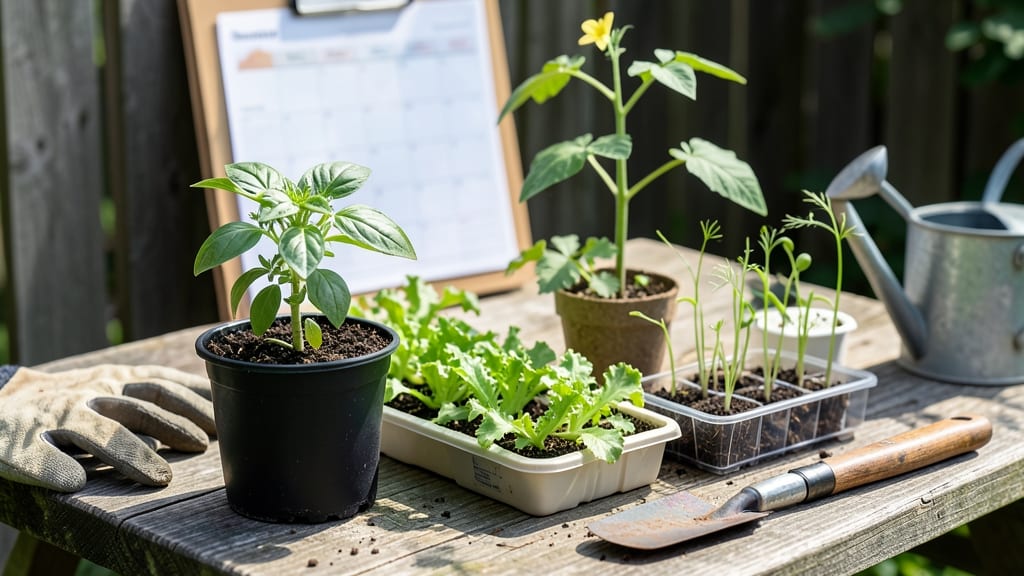
The best time to plant a garden depends on soil temperature and your local frost dates—getting it wrong can leave you with stunted plants or wasted seeds.
Picture this: You’ve prepped the soil, ordered your seeds, and are ready to dive in—only to watch your tender seedlings shiver under a surprise frost or bolt into flower too fast in the heat.
Timing your garden planting by soil temperature and plant type can mean the difference between a thriving harvest and a disappointing flop.
In USDA Zone 6a, like much of the Midwest, spring planting kicks off after your last frost (around April 15 for most areas), but the real secret is waiting for the soil to warm to the right degree for each crop.
Cool-season veggies like lettuce and peas love 40–50°F soil, while tomatoes and peppers need 60°F or higher to thrive.
Below, I’ll walk you through a simple soil temp checklist, how to test it yourself, and the 3 key adjustments to make if your season runs late. No more guessing—just a foolproof plan for a garden that grows strong from day one.
Soil temperature guidelines for planting by season and region
Getting your garden timing right starts with understanding soil temperature—not just air temperature. Most plants thrive when soil reaches specific warmth thresholds, which vary dramatically by season and region.
In USDA Zone 6a (like my garden), spring soil warms slowly, while Southern climates like Zone 8a can plant earlier. Let’s break down the ideal soil temps for cool-season vs. warm-season crops and how to adjust for your location.
Cool-season crops like lettuce, peas, and spinach can handle cooler soil, often germinating at 40–50°F. Warm-season plants such as tomatoes, peppers, and cucumbers, however, need soil at 60–85°F to germinate and grow.
The key? Monitor soil temps with a soil thermometer—air temps can mislead you by 10–15°F.
Regional differences matter too. In Northern climates (Zones 3–5), soil may stay cold until late May or June, delaying warm-season planting. Meanwhile, Southern gardens (Zones 7–10) can plant tomatoes as early as February or March.
Below, I’ve mapped out seasonal soil temp guidelines to help you align planting with your local climate.
| Plant Type |
Ideal Soil Temp (°F) |
Best Planting Window |
USDA Zones |
Regional Notes |
| Cool-Season Veggies |
40–50°F (germination) |
Early spring/fall (4–6 wks before frost) |
3–10 |
Northern zones: plant as soon as soil thaws. Southern zones: avoid summer heat. |
| Warm-Season Veggies |
60–85°F (germination) |
After last frost (soil ≥60°F) |
5–10 |
Northern zones: use row covers to warm soil. Southern zones: plant early to escape summer pests. |
| Herbs (Basil, Cilantro) |
50–70°F (basil: 70°F+) |
Spring (after frost) or fall |
All zones |
Basil bolts in heat; cilantro thrives in cool weather. |
| Flowers (Marigolds, Zinnias) |
60–75°F |
Late spring (soil ≥60°F) |
4–9 |
Direct-sow after frost; mulch to retain warmth. |
| Perennials (Asparagus, Rhubarb) |
50–60°F (crowns) |
Early spring (soil work
Best planting months for 10 common vegetables (and how to adjust for late starts)
Getting your vegetable garden timing right is everything—plant too early, and frost will kill tender seedlings; too late, and your harvest shrinks. The secret lies in matching each plant to its ideal soil temperature and frost-free window.
For example, lettuce thrives in cool soil, while tomatoes need warmth to germinate. Let’s break down the best months for 10 staples and how to salvage late starts.
Your local last frost date is your best friend. In USDA Zone 6a, most gardeners count on May 15 as the average last frost, but adjust for your region.
For cooler zones, start 2–4 weeks earlier; for warmer zones, delay by 2 weeks. Peppers and eggplants hate cold soil, while spinach and kale bolt in heat. Here’s your actionable calendar:
1
Tomatoes
Plant after soil hits 60°F (usually May–June). Late starts? Use black plastic mulch to warm soil faster.
2
Lettuce
Sow 4–6 weeks before last frost (typically March–April). For late starts, choose heat-tolerant varieties like romaine.
3
Peppers
Wait until soil is 70°F+ (usually June). Late starts? Try container gardening near a sunny wall.
4
Green Beans
Plant 1–2 weeks after last frost (usually April–May). For late starts, opt for bush varieties with shorter growing seasons.
5
Carrots
Sow 2–3 weeks before last frost (typically March–April) or late summer for fall harvests. Late starts? Use row covers to protect seedlings.
6
Cucumbers
Plant after soil is 65°F+ (usually May–June). Late starts? Choose parthenocarpic varieties (no pollination needed).
7
Spinach
Sow 4–6 weeks before last frost (typically March–April) or late summer for cooler weather. Late starts? Try shade cloth to prevent bolting.
8
Onions
Plant as soon as soil is workable (usually March–April). Late starts? Use transplants instead of seeds for faster growth.
|