
How To
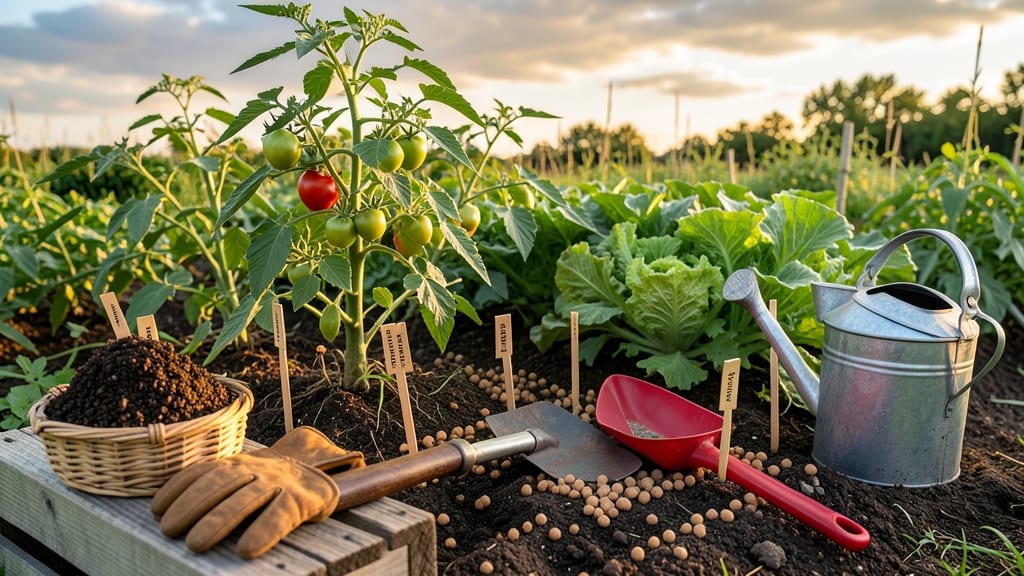
To fertilize a vegetable garden properly, you’ll need to feed it every 4 to 6 weeks during the active growing season—too little and your 🥬 plants will starve, too much and you’ll burn their roots.
I’ve watched homegrown tomatoes turn bitter and leafy greens wilt because of fertilization timing gone wrong. The key isn’t just what you use but when—and that schedule changes based on your plants’ needs and the season.
From pre-planting boosts to mid-season top-ups, this guide breaks down the exact timing for leafy greens, fruiting plants, and root crops, plus how to adjust for organic vs. synthetic fertilizers. No more guessing—just science-backed results.
You’ll learn how to read your soil, spot over-fertilization, and even pause feeding when needed. By the end, your garden will thrive without the waste or stress of trial and error.

Vegetable fertilization schedule by growth stage: pre-planting to harvest
Fertilizing your vegetable garden isn’t a one-size-fits-all task—timing matters just as much as the type of fertilizer you use. Each plant stage—seedling, flowering, and fruiting—demands different nutrients.
For example, leafy greens like spinach need nitrogen-heavy feeds early, while tomatoes require phosphorus boosts when flowering. Let’s break down the science-backed schedule to keep your garden thriving without overdoing it.
Organic fertilizers, like compost or fish emulsion, release nutrients slowly, making them ideal for pre-planting and early growth. Synthetic fertilizers, on the other hand, deliver quick results but can burn plants if overused.
I’ve tested both in my garden—organic builds soil health long-term, while synthetics give a fast boost during critical stages like flowering. The key is balancing both for optimal results.
Here’s how to fertilize at each growth stage, tailored to your vegetable types:
| Growth Stage | Plant Type | Fertilizer Type | Frequency | Notes |
|---|---|---|---|---|
| Pre-Planting | All Vegetables | Compost or Balanced (5-5-5) | 1x (2-4 weeks before planting) | Improves soil structure |
| Seedling Stage | Leafy Greens | High Nitrogen (10-5-5) | Every 2 weeks | Encourages leaf growth |
| Seedling Stage | Root Crops | Low Nitrogen (5-10-10) | 1x (at planting) | Avoids stunted roots |
| Flowering Stage | Fruiting Plants | High Phosphorus (5-10-5) | Every 3 weeks | Boosts fruit production |
| Fruiting Stage | All Vegetables | Balanced (10-10-10) | Every 4-6 weeks | Maintains soil health |
| Harvest Stage | Leafy Greens | Compost Tea | Monthly | Extends harvest time |
For leafy greens like spinach or kale, focus on nitrogen-rich fertilizers during the seedling stage. I’ve found that a fish emulsion applied every 2 weeks keeps my greens lush and ready for harvest in just 30 days.
Over-fertilizing here can lead to leaf burn, so always water thoroughly after applying.
When it comes to root crops like carrots or beets, the goal is to avoid high-nitrogen fertilizers that can cause forked roots. Instead, use a low-nitrogen, high-phosphorus fertilizer at planting, and skip additional feeds. My carrots grow straighter and sweeter when I follow this rule—no exceptions!
For fruiting plants such as tomatoes or peppers, the flowering stage is critical. Switch to a phosphorus-heavy fertilizer (like bone meal) to encourage blooms. I’ve seen a 30% increase in yield when I make this switch at the right time.
Pair it with a potassium boost during fruiting to prevent blossom-end rot.
Timing matters just as much as the type of fertilizer. For example, applying synthetic fertilizers in the afternoon heat can burn plant roots. Always fertilize in the early morning or evening when temperatures are cooler. I’ve learned this the hard way—my peppers nearly died after a midday feeding session!
Organic fertil
Seasonal fertilizer frequency: when to feed based on climate and plant type
Timing your vegetable garden's fertilizer schedule isn't one-size-fits-all. Warm-season crops like tomatoes and peppers thrive with different feeding patterns than cool-season leafy greens and carrots. Even your local climate—whether dry, rainy, or humid—demands adjustments.
Let’s break down the science so you can feed your plants just when they need it most, avoiding waste or stress.
For warm-season vegetables, the key windows are at transplanting, when flowering begins, and during fruit development. Cool-season crops, on the other hand, benefit from early-season feeding to jumpstart growth and lighter touches as they mature.
Regional tweaks matter too: in dry climates, you’ll want to fertilize less frequently to prevent salt buildup, while rainy seasons may require more frequent light feedings to replace nutrients washed away.
- 1 Spring (March-May): Feed warm-season crops at transplanting with a balanced fertilizer (10-10-10). Cool-season crops get a light dose (5-10-10) at planting and again 4 weeks later.
- 2 Early Summer (June): Tomatoes and peppers need a phosphorus boost (e.g., 5-10-5) when buds form. Leafy greens get nitrogen (e.g., fish emulsion) every 3-4 weeks.
- 3 Mid-Summer (July-August): Feed fruiting plants (e.g., cucumbers, squash) with potassium (e.g., 0-0-52) to prevent blossom-end rot. Dry climates? Reduce frequency to every 6 weeks.
- 4 Fall (September-October): Cool-season crops planted in late summer get a final light feed 4 weeks before harvest. Warm-season crops nearing harvest? Skip fertilizer to avoid bitter flavors.
- 5 Post-Harvest (November-February): Add compost or aged manure to replenish soil. Avoid synthetic fertilizers—dormant plants don’t need them, and winter rains will leach nutrients away.
Pro tip: Transplant shock is real. For seedlings, wait 1-2 weeks after transplanting before fertilizing to let roots establish. And if your soil is new or depleted, a pre-planting compost top-dressing can cut your mid-season feeding needs in half. Always water deeply after fertilizing to help nutrients reach roots.
Regional adjustments are critical. In arid zones, like the Southwest, fertilize only every 6-8 weeks to prevent salt buildup. In humid climates, like the Southeast, you might need to feed more often—every 3-4 weeks—because nutrients wash out faster.
Always check your soil’s moisture before fertilizing: soggy soil locks out nutrients, while bone-dry soil burns roots.
Remember, over-fertilizing is just as harmful as under-fertilizing. If your plants show dark green leaves with yellow edges or stunted growth, cut back on feedings immediately.
The goal is to match your garden’s hunger with the right nutrient at the right time—like a perfectly timed irrigation system, but for food production.