
Picking
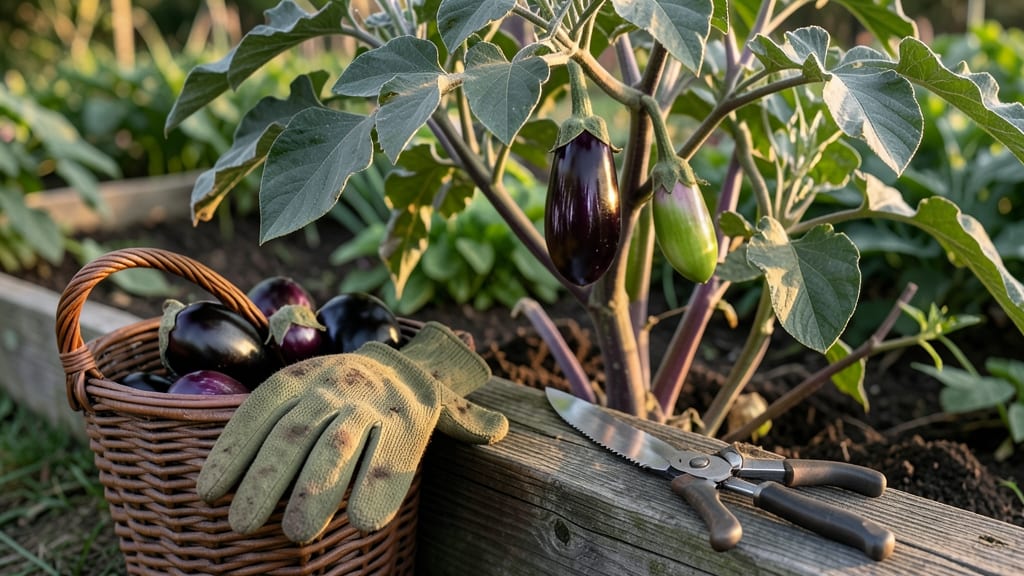
To pick eggplant in your garden at the perfect moment, watch for that glossy purple skin and a firm feel when you gently press it—this is when flavor peaks and seeds stay tender.
Harvesting too early means tough, bitter flesh, while waiting too long turns your 🍆 into a seedy mess. The difference between a delicious meal and wasted effort often comes down to timing, and the good news? You don’t need a degree in botany to master it.
In warmer climates like Zone 6a, eggplants typically reach picking size between July and October, but cooler areas may need to wait until late summer. Below, I’ll break down the exact visual cues—color shifts, size benchmarks, and the simple thumb test—to ensure you never miss the window again.
Once you’ve picked the perfect eggplant, I’ll also share how to store it properly so it stays fresh longer, plus a few pro tips to avoid common mistakes that ruin flavor before it even hits the pan.
Eggplant ripeness guide: color, size, and texture signs to harvest
Picking eggplant at the perfect moment transforms your garden harvest from bland to bursting with flavor. The key lies in three simple checks: color depth, fruit firmness, and stem separation.
Unlike tomatoes, eggplant doesn't soften as it ripens—instead, it develops a glossy sheen and reaches a specific size. Even white or striped varieties follow the same rules, just with different color cues.
My first year growing eggplant, I nearly missed the harvest window because I focused only on size. The fruit looked ready, but the skin was dull and soft—turns out, it needed another week to develop that satisfying snap when gently squeezed.
That mistake taught me to always check all three ripeness signs before picking. Now, I harvest consistently perfect eggplant every season.
Eggplant varieties come in stunning colors beyond classic purple, like white 'Casper' or green 'Thai Long'. Each type has unique ripeness markers, but the core principles remain the same. Below, we'll break down exactly what to look for in your garden, plus how to test firmness like a pro.
🌱
| Ripeness Sign | Purple Varieties | White/Green Varieties | Striped Varieties |
|---|---|---|---|
| Size | 4-8 inches long | 3-5 inches long | 5-7 inches long |
| Color | Deep, glossy purple | Creamy white/light green | Uniform stripe pattern |
| Texture | Firm with slight gloss | Smooth, firm surface | Slightly waxy finish |
| Stem Test | Snaps cleanly when bent | Separates easily from vine | Pulls away with gentle twist |
| Harvest Time | Morning hours | Early afternoon | Cool morning |
The color shift is your first clue—ripe eggplant develops a deep, uniform hue with a slight gloss. For purple varieties, this means moving from dull green to rich, eggplant-colored purple.
White varieties like 'Casper' should turn from pale green to creamy white with no green tinges. Striped types like 'Bingo' need their stripes to become bold and consistent.
Size matters too, but it varies by variety. Most standard eggplants hit 4-6 inches long when ready, while smaller types like 'Fairy Tale' stay around 3 inches. Always check your seed packet for variety-specific guidelines.
I once grew 'Ichiban' eggplant and picked it at 8 inches—way too big! The flavor was watery and seedy, a lesson in paying attention to size limits.
Never skip the firmness test. Press your thumb gently into the eggplant's skin—it should resist slightly but not feel rock-hard. Overripe eggplant becomes soft and spongy, while underripe fruit stays firm but dull.
Pro tip: Hold the eggplant up to the light—ripe skin will have a slight translucency that unripe skin lacks.
💧
Another pro trick is the stem separation test. Gently twist or bend the stem while holding the eggplant—it should snap or pull away cleanly. If the stem resists, the fruit needs more time.
This method works especially well for container-grown eggplant, where stems can get hidden under leaves. I use this test religiously in my raised beds to avoid missing hidden fruit.
Climate plays a role in ripening too. In hot, dry regions, eggplant may ripen faster and need harvesting every 2-3 days.
Cool, cloudy summers can slow ripening—if your eggplant stays small and green past 90 days, it might need a warmth boost like black plastic mulch or a row cover.
For white and green varieties, pay extra attention to color changes since they lack the classic purple glow. 'Casper' eggplant, for example, should turn pure white with no green spots, while 'Thai Long' develops a smooth, pale green finish.
Striped types like 'Bingo' need their stripes to darken and sharpen—if they look faded, the fruit isn't ready.
🌿
Common mistakes that ruin eggplant flavor (and how to avoid them)
Even the most experienced gardeners can fall into traps that turn eggplant into a flavor disappointment. Overripe eggplant develops seedy, bitter flesh, while underripe fruit stays tough and bland. The key is timing—harvesting too early or too late ruins both texture and taste.
I’ve learned this the hard way after leaving eggplants on the vine just a few days too long, only to discover a mushy, bitter mess.
Environmental factors like excessive heat or heavy rain can accelerate ripening, making it critical to monitor your plants closely. In my Zone 6a garden, late summer downpours often trick me into thinking eggplants are ready when they’re not.
The result? A harvest that’s either too firm or too soft, neither of which is ideal for grilling or roasting.
Here’s the biggest mistake: assuming eggplant ripens uniformly. Some varieties like Black Beauty mature faster than Ichiban, which stays firm longer. Ignoring these differences leads to inconsistent harvests.
I once picked a batch of Ichiban too early because they looked similar to my overripe Black Beauties—big mistake! The Ichiban needed another week.
⚠️ Warning: When to Pick Eggplant in Garden
Overripe eggplant is the #1 flavor killer—it turns seedy, bitter, and mushy. Underripe eggplant stays tough and lacks sweetness. Check these 3 signs before harvesting:
- ✅ Glossy skin (not dull or wrinkled)
- ✅ Firm to touch (no soft spots)
- ✅ Stem snaps easily (not tough or woody)
💡 Pro Tip: In hot climates, check eggplants every 2-3 days—they ripen faster!
Another common pitfall is delayed harvests due to weather or garden distractions. If you’re away for a weekend, eggplants can overripen quickly, especially in humid climates. I once returned from a trip to find my eggplants splitting open—an absolute disaster.
Now, I set a reminder in my garden journal to check them every 48 hours during peak season.
To troubleshoot delayed harvests, start by pruning lower leaves to improve airflow and slow ripening. Also, reduce watering slightly if your soil stays soggy—excess moisture speeds up decay. In my raised beds, I’ve found that mulching with straw helps regulate moisture and keeps eggplants from ripening too fast.
Finally, don’t ignore variety-specific cues. White eggplants like Casper may look ready but still need time to develop sweetness, while striped varieties like Italian Long Purple can overripen faster.
I keep a small chart in my garden notebook listing each variety’s ideal size and color—it’s saved me from multiple bitter harvests!
By avoiding these mistakes, you’ll enjoy eggplants that are sweet, tender, and packed with flavor. The secret? Stay vigilant, check daily, and harvest at the first sign of ripeness—before problems start. Your taste buds (and future grilled eggplant dishes) will thank you! 🌱