
Planting
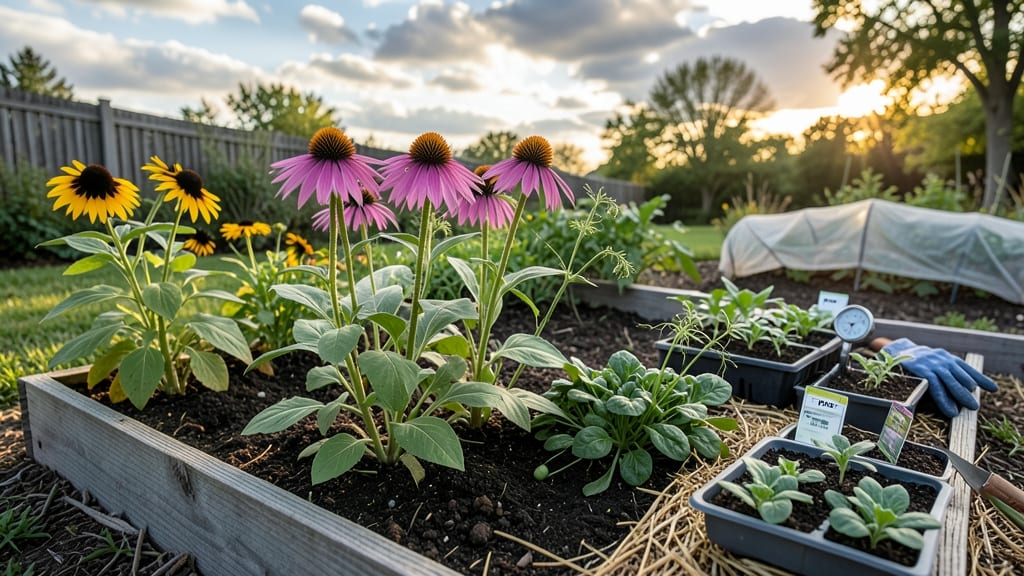
Planting a garden in Minnesota means timing your seeds and transplants to the last frost—and missing that window can leave you with nothing but a patch of dirt by summer.
Minnesota’s short growing season demands precision: plant too early and risk frost, too late and miss the harvest.
In USDA Zone 5B, where I’ve spent years growing everything from peas to peppers, the difference between thriving plants and wasted seeds often comes down to knowing the exact deadlines for each crop.
Whether you’re sowing cool-season crops like spinach in early spring or warm-season favorites like tomatoes after Memorial Day, the right timing ensures a harvest. Below, I’ll break down the critical frost dates, the best planting schedule by crop, and how to stretch your season with simple tricks.
From asparagus to zucchini, you’ll learn when to start seeds indoors, when to transplant, and how to adjust for Minnesota’s unpredictable weather—so you can finally grow the garden you’ve always wanted.
Minnesota’s last frost dates by region: critical deadlines for planting
Understanding Minnesota’s last frost dates is your first step to a successful garden. With USDA Zone 5B temperatures, frost can linger until mid-May in northern regions or as late as late May in southern areas. These dates separate survival from failure for warm-season crops like tomatoes and peppers.
Your planting timeline depends on where you live in the state. Southern Minnesota (e.g., Rochester, Winona) typically sees its last frost by May 15, while northern areas (e.g., Duluth, Brainerd) may wait until June 1.
Microclimates—like urban heat islands or lakeside areas—can shift these dates by 1-2 weeks.
Cool-season crops like kale and peas thrive when planted 4-6 weeks before the last frost. Warm-season crops, however, need to wait until 2 weeks after the average last frost date to avoid frost damage. Always check local frost records from the MN State Climatology Office for precision.
Here’s a quick reference for Minnesota’s last frost dates by region, including how microclimates affect your planting window:
Use these dates as a starting point, not a rule. For example, cool-season crops like spinach and lettuce can handle light frosts, so plant them 4-6 weeks before your region’s last frost.
Warm-season crops like tomatoes and peppers need consistent warmth, so wait until 2 weeks after your area’s last frost.
Microclimates play a huge role. Urban areas often warm up faster due to concrete and buildings, while valleys and low spots can hold frost longer. If you’re near a large body of water, like Lake Superior, expect cooler temperatures that delay planting by 1-2 weeks.
Track your own frost dates for 3-5 years to refine your schedule. The MN Department of Agriculture and University of Minnesota Extension offer local frost data and planting guides tailored to your county.
For example, St. Cloud’s last frost often falls on May 22, while Mankato’s is closer to May 10.
Don’t forget to harden off seedlings before transplanting outdoors. Gradually expose them to outdoor conditions over 7-10 days to prevent shock. This is especially critical in northern Minnesota, where temperature swings can be extreme.
For warm-season crops, consider using row covers or cold frames to extend your planting window. These tools can push your last frost date back by 2-4 weeks, giving you more time to grow heat-loving plants like cucumbers and squash.
Plan ahead for fall planting too. Cool-season crops can often be sown in late summer for a fall harvest. Use your first frost date (typically September 20-October 15) to calculate how early you can plant kale, radishes, and carrots.
When in doubt, consult your local cooperative extension office. They provide free, science-backed advice tailored to your specific microclimate. With the right timing, you’ll turn Minnesota’s short growing season into a bountiful harvest.
Best planting schedule for Minnesota crops: from asparagus to zucchini
Minnesota gardeners face a unique challenge: our short 120-150 day growing season requires careful planning to maximize harvests. The key is understanding each crop's frost tolerance and maturity timeline. Cool-season crops like kale and peas thrive in spring's chill, while tomatoes and zucchini demand warm soil and longer daylight.
I've planted my Minnesota garden for over 10 years, and the difference between a bountiful harvest and wasted seeds often comes down to timing.
For example, planting asparagus crowns in early spring gives them 3-4 years to establish before producing, while radishes can be sown every 2 weeks for continuous harvests.
Here's my month-by-month planting guide for 12 essential Minnesota crops, including succession planting tips to extend your harvest season:
| Crop | Planting Window | Succession Planting | Frost Tolerance | Days to Harvest |
|---|---|---|---|---|
| Asparagus | Early Spring (April) | None (perennial) | Hardy to -20°F | 3-4 years to harvest |
| Peas | Late April-May | Every 2 weeks until June | Tolerates light frost | 50-60 days |
| Lettuce | April-May, Aug-Sept | Every 3 weeks | Bolts at 75°F | 30-50 days |
| Radishes | April-May, July-Aug | Every 2 weeks | Cold-hardy | 25-30 days |
| Tomatoes | After last frost (May 15-June 1) | None (long season) | Sensitive to frost | 60-85 days |
| Zucchini | After last frost (May 20-June 5) | None (fast producer) | Tender plant | 45-55 days |
| Kale | April-May, July-Aug | Every 3 weeks | Cold-hardy to 20°F | 50-60 days |
| Carrots | April-May, July | Every 3 weeks | Tolerates light frost | 60-80 days |
| Green Beans | After last frost (May 20-June 10) | Every 2 weeks | Sensitive to frost | 50-60 days |
| Potatoes | Early April (plant in cold soil) |