
Advice
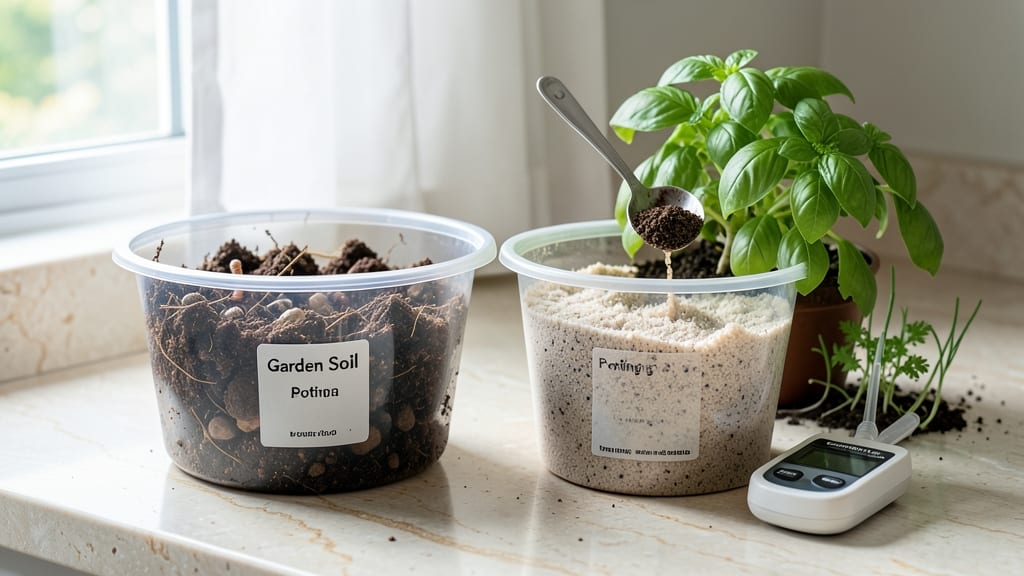
You shouldn't use garden soil as potting soil because it compacts easily, drains poorly, and may contain pests, weeds, or diseases that harm container plants. Instead, opt for lightweight, sterile potting mixes designed for root aeration and moisture control.
Garden soil is heavy and dense, packed with minerals that don't suit container gardening. The compacted texture smothers roots, cutting off airflow and trapping excess moisture—leading to rot. 🌱 Plus, outdoor soil often carries pathogens or weed seeds that thrive in pots, where they can't be easily removed.
For container plants, you need a mix that stays loose and breathable, allowing roots to expand freely while preventing waterlogging.
Commercial potting mixes solve these issues by blending organic matter with perlite or vermiculite for structure. DIY alternatives like coconut coir, peat moss, and composted bark work too, especially when amended with sand for grit.
The key is creating a balance that mimics natural forest soil—light enough to drain but rich enough to feed roots without suffocating them.
💡 In This Article
- Why Garden Soil Fails as Potting Mix
- Best Potting Soil Alternatives for Healthy Plants
Why garden soil fails as potting mix
Garden soil's dense, clay-heavy composition creates a suffocating environment for container plants. The tiny particles pack tightly together, reducing pore space by up to 70% compared to ideal potting mixes. This compaction cuts off oxygen flow to roots, which need 10-20% air space in their growing medium to thrive.
Without proper aeration, roots suffocate and plants develop shallow, weak growth patterns that can't support healthy foliage.
The nutrient balance is another critical issue. Garden soil contains high concentrations of minerals like iron and phosphorus that become toxic in confined containers.
These salts build up in the root zone, creating a condition called salinization that burns delicate root hairs. 🌱 Meanwhile, essential micronutrients like nitrogen and potassium get locked in organic matter that decomposes too slowly for container gardening's accelerated growth cycles.
The result is plants that appear starved even when surrounded by "rich" soil.
Microbial risks make garden soil particularly dangerous for potted plants. Outdoor soil often contains pathogenic fungi like Phytophthora or nematodes that thrive in the warm, moist conditions of containers. These organisms have no natural predators in confined spaces, allowing them to multiply unchecked.
Even beneficial microbes from garden soil can become problematic—they may introduce weed seeds that sprout uncontrollably in pots where you can't easily remove them.
The water retention properties of garden soil create another major problem. Clay particles hold water like a sponge, creating anaerobic conditions at the root zone. When you water container plants, garden soil stays saturated for days longer than proper potting mixes, leading to root rot.
The lack of drainage channels forces excess moisture to pool around roots, which can't escape through container walls like they would in open garden beds.
Consider this comparison: A typical garden soil has a 3:1 clay-to-sand ratio, while ideal potting mixes maintain a 1:1 ratio> with organic matter and amendments.
This structural difference means garden soil can hold 30-50% more water> by weight than proper potting mixes, creating the perfect storm of oxygen deprivation and moisture stress for container plants.
The texture difference becomes immediately apparent when you handle both soils. Garden soil feels heavy and sticky when wet, with particles that resist separation.
In contrast, quality potting mixes have a light, almost fluffy texture that crumbles easily between your fingers—a tactile difference that directly correlates with root health and plant vitality.