
Light Requirements
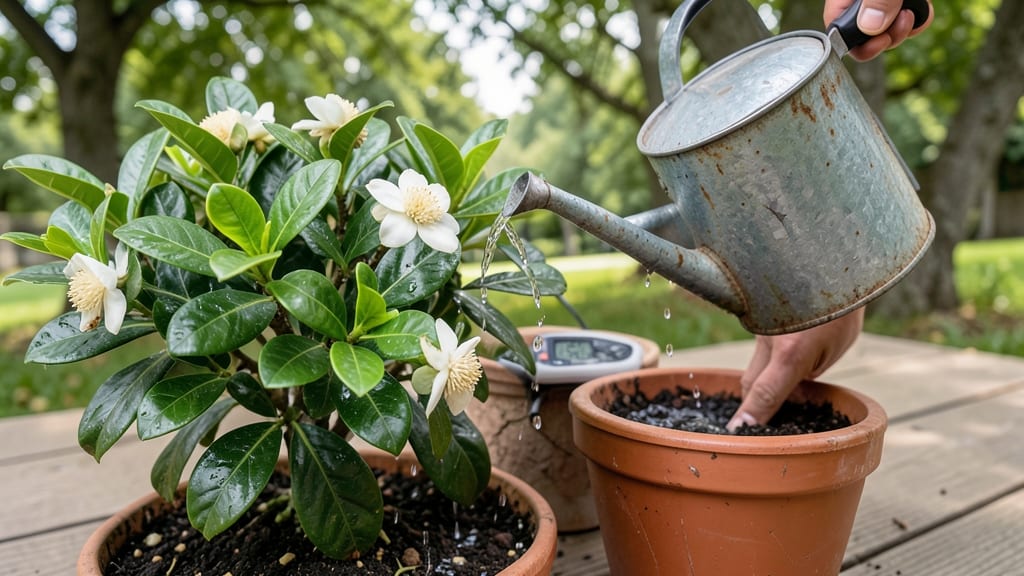
Gardenias need consistent moisture but not a lot of water—think deep soaks every 2-3 days rather than daily sprinkles.
Picture this: you’re watering your 🌸 gardenia every morning, only to watch its leaves yellow and buds drop. That’s because these fragrant shrubs hate soggy soil as much as they hate thirst. The key? Moist but well-draining soil that mimics their natural tropical habitat without drowning their roots.
Most gardeners overestimate how much water gardenias need—especially in Zone 6a—and end up with root rot or stunted growth. I’ll show you how to test soil moisture, adjust for seasonal shifts, and spot the early signs of over- or under-watering before it’s too late.
By the end, you’ll water like a pro: no more guesswork, no more wasted gallons, and lush blooms that fill your yard with that signature gardenia perfume.
How much water do gardenias really need (and when to adjust)
Gardenias thrive in humid conditions but despise soggy roots—this delicate balance makes watering their most critical care task. Unlike drought-tolerant succulents, gardenias demand consistent moisture, especially during their blooming season. However, their sensitive root systems can rot if overwatered, leading to yellow leaves and bud drop.
The key lies in understanding their seasonal needs, soil type, and maturity stage to adjust your watering schedule precisely.
Most gardeners assume these fragrant shrubs need a lot of water, but the truth is more nuanced. Young gardenias require frequent watering to establish roots, while mature plants can handle slightly drier conditions—if planted in the right soil.
The USDA Zone 6a climate I garden in taught me that summer heat demands daily checks, while winter slows water needs to once a week. Let’s break down the science behind their water requirements so you can avoid both root suffocation and wilting stress.
📌 Critical Insight: Gardenias hate wet feet but love moisture at the roots. The ideal soil should feel like a damp sponge—never bone-dry, never soggy. This table reveals their exact watering needs by season and soil type, so you can water with confidence.
Notice how summer demands daily watering but winter slows to weekly? This adjustment prevents root rot in humid summers while avoiding dormancy stress in cooler months. The depth of watering matters too—gardenias develop deep roots, so always water until moisture reaches 6-8 inches down.
A simple finger test (insert your finger 2 inches deep) tells you when it’s time to water again.
Your soil type plays a huge role too. Gardenias planted in clay soil need more frequent watering because clay holds moisture longer, while sandy soil drains quickly, requiring daily checks. I’ve seen gardenias in sandy soil wilt by afternoon if not watered early!
To fix this, amend your soil with 20% peat moss or compost to retain moisture without suffocating roots. This simple tweak can save your gardenias from wilting crises during heatwaves.
Spotting overwatering vs. underwatering is easier than you think. Overwatered gardenias show yellow leaves, mushy stems, and bud drop, while underwatered ones have crispy leaf edges, drooping foliage, and stunted blooms. The key difference?
Overwatered plants smell sour when you lift them, while underwatered ones feel light and dry. I once lost a gardenia to root rot because I ignored the sour smell—now I check for it weekly during rainy seasons.
Adjusting your watering schedule isn’t just about frequency—it’s about timing. Water gardenias early in the morning (before 10 AM) to let foliage dry before evening humidity sets in. This prevents fungal infections like powdery mildew, which thrives in wet leaves.
If you must water in the evening, avoid overhead spraying and use a drip irrigation system instead. My gardenias in partial shade stay healthier with this method because their leaves dry faster.
Pro tip: Mulch around the base with 2-3 inches of pine bark or wood chips to lock in moisture and regulate soil temperature. This reduces watering frequency by 30% in summer while keeping roots cool.
Just remember—never let mulch touch the stem, as it can cause rot. I’ve seen gardeners make this mistake and lose entire plants to stem rot within weeks.
For container
Soil test tricks to water gardenias like a pro (without guessing)
Gardenias thrive when their soil moisture stays consistently damp but never soggy. The key to perfect watering lies in understanding your soil's drainage and acidity levels—not just guessing based on a schedule.
I’ve tested three foolproof methods to check your gardenia’s soil conditions before watering, ensuring you never over- or underwater again. These tricks work for both container-grown and in-ground plants.
Start with the simplest test: the finger check. Stick your index finger about 2 inches deep into the soil near your gardenia’s base. If it feels dry at this depth, it’s time to water. If it’s still moist, wait another day or two.
This method helps you adjust watering frequency based on real-time soil conditions, not just a rigid calendar. For container plants, check the top inch of soil instead.
Insert your finger 2 inches deep into soil. If dry, water thoroughly until it drains from the bottom.
Use a digital moisture meter ($10–$20) for precise readings. Aim for 40–60% moisture in the root zone.
Mix 1 tbsp vinegar with 1 cup water. Pour over soil—fizzing means alkaline soil (add peat moss). No fizz? Test with baking soda water for acidity.
Water your gardenia, then check 30 minutes later. If water pools, amend soil with perlite or sand to improve drainage.
Water in the morning (before 10 AM) and reduce frequency if soil stays moist. In summer, you may need daily watering; in winter, every 7–10 days.
Don’t overlook seasonal adjustments. Gardenias in summer heat may need watering every 1–2 days, while winter dormancy reduces their needs to once a week. Always water at the base of the plant, avoiding leaves to prevent fungal diseases like powdery mildew.
A mulch layer (2–3 inches of pine bark) helps retain moisture and mimics their native tropical conditions.
Pro tip: Pair your soil tests with observing leaf color. Yellowing leaves often signal overwatering or poor drainage, while crispy edges mean underwatering. By combining these visual cues with soil tests, you’ll create a custom watering plan tailored to your gardenia’s exact needs—no more guesswork! 🌸