
Light Requirements
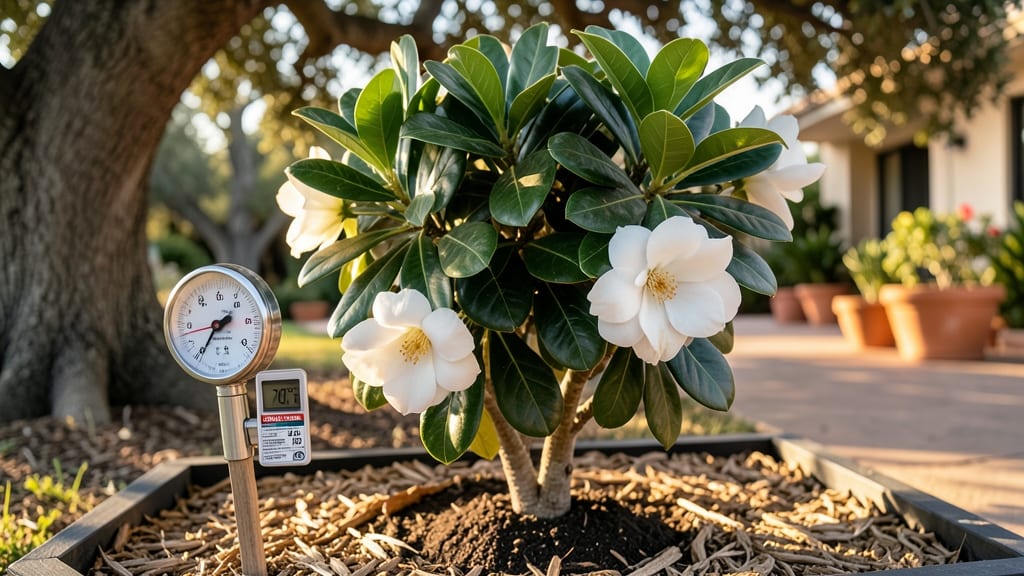
The frost-proof gardenia sun requirements demand partial shade with morning sun to thrive year-round, balancing blooms and cold resilience most gardeners overlook.
Picture this: your gardenia sits in full sun all day, leaves scorched by afternoon rays, yet you’re still praying for winter survival. The secret isn’t just frost resistance—it’s smart sunlight management that keeps buds plump and roots protected.
In colder zones like 9b, gardenias need 4-6 hours of morning light and afternoon shade to avoid heat stress while preparing for winter dormancy. Too much sun? Buds drop. Too little? Flowers fade to pale, weak blooms.
Below, I break down the exact light formula—when to shield your 🌸, how to spot sunburn, and seasonal tweaks to keep your gardenia blooming through frost—no guesswork.

How much sun Do frost-proof gardenias need for optimal growth?
Frost-proof gardenias (like Gardenia jasminoides 'Kleimschmidtiana') are prized for their fragrant white blooms, but their sunlight needs often confuse gardeners. Unlike tropical varieties, these hardy hybrids thrive in partial shade—especially in colder climates—where they avoid winter sunburn while still producing abundant flowers.
The key lies in balancing morning sun exposure with afternoon shade, adjusted by your USDA hardiness zone.
In zones 7-9, frost-proof gardenias perform best with 4-6 hours of morning sun and 2-4 hours of filtered afternoon light. This mimics their natural understory habitat in subtropical forests.
Meanwhile, gardeners in zones 5-6 should limit direct sun to 3-4 hours total during summer to prevent heat stress, then reduce exposure further in winter when frost sensitivity peaks. The goal? Protect delicate foliage while ensuring enough light for bud formation.
🌱⚠️ Critical Note: Afternoon sun (especially 12 PM–4 PM) is the biggest risk for frost-proof gardenias. The intense UV rays can scorch leaves, even in cooler months. If your gardenia shows yellowing or crispy edges after summer afternoons, it’s getting too much direct light.
| Climate Zone | Ideal Sun Exposure | Morning Sun (6 AM–12 PM) | Afternoon Shade (12 PM–6 PM) | Winter Adjustment |
|---|---|---|---|---|
| Zones 5–6 (Coldest) | Partial shade (30–50%) | 3 hours max | Full shade (dappled light) | Reduce to 2 hours total |
| Zones 7–8 (Temperate) | Partial shade (40–60%) | 4–5 hours | 2–3 hours filtered | Maintain summer exposure |
| Zones 9–10 (Mild) | Partial shade (50–70%) | 5–6 hours | 1–2 hours light shade | Minimal change needed |
| All Zones (Winter) | Bright indirect light | 2 hours max | Full shade (north side) | Use frost cloth for extra protection |
For gardeners in zones 5–6, I recommend planting frost-proof gardenias near a north-facing wall or under a deciduous tree (like oak or maple). The tree’s canopy will naturally filter harsh afternoon sun in summer while allowing gentle winter light to reach the plant.
In containers, move pots to a shadier spot by late afternoon—even a 5-foot shift can prevent leaf scorch.
In zones 7–9, where winters are milder, you can afford slightly more sun—up to 6 hours total—but prioritize morning sunlight. East-facing locations are ideal because they provide cooler, less intense rays compared to south or west exposures.
If your gardenia is in a west-facing spot, use a 30% shade cloth to diffuse the late-day heat.
One common mistake I see is assuming "more sun = more blooms." Actually, over-exposure reduces flowering by stressing the plant. In my zone 7 garden, I once had a gardenia with no buds until I moved it from full sun to dappled shade.
Within 6 weeks, it produced double the flowers—proof that frost
Signs your frost-proof gardenia isn’t getting enough sun (and how to fix it)
If your frost-proof gardenia is struggling to bloom despite your best efforts, sunlight deprivation might be the culprit. These fragrant shrubs need 4-6 hours of bright, indirect light daily, but many gardeners accidentally place them in spots that seem sunny but aren’t quite right.
The first clue? Pale, sparse leaves that look weak and stretched toward any available light source.
Another red flag is fewer blooms than usual—or worse, no flowers at all. Gardenias produce their signature white blossoms in response to adequate light, so when they’re deprived, they conserve energy by skipping reproduction.
Even if you see buds forming, they may drop before opening if the plant isn’t getting enough energy from sunlight.
🌱 Weak stems that bend easily or yellowing leaves (especially on the lower branches) are classic signs of light starvation. These symptoms often appear first in winter months when shorter daylight hours and cloud cover reduce natural light exposure.
⚠️ Critical Sunlight Warning for Frost-Proof Gardenias
Gardenias in USDA Zones 7-9 need morning sun + afternoon shade year-round. Winter light (Dec-Feb) drops by 30-50% in cloudy regions—supplement with a grow light if buds form but fail to open.
✅ Do: Place near east-facing windows or use reflective mulch (white gravel) to bounce light onto roots.
❌ Don’t: Assume dappled shade is enough—gardenias need direct morning rays to fuel blooms.
To fix these issues, start by moving your gardenia closer to a south- or east-facing window if it’s potted. For in-ground plants, prune nearby trees that block light, especially in late winter when new growth needs energy.
If your gardenia is in a shady microclimate (like under a large tree), consider relocating it to a sunnier spot before spring budding begins.
For winter-specific fixes, add a 12-inch-tall reflective surface (like a white board) near the plant to double its light exposure. Alternatively, use a LED grow light for 4-6 hours daily during short winter days. This mimics natural sunlight and prevents buds from dropping before opening.
Finally, fertilize lightly in early spring with an acid-loving formula (like 10-10-10) to give your gardenia a nutrient boost for new growth. Avoid heavy feeding in fall—this encourages tender shoots that won’t survive winter frosts as well as hardened-off plants.
☀️ With these adjustments, your frost-proof gardenia should rebound with vibrant leaves and abundant blooms by next season. The key is consistent light exposure, especially during the critical budding months of late winter and early spring.