
Tools
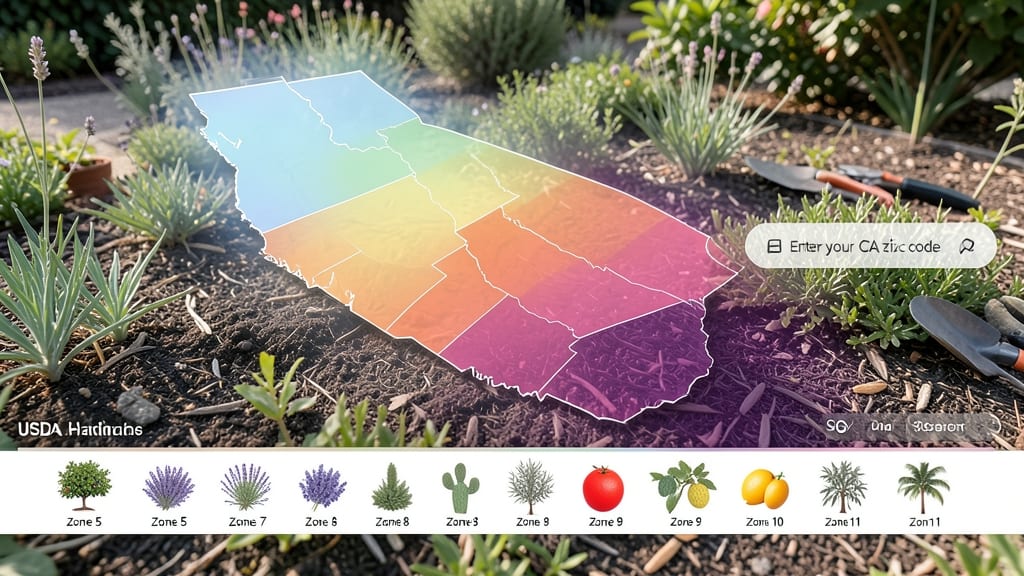
California's gardening zones by zip code span from 5a to 11b, with coastal regions usually falling between 7-10 and inland valleys often reaching 9-11. For accurate planting advice, consult the USDA Plant Hardiness Zone Map or check local climate data specific to your exact address.
California’s diverse geography creates some of the most varied gardening conditions in the U.S., where a single county can jump from zone 8 near the coast to zone 10 just 30 miles inland. 🌵 The Pacific Ocean’s cooling effect keeps coastal areas milder, while desert valleys like the Central Valley experience extreme heat that pushes zones upward.
Even within cities, urban heat islands can shift your effective zone by 1-2 levels—so always verify with tools like the Sunset Western Garden Book or UC Master Gardener resources for hyper-local precision.
Pro tip: Check elevation too—mountain slopes in zone 6 can sit just miles from zone 10 valleys. I always cross-reference the USDA map with my local nursery’s recommendations to account for these microclimates.
💡 In This Article
- How California’s Unique Microclimates Affect Plant Hardiness Zones
- Finding Your Exact Zone: Free Zip Code Lookup Tools and Local Adjustments
How California’s unique microclimates affect plant hardiness zones
California’s gardening zones defy simple rules because its geography creates extreme microclimates. The Pacific Ocean generates a coastal fog belt that keeps areas like San Francisco in zone 9-10 despite their northern latitude, while inland valleys like the Central Valley hit zone 11b with summer temperatures exceeding 100°F.
This happens because cold ocean currents create a temperature inversion—cooler air sits over warmer land, trapping fog and moderating coastal temperatures by 10-15°F compared to inland areas just miles away.
The Sierra Nevada mountains add another layer of complexity. At 5,000 feet elevation, zones drop to 6-7, while foothills remain in 8-9.
This vertical shift occurs because temperature decreases by 3.5°F per 1,000 feet—so a zone 10 valley garden can sit adjacent to a zone 7 mountain meadow.
Even Death Valley’s zone 12 extreme contrasts with nearby zone 9 coastal deserts, proving California’s zones aren’t just about latitude but about local topography.
Urban areas complicate things further with heat islands that can push zones up by 1-2 levels. Los Angeles’ downtown core often feels like zone 10b, while nearby canyons stay in 9b due to cooler nighttime temperatures.
This urban-rural divide happens because concrete absorbs heat during the day and radiates it at night, creating a 5-10°F temperature difference between city centers and surrounding suburbs.
Microclimates even exist within single neighborhoods. A south-facing yard might reach zone 10 while a north-facing one stays in 9—the sun’s angle creates a 10°F temperature difference.
This is why gardeners in zone 9a coastal areas can grow tropical plants like bougainvillea in sunny spots but need to protect them from 28°F winter dips in shaded areas.
California’s ocean currents play a surprising role too. The California Current brings cold water from Alaska, creating summer fog that keeps coastal zones 2-3 levels cooler than inland areas.
In contrast, the Southern California Bight creates a warmer microclimate where zone 10b extends further north than expected—explaining why palm trees thrive in Santa Barbara but struggle in zone 9b Sacramento.
What most gardeners overlook is how wind patterns affect zones. Coastal winds moderate temperatures but also dry out soil, creating conditions more like zone 8 despite the official zone 10 classification. This is why drought-tolerant plants thrive in coastal gardens while traditional zone 10 plants need extra irrigation.