
Planting
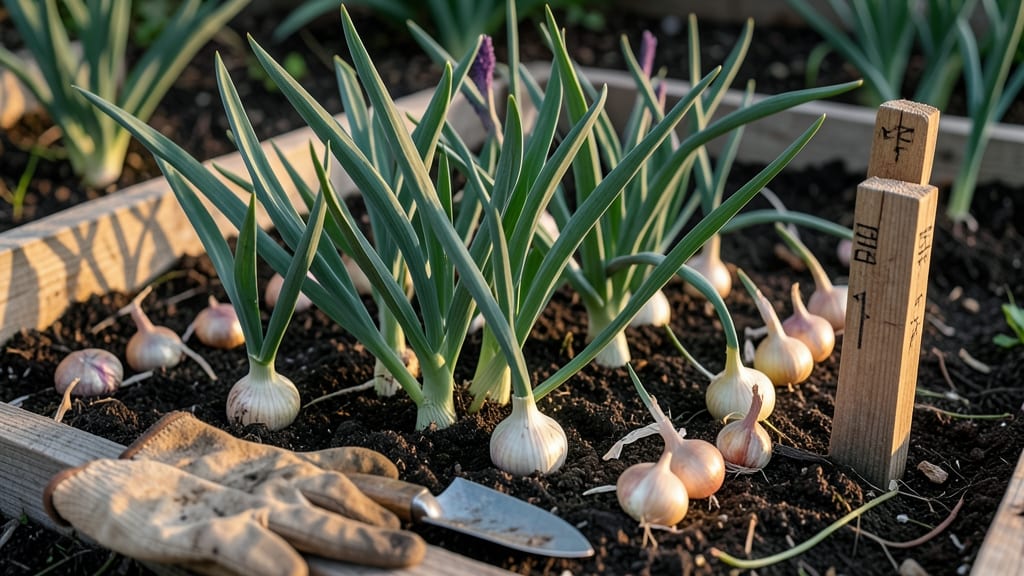
Spacing garlic in your garden correctly is the one factor that determines whether you harvest plump bulbs or puny, split cloves next summer.
Picture this: you’ve prepped the soil, chosen the right variety, and planted your cloves with high hopes—only to find stunted growth and poor yields. The culprit? Too much competition for nutrients or airflow.
Whether you’re growing hardneck or softneck 🧄, the distance between cloves and rows isn’t just about fitting them in—it’s about maximizing bulb size and preventing disease.
In this guide, I’ll walk you through the exact spacing rules for your USDA Zone 6a garden, including how to adjust for different garlic types and common mistakes that sabotage your harvest.
You’ll learn why 4-6 inches between cloves isn’t just a suggestion, and how to fit more plants without sacrificing quality.
By the end, you’ll have a clear plan to space your garlic for the best possible yield—no guesswork, just science-backed results. Let’s get started.
Optimal garlic spacing by variety: hardneck vs softneck requirements
Garlic isn’t just one plant—it’s two distinct types with completely different spacing needs: hardneck and softneck varieties. I’ve learned the hard way that ignoring these differences leads to crowded, underdeveloped bulbs. Hardnecks like rocker and artichoke garlic need more elbow room than softnecks like silverskin or creole.
The reason? Hardnecks produce scape stalks that require extra space to grow upright without competing for sunlight.
For hardneck garlic, I recommend spacing cloves 4-6 inches apart in rows that are 12-18 inches apart. This gives their scapes room to develop while allowing bulbs to swell properly.
In warmer climates (USDA zones 7-10), you can reduce spacing slightly to 3-4 inches between cloves, but never less—crowding invites fungal diseases like white rot.
Softneck varieties, on the other hand, are more forgiving. They don’t produce scapes, so you can plant them closer together—typically 3-4 inches apart—with rows 10-12 inches apart.
This works perfectly for small gardens or container growing, where space is limited. The trade-off? Softnecks often yield slightly smaller bulbs compared to hardnecks when given the same space.
Here’s a critical tip: Bulb size matters. Large cloves (1.5+ inches in diameter) need 6+ inches apart, while small cloves (<1 inch) can handle 2-3 inches apart.
I’ve seen gardeners plant oversized cloves too close together, leading to stunted growth and poor yields. Always adjust spacing based on the clove size you’re starting with.
| Variety | Clove Spacing | Row Spacing | Climate Adjustment | Best For |
|---|---|---|---|---|
| Hardneck (Rocker, Artichoke) | 4-6" (3-4" in warm zones) | 12-18" | Reduce spacing in zones 7-10 | Cold climates, large bulbs |
| Softneck (Silverskin, Creole) | 3-4" (2-3" for small cloves) | 10-12" | No adjustment needed | Small gardens, containers |
| Elephant Garlic (Giant Softneck) | 6-8" (oversized cloves) | 18-24" | Always use max spacing | Large bulbs, long storage |
Climate plays a surprising role in spacing adjustments. In cold regions (zones 3-6), I recommend the full 6-inch spacing for hardnecks to ensure bulbs have enough energy to overwinter. The extra space helps prevent soil-borne diseases that thrive in damp, crowded conditions.
Meanwhile, in warm climates, where garlic grows more aggressively, you can safely reduce spacing by 25-30%—but never below 3 inches.
One mistake I see often is treating all garlic the same. Elephant garlic, for example, needs double the spacing of regular varieties because its cloves are massive. I’ve planted them too close, and the results were tiny, deformed bulbs.
If you’re growing elephant garlic, give it 6-8 inches between cloves and 18-24 inches between rows—it’s worth the extra space for those giant, flavorful bulbs.
Proper spacing also improves air circulation, which is critical for preventing botrytis leaf blight and rust diseases. I’ve found that well-spaced garlic plants dry out more quickly after rain, reducing the risk of fungal infections.
In my urban garden, I use raised beds with 12-inch row spacing to maximize airflow while still fitting multiple rows in a small footprint.
For container growing, where space is ultra-limited, I recommend using 5-gallon buckets with 3-4 garlic cloves per container. Place them in a triangle pattern (not a straight line) to maximize root spread.
This works best for softneck varieties, which tolerate closer quarters. Hardnecks in containers often struggle with scape development if crowded.
Remember: Spacing affects bulb size, not just yield. Tightly packed garlic may produce more small bulbs, while properly spaced plants develop plump, high-quality cloves perfect for braiding or long-term storage.
Next time you plan your garlic patch, grab a tape measure and mark your rows—your future harvest will thank you!
Common garlic spacing mistakes and how to fix them
Even experienced gardeners sometimes make critical garlic spacing errors that sabotage harvests. I’ve seen stunted bulbs and disease-prone plants from simple spacing oversights. The good news? Most issues have quick fixes. Let’s diagnose the five most common mistakes and restore your garlic’s growth potential.
First, overcrowding is the silent yield killer. When cloves are planted too close (less than 4 inches apart), they compete aggressively for nutrients and water.
This leads to small, weak bulbs that store poorly. I once had a 50% yield drop from planting at 3 inches instead of 6 inches.
Second, ignoring soil type creates hidden spacing problems. Heavy clay soils compact easily, forcing roots to grow upward instead of downward. In these conditions, increase spacing to 6-8 inches between cloves to prevent root competition. Sandy soils, on the other hand, need closer spacing (4-5 inches) to retain moisture.
Third, planting depth mistakes directly affect spacing needs. Cloves planted too shallow (less than 2 inches) produce sparse foliage, while those buried too deep (over 3 inches) struggle to emerge. Both scenarios force plants to grow unevenly, creating uneven spacing as they mature.
⚠️ Garlic Spacing Emergency Check
If your garlic shows these signs:
- ✅ Yellowing leaves at base (nutrient starvation from crowding)
- ✅ Stunted growth (roots bound by competition)
- ✅ Fungal spots (poor air circulation from tight spacing)
- ✅ Uneven bulb sizes (inconsistent spacing)
Action: Thin immediately to 6-inch spacing and add compost to improve soil structure. For containers, reduce plants to 1 per 5-gallon pot.
Fourth, container crowding is a unique challenge. Many urban gardeners pack garlic into small pots, assuming they’ll "stretch out." But garlic needs at least 5 gallons of soil per plant to develop properly. In containers, use only 1 clove per pot and choose smaller varieties like 'Silverskin' for better results.
Finally, skipping row spacing adjustments wastes garden space. Rows should be 12-18 inches apart for hardneck varieties and 10-12 inches for softneck. I’ve seen gardeners plant rows just 6 inches apart, forcing them to either overcrowd plants or leave large gaps between rows.
To fix these issues, start with a spacing audit: Measure your current plant distances and compare them to the variety-specific guidelines. For hardnecks, aim for 6 inches between cloves and 12 inches between rows.
Softnecks can tolerate 4-5 inches between cloves but still need 10-inch rows. Add organic mulch to maintain even moisture and prevent soil compaction.