
How To
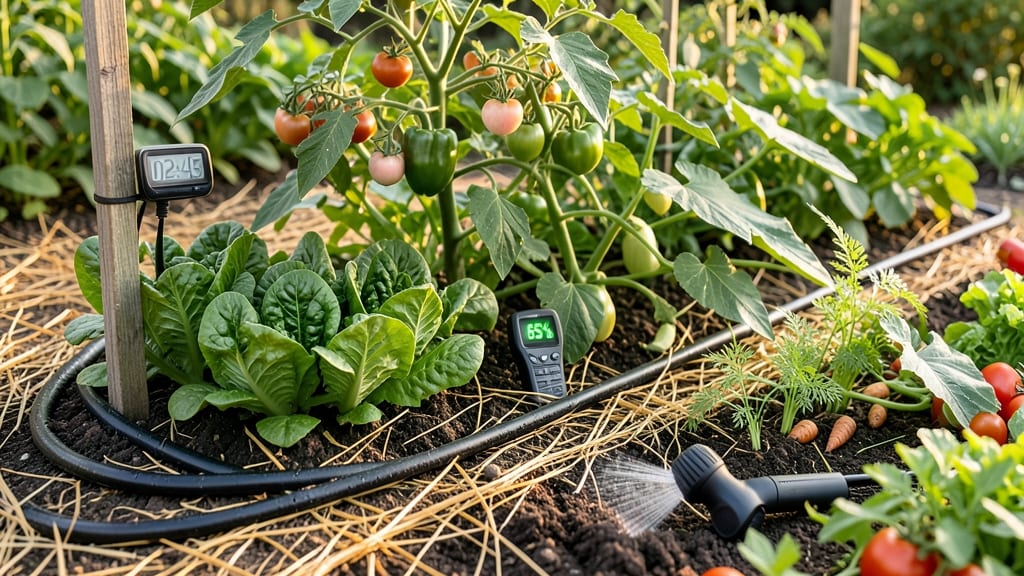
Leaving a soaker hose on your vegetable garden for 20 to 40 minutes at a time is the sweet spot for deep, efficient watering that keeps roots happy without drowning them.
Picture this: you’ve just planted your 🥬 vegetable garden in Zone 6a, and the soil is thirsty after a dry spell. Run the hose too short, and your seedlings wilt by noon.
Too long, and you’re wasting water while risking root rot. The key? Matching duration to soil type, plant needs, and weather—something most gardeners guess at instead of measuring.
Sandy soil drains fast, so 20 minutes might be enough, while clay holds moisture longer, often needing only 15 minutes. Root crops like carrots need deeper soaks, while leafy greens prefer shorter, frequent sessions.
Below, I break down the science so you can water like a pro—no more wasted gallons or stressed plants.
You’ll also discover how to split sessions for bigger gardens, spot overwatering before it’s too late, and tweak your schedule for spring showers or summer heat. Let’s turn your hose into a precision tool.
Optimal soaker hose duration by plant type and soil conditions
A soaker hose delivers water directly to the roots, but getting the duration right depends on your plant types and soil composition. Leafy greens like lettuce or spinach need frequent, shallow watering, while root crops like carrots or potatoes thrive with deeper, less frequent soaks.
The same hose settings won’t work for both—adjusting for soil drainage and climate is key to avoiding waste or underwatering.
Sandy soil drains too quickly, requiring shorter soaker hose sessions (15–30 minutes) to prevent runoff, while clay soil holds moisture longer, allowing 45–60 minutes of continuous watering. In arid climates, split sessions with mulch are ideal, whereas humid zones may only need 20–40 minutes to avoid fungal growth.
Let’s break down the science so you can water like a pro.
| Plant Type | Soil Type | Climate Zone | Soaker Hose Duration | Notes |
|---|---|---|---|---|
| Leafy Greens (lettuce, spinach, kale) | Sandy | Arid | 15–25 minutes | Split into 2 sessions; mulch heavily. |
| Leafy Greens (lettuce, spinach, kale) | Clay | Humid | 30–40 minutes | Water in morning to prevent fungal issues. |
| Root Crops (carrots, potatoes, beets) | Sandy | Arid | 30–45 minutes | Deep watering encourages root growth. |
| Root Crops (carrots, potatoes, beets) | Clay | Humid | 45–60 minutes | Avoid waterlogging; test soil moisture. |
| Fruiting Plants (tomatoes, peppers, cucumbers) | Sandy | Arid | 40–50 minutes | Focus on root zone; avoid wetting foliage. |
| Fruiting Plants (tomatoes, peppers, cucumbers) | Clay | Humid | 50–60 minutes | Ensure even water distribution. |
For leafy greens, shorter durations (15–40 minutes) prevent leaf scorch and fungal diseases like downy mildew. These plants have shallow roots, so frequent, light watering mimics natural rainfall.
In contrast, root crops like carrots or beets need deeper watering (30–60 minutes) to encourage root penetration. Overwatering here leads to forked roots or rot, while underwatering causes stunted growth.
Fruiting plants such as tomatoes or peppers fall in the middle, requiring 40–60 minutes of soaker hose time. Their deep root systems benefit from consistent moisture, but avoid wetting leaves to prevent blight. In arid climates, split your watering into two sessions—morning and late afternoon—to reduce evaporation and stress on plants. Always check soil moisture 2–3 inches down before watering again.
Soil type plays a huge role in absorption rates. Sandy soil drains water in minutes, so shorter sessions (15–30 minutes) are ideal, while clay soil can hold moisture for days, allowing longer soaks (45–60 minutes).
Test your soil’s drainage by digging a hole, filling it with water, and timing how long it takes to drain. Adjust your soaker hose duration based on this test—it’s the fastest way to dial in your watering routine.
Climate also dictates timing. In humid zones, water early in the day to let foliage dry quickly and prevent fungal growth. Aim for 30–50 minutes max, as excess moisture lingers in the air.
In arid regions, water deeply but split sessions to avoid runoff. Use a moisture meter to confirm soil is damp 6 inches down—this is your golden rule for efficient watering.
Pro tip: Mulch your vegetable garden with straw or wood chips to retain moisture and reduce evaporation. This lets you cut soaker hose time by 20–30%, saving water and effort. Pair mulching with a drip irrigation timer for hands-off precision.
For example, my tomato plants in clay soil now get 45 minutes every other day thanks to mulch—down from 60 minutes daily before.
Watch for signs of overwatering like yellowing leaves or soil crusting, or
How to adjust watering time for seasonal changes and plant growth stages
Seasonal shifts and plant growth stages demand flexible watering strategies—what works for seedlings in spring may drown mature tomatoes in summer. The key is adapting your soaker hose runtime to match your plants' thirst and environmental demands.
For example, young seedlings need frequent, shallow watering, while established root systems thrive with deep, infrequent soaks. Let’s break down how to fine-tune your watering schedule like a pro.
Temperature swings alone can double your water needs—think 90°F heat vs. 60°F spring mornings. Add wind exposure or clay soil, and your hose runtime might need a 50% boost.
Always check for wilting leaves (underwatering) or yellowing foliage (overwatering) before adjusting. Pro tip: Use a moisture meter to avoid guesswork and save gallons of water.
Don’t forget that soil type plays a huge role—sandy soil drains fast, while clay holds moisture longer. Test your soil’s absorption rate by digging a 6-inch hole, filling it with water, and timing how long it takes to drain.
Adjust your hose runtime accordingly. For instance, if water disappears in 10 minutes, extend your soaker hose session by 50% to ensure roots get hydrated.
Watch for seasonal cues like budding flowers (signaling increased water needs) or yellowing leaves (often a sign of overwatering in cooler months). My go-to trick is to bury a plastic bottle filled with water near the hose—if it’s empty after 24 hours, your plants need more.
This DIY moisture gauge costs nothing and saves gallons of wasted water.
Finally, mulch is your best friend—apply 2-3 inches of straw or wood chips to lock in moisture and keep soil temperatures stable. This can reduce your soaker hose runtime by 30% by minimizing evaporation.
Pair mulch with a drip irrigation timer, and you’ll have a low-maintenance, high-efficiency system that adapts to Mother Nature’s whims.