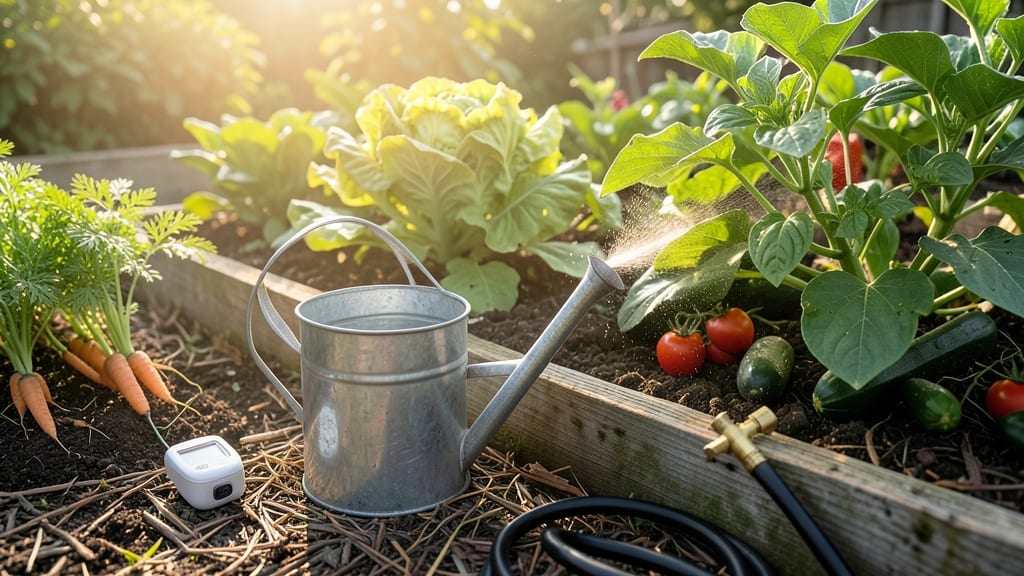
A vegetable garden needs 1 to 2 inches of water per week — deep, infrequent soaks that encourage strong roots and prevent waste.
Too much or too little water can turn your 🥬 thriving garden into a sad, wilted mess. I’ve seen it happen: one week of neglect, and suddenly your tomatoes are drooping like they’re auditioning for a drama club.
The key isn’t just how much you water, but when and how—and it changes with the season, soil type, and even what you’re growing.
Leafy greens like lettuce and spinach need consistent moisture, while root crops like carrots and potatoes prefer deeper, less frequent watering. Then there’s the heat of summer, when evaporation turns your garden into a desert faster than you can say “mulch.”
In this guide, I’ll break down the exact watering schedule for your favorite veggies, plus smart techniques like drip irrigation and mulching to keep your plants happy without wasting a drop. No more guesswork—just science-backed results.
💧
Frequency
Every 2-3 days (spring/fall), Daily (summer)
🥛
Amount
Deep soak (1-2 inches of water per week)
Deep watering schedule by vegetable type: how often to water different plants
Watering your vegetable garden isn't one-size-fits-all—each plant has unique needs based on its growth stage, soil type, and climate conditions. I’ve grown everything from thirsty tomatoes to drought-tolerant kale, and let me tell you: consistency is key.
Deep watering—soaking the soil 6-12 inches deep—encourages strong root systems, while shallow watering leads to weak, shallow roots that struggle in heat. But how often should you water? That depends on whether you’re battling drought or humid summers, and which vegetables are in your beds.
For example, leafy greens like lettuce and spinach need consistent moisture but can’t handle soggy soil, while root crops like carrots and potatoes prefer evenly moist (but not waterlogged) conditions.
Tomatoes, on the other hand, are heavy drinkers—especially when fruiting—and need 1-2 inches of water per week during peak summer. The key is adjusting your schedule based on weather patterns and soil drainage.
Sandy soil drains quickly, while clay holds moisture longer, so your watering frequency will shift depending on what you’re working with.
| Vegetable Type |
Watering Frequency (Summer) |
Watering Depth |
Adjustments for Drought |
Adjustments for Humidity |
| Tomatoes |
Every 2-3 days |
6-8 inches |
Water twice daily (morning/evening) |
Reduce to every 3-4 days |
| Peppers |
Every 2-3 days |
4-6 inches |
Mulch heavily to retain moisture |
Water early morning only |
| Leafy Greens (Lettuce, Spinach) |
Every 1-2 days |
2-3 inches |
Use shade cloth to reduce stress |
Water lightly daily |
| Root Crops (Carrots, Potatoes) |
Every 3-4 days |
4-6 inches |
Deep water every 2 days |
Reduce frequency to every 5 days |
| Cucumbers, Zucchini |
Every 2 days |
6-8 inches |
Use drip irrigation for consistency |
Water early morning only |
| Herbs (Basil, Parsley) |
Every 2-3 days |
3-4 inches |
Water at soil level (not leaves) |
Signs your vegetable garden is overwatered or underwatered (and how to fix it)
Your vegetable garden is the heart of your outdoor space, but getting the watering right can feel like walking a tightrope. Too much water drowns roots, while too little stunts growth—both can leave your tomatoes and peppers looking sad.
The key is learning to read your plants' signals before it's too late.
Start by checking the soil moisture with your finger. Stick it 1-2 inches deep—if it feels damp, hold off on watering. If it's bone-dry, your plants are thirsty. But visual cues are even more telling. Yellowing leaves or mushy stems scream "overwatered," while crispy edges or drooping foliage mean "underwatered."
⚠️
How Much Water Does a Vegetable Garden Need?
Most vegetables need 1-2 inches of water per week, delivered deeply (not just surface watering). Adjust based on soil type—sandy soil drains fast, while clay holds moisture longer. Morning watering prevents fungal diseases by letting foliage dry before nightfall.
Overwatering is sneaky—it often starts with yellow leaves that stay yellow even when you stop watering. Check the roots: if they’re brown and mushy, root rot has set in. Pull the plant gently—if it slides out easily, the soil is too soggy.
Fix it by improving drainage (add compost or perlite) and watering only when the top inch of soil is dry.
Underwatered plants show stress in other ways. Wilting leaves that don’t perk up after watering? That’s a classic sign. Leaf edges curl inward, and new growth stalls. For leafy greens like lettuce, this means bitter, tough leaves.
Dig deeper: if the soil is hard and cracked, your plants are begging for hydration. Water deeply at the base (not overhead) to encourage strong roots.
Mold or mildew on leaves? That’s your garden’s SOS for overwatering. Powdery mildew (white fuzzy spots) or gray mold (slime-like patches) thrive in damp conditions. Prune affected leaves immediately and space plants farther apart for better airflow.
A light application of neem oil can help, but fix the watering first—fungus won’t disappear without proper care.
Don’t guess—use a soil moisture meter ($10 at garden centers) to take the guesswork out. Stick it in the soil before watering; if it reads "dry," give your plants a drink. For containers, lift the pot—if it’s light, water it.
Mulch with straw or shredded leaves to lock in moisture and keep roots cool. With these tricks, you’ll spot problems early and keep your garden thriving.
★★★★★4.6(9 reviews)