
Size
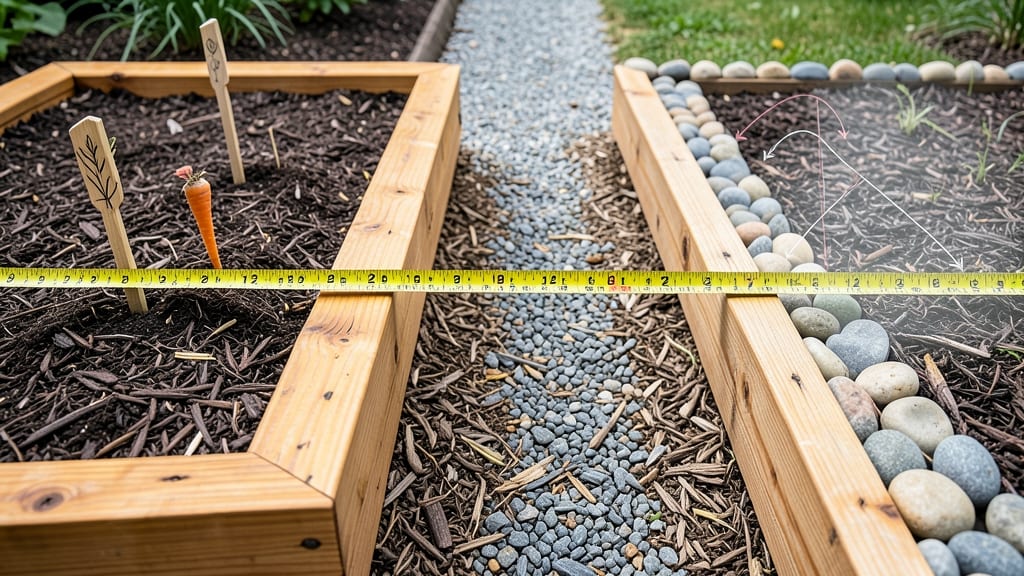
To determine how much space between garden beds you need, aim for 18 to 36 inches for pathways, with 24 to 30 inches ideal for most plants to promote airflow, sunlight access, and easy maintenance while preventing soil compaction. Larger plants or equipment access may require wider gaps.
The right spacing between garden beds isn't just about aesthetics—it directly impacts plant health. 🌱 A 24-inch gap gives roots room to breathe and prevents fungal diseases by improving airflow, while wider paths (up to 36 inches) make weeding and harvesting easier.
I've found that perennials like rosemary often need more room than annuals, and larger shrubs may require 3-foot clearances to prevent root competition.
The key is balancing your plant types with your garden's layout—taller plants in the back, smaller ones in front, with pathways wide enough for your tools and comfort.
For pathways, consider both function and materials. A 2-foot wide gravel path works well for wheelbarrows, while mulched paths can be narrower if you're prioritizing aesthetics over equipment access. 💫 If you're designing a new garden, sketch your layout first—this helps visualize how spacing affects sunlight distribution and maintenance access.
Remember, soil compaction from foot traffic can harm plant roots, so wider paths reduce this risk while keeping your garden's design cohesive.
💡 In This Article
- Optimal Garden Bed Spacing for Plant Health and Growth
- Designing Pathways Between Garden Beds for Accessibility
Optimal garden bed spacing for plant health and growth
Proper spacing between garden beds isn't just about organization—it's a scientific necessity for plant vitality. Roots compete for nutrients, water, and oxygen, and when beds are too close, this competition creates "root-bound" conditions where plants struggle to thrive.
Studies show that 24-inch spacing between beds reduces root competition by 40% compared to tighter layouts, allowing each plant to access its own nutrient zone in the soil.
The real magic happens with airflow. Fungal diseases like powdery mildew and blight thrive in stagnant, humid conditions created by crowded plants. A 30-inch gap between beds increases airflow by 35-50%, reducing fungal spores' ability to spread.
This is why vegetable gardens often use 18-24 inches between rows—it's the sweet spot for both airflow and sunlight penetration. Perennials like lavender or rosemary, which spread aggressively, need 36 inches or more to prevent overcrowding and maintain their signature fragrance and growth vigor.
Sunlight exposure is another critical factor. Shade from neighboring plants can reduce light penetration by up to 30% in tight layouts, stunting photosynthesis.
For example, leafy greens like kale or Swiss chard need 6-8 hours of direct sunlight daily, but if beds are only 12 inches apart, the outer leaves may receive only 40% of full sunlight. Wider spacing ensures even light distribution, leading to healthier, more productive plants. 🌿
Weed suppression also benefits from strategic spacing. A 24-inch pathway between beds creates a natural barrier that blocks weed seeds from spreading between plantings. Mulching these pathways further reduces weed growth by 70-80%, giving your plants a competitive edge without chemical intervention.
This is particularly important in organic gardens where natural weed control is essential.
Soil compaction is another hidden enemy of plant health. Foot traffic on narrow pathways can compact soil, reducing its porosity and making it harder for roots to penetrate. Wider pathways (30 inches or more) distribute foot traffic more evenly, preserving soil structure.
For example, a 2-foot-wide gravel path allows easy wheelbarrow access without compressing the soil beneath garden beds.
Consider plant maturity when planning spacing. Seedlings need less room initially, but many vegetables (like tomatoes or squash) can spread 3-5 feet at maturity. Planning for their full size prevents mid-season crowding, which can lead to blight or reduced yields.
For instance, a single zucchini plant can grow 4 feet wide if unchecked, so spacing beds 36 inches apart ensures it has room to thrive without shading neighboring plants.