
Light Requirements
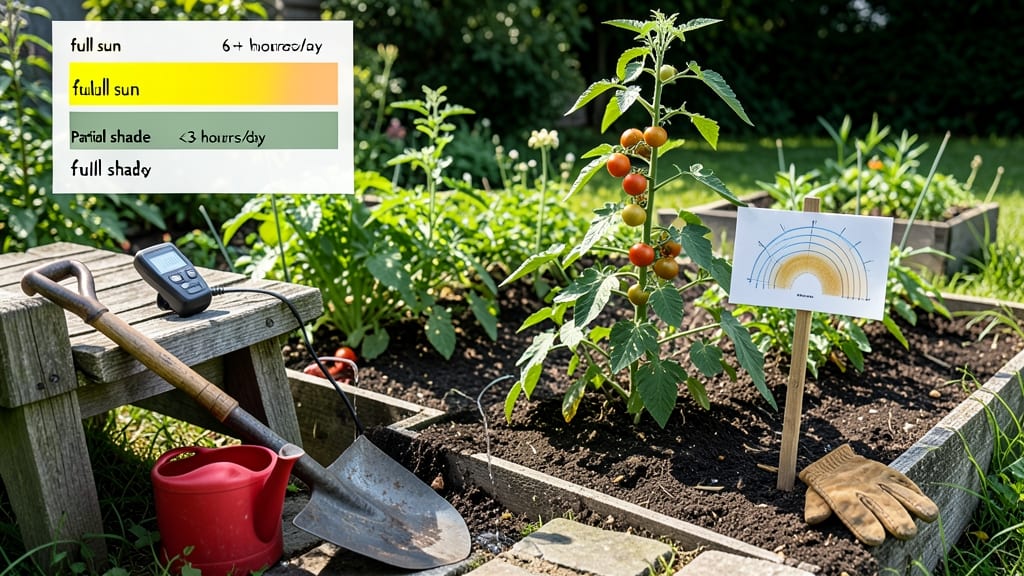
A vegetable garden needs 6 to 8 hours of sunlight daily to thrive, but many gardeners still guess wrong about placement—and end up with stunted plants or wasted space.
Picture this: your tomatoes are sprawling but fruitless, your lettuce bolts to seed by noon, and your carrots grow leggy instead of sweet. These aren’t just bad luck—they’re classic signs of sunlight mismatches that cost time, money, and patience.
Not all veggies demand the same light, though. Tomatoes and peppers crave full sun, while leafy greens and root crops can handle partial shade. Below, I break down the exact hours each plant needs, how to spot sunlight shortages, and clever tricks to stretch light in tricky spots.
You’ll learn how to map your garden’s sun patterns, fix common mistakes (like planting sun-lovers in shade), and even turn a shady corner into productive real estate—no guesswork required.

Sunlight requirements for vegetable gardens by plant type (full sun vs. partial shade)
Sunlight isn't just about making your plants grow—it directly impacts flavor, yield, and even disease resistance. Most vegetables fall into three categories based on their sunlight needs: full sun (6+ hours), partial sun (4-6 hours), or partial shade (less than 4 hours).
Understanding these distinctions helps you avoid common mistakes like planting tomatoes in the shade or struggling with leafy greens bolting too quickly.
For example, tomatoes and peppers thrive with 6-8 hours of direct sunlight daily, while lettuce and spinach can handle 3-4 hours and even tolerate dappled shade. Root crops like carrots and beets prefer partial sun to prevent them from becoming woody or bitter.
Let’s break down the exact needs for your most common garden vegetables and how to position them for success.
| Vegetable | Sunlight Needs | Growth Impact | Best Placement |
|---|---|---|---|
| Tomatoes, Peppers, Eggplants | 6-8 hours | Poor fruit set, weak stems | South-facing beds, trellises |
| Cucumbers, Zucchini, Squash | 6-8 hours | Reduced yields, bitter fruit | Full sun with afternoon shade |
| Carrots, Beets, Radishes | 4-6 hours | Woody texture, slow growth | East-west garden edges |
| Lettuce, Spinach, Kale | 3-4 hours | Bolting, bitter taste | North-facing or filtered shade |
| Green Onions, Swiss Chard | 3-5 hours | Leggy growth, poor flavor | Container gardens, patio spots |
Sunlight isn’t just about the quantity—it’s also about the quality. Morning sun (cooler and less intense) is ideal for leafy greens, while afternoon sun (warmer and brighter) benefits fruiting plants like tomatoes.
If your garden has areas with partial shade, opt for shade-tolerant varieties like 'Outredgeous' lettuce or 'Black Krim' tomatoes, which perform better in 4-6 hours of light.
Another key factor is seasonal sunlight shifts. In summer, days are longer, but afternoon shade can protect delicate leaves from scorching. In winter, even full-sun plants may need adjustments. Use reflective mulches or light-colored containers to bounce extra light onto shady spots during shorter days.
If you’re working with containers or raised beds, place them in the sunniest spots first, as they can overheat or dry out faster. For root crops, ensure they get enough light to prevent forked or stunted growth.
For example, carrots left in partial shade often develop uneven shapes or bitter flavors.
For herbs like basil and cilantro, 6+ hours of sun is non-negotiable—otherwise, they’ll bolt prematurely or lose their aromatic oils. Meanwhile, mint and parsley can thrive in 3-4 hours of light, making them perfect for shadier garden corners or container gardens on patios.
Pro tip: Use a sunlight tracker for a week to map your garden’s light patterns. Place a white piece of paper in different spots and mark the shaded areas every hour. This helps you visualize where to place sun-loving vs. shade-tolerant plants for the best results.
Even if your garden has limited sunlight, you can still grow vegetables by choosing the right varieties and using grow lights for seedlings. For
How to measure and adjust sunlight exposure in your garden for maximum growth
Understanding your garden's sunlight patterns is like having a secret weapon for growing thriving vegetables. Morning sun warms the soil, while afternoon sun fuels photosynthesis—both are essential for optimal growth.
Many gardeners assume all sun is equal, but the angle and intensity of sunlight change throughout the day, affecting everything from plant height to flavor development.
Before you start planting, take a moment to observe your garden's natural light conditions. Trees, fences, and buildings can cast unexpected shadows, creating microclimates that drastically alter sunlight exposure.
What might seem like a sunny spot in spring could become a shady nook by summer when leaves fill out. Partial shade plants like lettuce or spinach thrive in these areas, while sun-lovers like tomatoes will struggle.
⚠️ WARNING: Planting Sun-Lovers in Shade ⚠️ Did you know? Tomatoes, peppers, and cucumbers need 6-8 hours of direct sunlight daily to produce fruit. Planting them in areas receiving less than 4 hours will result in stunted growth, poor yields, and bitter flavors.
Even leafy greens like kale require 4-6 hours—any less and they’ll bolt prematurely. Use this rule of thumb: Full sun = 6+ hours, partial shade = 3-6 hours, shade = less than 3 hours.
To accurately measure your garden's sunlight, create a simple DIY sunlight tracker using a whiteboard or poster board and a ruler. Place it in your garden bed and mark the sun's position every hour.
Repeat this for a week to account for cloudy days and seasonal changes. You’ll quickly identify which areas get morning sun only, afternoon shade, or full-day exposure.
If your garden lacks sufficient sunlight, don’t despair—there are creative solutions! Reflective surfaces like white gravel or mirrors can bounce extra light onto shaded areas.
For vertical gardening, use trellises or wall-mounted planters to grow sun-loving plants upward, where they can access more light. Shade cloth (30-50% coverage) is perfect for protecting partial-sun plants from intense afternoon rays while still allowing enough light for growth.
Another trick is to rotate your crops seasonally. In early spring, when sunlight is less intense, plant heat-sensitive crops like peas or lettuce in sunnier spots. As summer arrives, move them to partial shade and replace them with tomatoes or peppers that thrive in the heat.
This dynamic planting strategy maximizes your garden’s potential year-round.
Finally, pay attention to the direction your garden faces. South-facing gardens in the Northern Hemisphere receive the most sunlight, while north-facing areas get the least. East-facing gardens get morning sun—ideal for cool-season crops—while west-facing gardens can become scorching hot in the afternoon.
Adjust your plant selection and watering schedule accordingly to keep your garden thriving.