
Watering
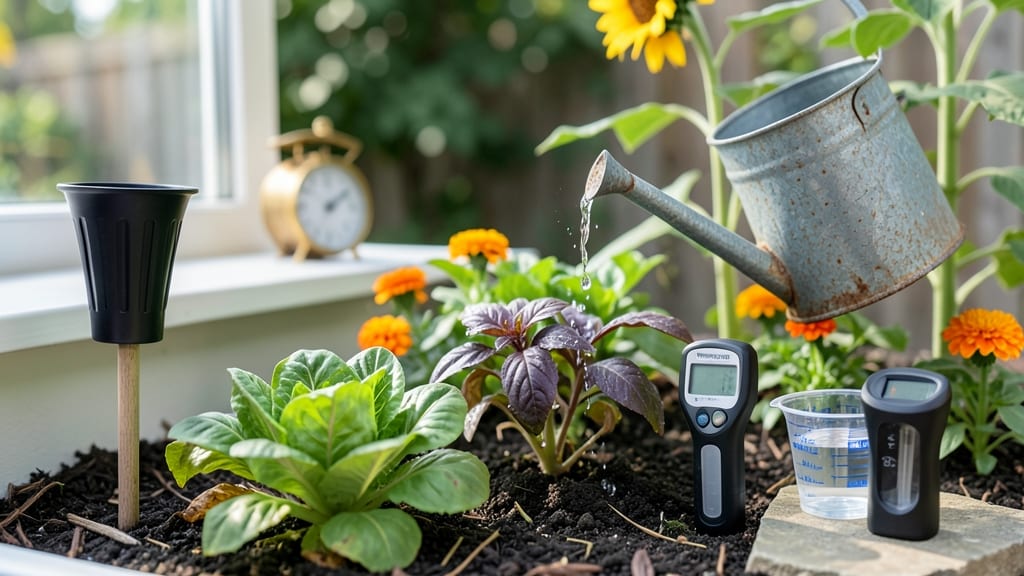
A garden needs about 1 to 2 inches of water per day—but that number changes faster than the weather in your area. 🌱
Ever water your plants religiously, only to watch them droop the next morning? Or maybe you’ve seen neighbors with lush gardens while yours struggles? The secret isn’t just how much you water—it’s when, how, and what your soil and plants actually need.
Too little, and roots starve; too much, and you’re drowning your greens (literally).
Science breaks it down: thirsty tomatoes crave 1-2 inches daily in summer, while drought-tolerant lavender survives on half an inch every 7 days. But throw in clay soil, a heatwave, or wind, and those numbers shift.
Below, I’ll walk you through the exact formula—plus 3 easy fixes to stop guessing and start growing like a pro.
You’ll learn how to read your soil, adjust for your climate, and water smarter, not harder. No more wasted gallons or wilted dreams—just a garden that thrives, no matter what Mother Nature throws at it.
Daily water requirements by plant type: a science-backed breakdown
Understanding your garden’s water needs starts with recognizing that not all plants drink the same. Science shows that evapotranspiration rates (ET) and root depth determine how much water plants consume daily.
For example, a tomato plant might need 1-2 inches of water per day in peak summer, while a succulent survives on less than 0.5 inches per week. Let’s break down the science behind these numbers and how to apply them to your garden.
Most gardeners overlook the fact that water needs change with growth stages. A young basil seedling requires 0.25 inches of water daily, but a mature plant needs 1 inch daily during flowering.
Even soil type plays a critical role—sandy soil drains quickly, while clay holds moisture longer. This means your watering schedule must adapt based on both plant and soil conditions.
Here’s the key takeaway: Deep watering encourages strong root systems, while shallow watering leads to weak, surface roots. For instance, leafy greens like lettuce need 0.5-1 inch of water daily but thrive with frequent, light watering. Meanwhile, deep-rooted plants like carrots prefer 1-1.5 inches every 2-3 days to reach maturity.
🌱
| Plant Type | Water Needs (Inches/Day) | Root Depth | Growth Stage Notes |
|---|---|---|---|
| Vegetables (Tomatoes, Peppers, Cucumbers) | 1-2 inches | 12-24 inches | Highest need during fruiting |
| Leafy Greens (Lettuce, Spinach, Kale) | 0.5-1 inch | 6-12 inches | Keep soil moist, not soggy |
| Herbs (Basil, Mint, Parsley) | 0.5-1 inch | 6-12 inches | Reduce watering in winter |
| Flowers (Roses, Petunias, Marigolds) | 0.75-1.5 inches | 12-24 inches | Deep watering encourages blooms |
| Succulents & Cacti (Aloe, Jade, Snake Plant) | <0.5 inches/week | Shallow roots | Water only when soil is dry |
| Trees & Shrubs (Young Fruit Trees, Lavender) | 1-3 inches (deep soak) | 24+ inches | Critical in first 2 years |
| Lawns (Cool-Season vs. Warm-Season) | 0.5-1.5 inches | Surface roots | Early morning watering best |
Let’s tackle a common misconception: more water isn’t always better. Overwatering can suffocate roots and lead to fungal diseases, while underwatering causes wilting and stunted growth. For example, herbs like rosemary despise soggy soil and may die if watered daily.
Instead, aim for consistent moisture—check soil 1-2 inches deep before watering. If it feels dry, it’s time to hydrate.
Climate also shifts the scale. In hot, dry regions, even drought-tolerant plants like lavender may need 1 inch of water every 2-3 days during peak summer. Conversely, in humid climates, fungal risks increase, so watering in the early morning reduces disease spread.
Always adjust based on weather forecasts—a week of 90°F heat will demand more water than a 70°F day.
For container gardens, the rules change entirely. Potted plants dry out faster due to limited soil volume. A basil plant in a 6-inch pot might need watering every 1-2 days in summer, while the same plant in the ground could go 3-4 days between waterings.
Always check the weight of the pot—if it feels light, it’s time to water.
💧
Pro tip: Use a moisture meter or the finger test to avoid guesswork. Stick your finger 1-2 inches into the soil—if it’s dry, water thoroughly. If it’s damp, wait another day. This method works for 90% of garden plants and saves water by preventing overhydration.
Pair this with mulching (2-3 inches of organic mulch) to retain moisture and reduce evaporation by up to 30%.
Finally, don’t forget that seasonal adjustments are non-negotiable. In spring and fall, most plants need 20-30% less water than in summer. Even evergreen trees, which seem indestructible, slow their water uptake in cooler months. By tailoring your watering to these cycles, you’ll see
How to calculate your garden’s exact water needs (Step-by-Step)
Calculating your garden’s water needs isn’t guesswork—it’s science! The evapotranspiration rate (ET) of your area, combined with soil type and plant density, determines how much water your garden truly needs.
For example, a sandy soil drains quickly, while clay soil holds moisture longer. Start by checking your local weather station data for ET rates, then adjust for your garden’s unique conditions.
Don’t have fancy tools? No problem! A simple finger test or moisture meter can reveal soil moisture levels. Stick your finger 1-2 inches deep—if it feels dry, it’s time to water. For precise measurements, a tensiometer (around $20) measures soil moisture tension, giving you exact data.
Even a rain gauge helps track natural water input, so you can avoid overwatering during rainy spells.
Step-by-Step Water Calculation for Your Garden
- 💧 Step 1: Determine ET Rate Find your local evapotranspiration rate (ET) from a weather service (e.g., 1/4 inch/day in dry climates, 1/8 inch/day in humid areas).
- 🌱 Step 2: Adjust for Soil Type
Multiply ET by soil adjustment factors:
- Sandy soil: ×1.2 (drains fast)
- Loamy soil: ×1.0 (ideal)
- Clay soil: ×0.8 (holds moisture)
- 🌿 Step 3: Factor in Plant Density For dense plantings, reduce water by 20% (shaded soil retains moisture). For sparse plantings, increase by 15% (more sun exposure).
- ☀️ Step 4: Add Climate Adjustments In drought conditions, increase water by 30%. In humid climates, reduce by 15%.
- 📏 Step 5: Calculate Total Water Multiply adjusted ET by your garden’s square footage. Example: 1/4 inch/day × 1.0 (loam) × 1.0 (medium density) = 1/4 inch/day for a 100 sqft garden = 2.5 gallons/day.
Once you’ve calculated your garden’s baseline needs, monitor plant stress signs. Drooping leaves or crispy edges mean you’re underwatering, while yellowing leaves or moldy soil signal overwatering. Mulch (2-3 inches) retains moisture and reduces evaporation, cutting water needs by up to 30%.
For container gardens, check soil moisture daily—pots dry out faster than in-ground beds.
In drought-prone areas, group plants with similar water needs (e.g., succulents with lavender) to simplify irrigation. Use drip irrigation or soaker hoses to deliver water directly to roots, minimizing waste. For humid climates, water early in the morning to reduce fungal diseases from prolonged leaf wetness.
Track your garden’s water usage for a month to refine your calculations. Adjust seasonally—spring and summer demand more water, while fall and winter needs drop. With this method, you’ll save water, reduce runoff, and keep your plants thriving without guesswork.