
Watering
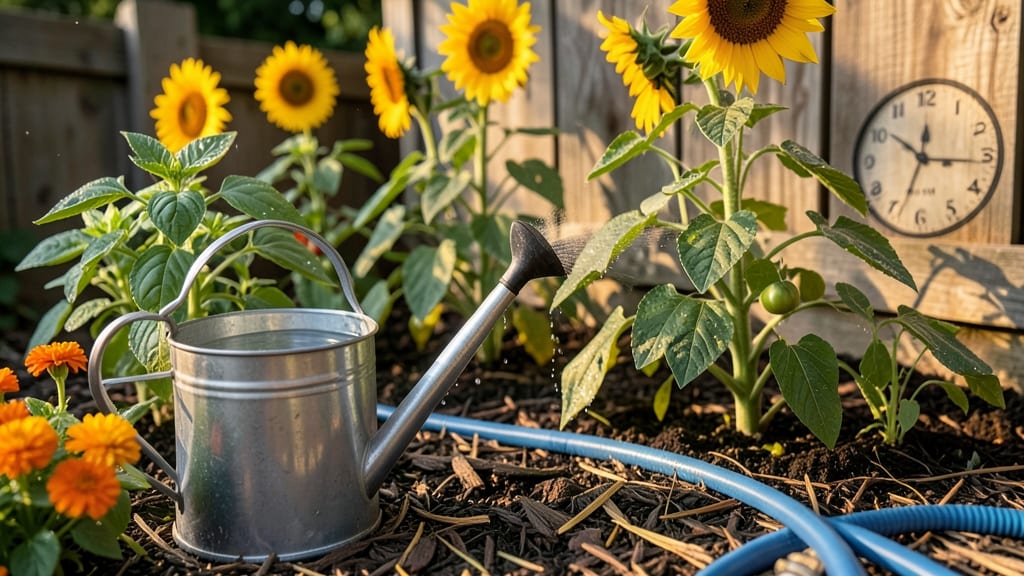
To water your garden in summer often enough to keep plants thriving without drowning them, you’ll need a schedule that adapts to heat, soil, and plant types.
Summer heat can turn your lush garden into a crispy disaster if you don’t water correctly—but guessing how often is a recipe for over- or underwatering. The secret lies in soil moisture, plant types, and climate cues—here’s how to master it.
Most garden plants 🌱 need 1-2 inches of water per week, but that changes when temperatures hit 90°F+ or your soil drains like a sieve. Vegetables like tomatoes and peppers may need daily watering, while drought-tolerant perennials can stretch their drinks to once a week.
Below, I’ll break down the 3-step soil check to avoid overwatering, adjust for heatwaves, and even save water without sacrificing your garden’s health.
How often to water different plants in summer heat
Summer heat transforms your garden into a high-stakes experiment—water too much and you drown roots, too little and plants wilt faster than a sunburned arm. The key?
Tailoring your watering schedule to each plant's needs while accounting for soil type and sunlight exposure. Vegetables like tomatoes crave daily hydration, while drought-tolerant succulents barely need a sip. Let's break down the science so you can water with confidence, not guesswork.
Your first move: group plants by their water needs. Thirsty plants (vegetables, annual flowers) demand frequent, deep watering, while drought-tolerant species (lavender, yucca) thrive on neglect. Soil type plays a huge role too—sandy soil drains fast, requiring more frequent watering, while clay holds moisture longer.
Even mulch depth (2-4 inches) can cut water needs by 30%. Master these variables, and your garden will stay lush, not limp.
Here’s the visual cheat sheet for summer watering—compare thirsty vs. drought-tolerant plants at a glance. Use this as your garden’s watering bible during heatwaves.
Now that you’ve got the plant-by-plant breakdown, let’s talk sunlight exposure.
A full-sun vegetable garden (6+ hours of sun) may need watering twice daily during heatwaves, while shade-loving ferns might only need a sip every 5–7 days. Morning watering is non-negotiable—it reduces evaporation and fungal diseases like powdery mildew.
If your hose can’t keep up, invest in a drip irrigation system; it delivers water directly to roots with 90% less waste than sprinklers.
Don’t overlook soil type—it’s the silent watering game-changer
The 3-Step soil check method to avoid overwatering
Summer watering feels like a guessing game—too much and you waste water, too little and your plants wilt. The key is checking your soil’s moisture level before reaching for the hose. My foolproof 3-step soil check eliminates guesswork by combining finger depth, soil weight, and color cues.
This method works for vegetables, flowers, and shrubs alike, and it’s free if you already have a trowel!
Most gardeners overwater because they rely on schedules instead of soil conditions. But summer heat dries soil faster—sometimes in just 24 hours. Instead of watering every morning, I check the soil first.
This simple habit saves water, prevents root rot, and keeps your plants thriving. Let’s break it down into three easy steps you can do in under a minute.
🌱 STEP-LIST: The 3-Step Soil Check Method
- Insert your finger 1-2 inches into the soil near the plant’s base.
- If the soil feels dry and crumbly, it’s time to water.
- If it’s slightly damp, wait 1-2 days before checking again.
- Grab a handful of soil and squeeze it gently.
- If it holds its shape, it’s too wet—wait before watering.
- If it crumbles easily, your plants need hydration.
- Check the soil’s color—dark brown or black means it’s moist.
- Light tan or white indicates dryness and signals it’s time to water.
- For sandy soil, check more frequently—it dries out faster!
For a more precise approach, I recommend a moisture meter (like the Garden Tutor model). These tools give instant readings and are perfect for container gardens or high-value plants like tomatoes.
If you’re on a budget, try a DIY wooden skewer test: Insert a skewer into the soil, then check for moisture when you pull it out.
Pro tip: Always water deeply in the morning to encourage root growth and reduce evaporation. Avoid evening watering—it promotes fungal diseases like powdery mildew. With this method, you’ll never overwater again, and your plants will reward you with healthier foliage and bigger blooms all summer long.
Remember, overwatering is just as harmful as underwatering. Trust your soil’s signals, and your garden will thank you with vibrant growth all season. 🌿