
Planting
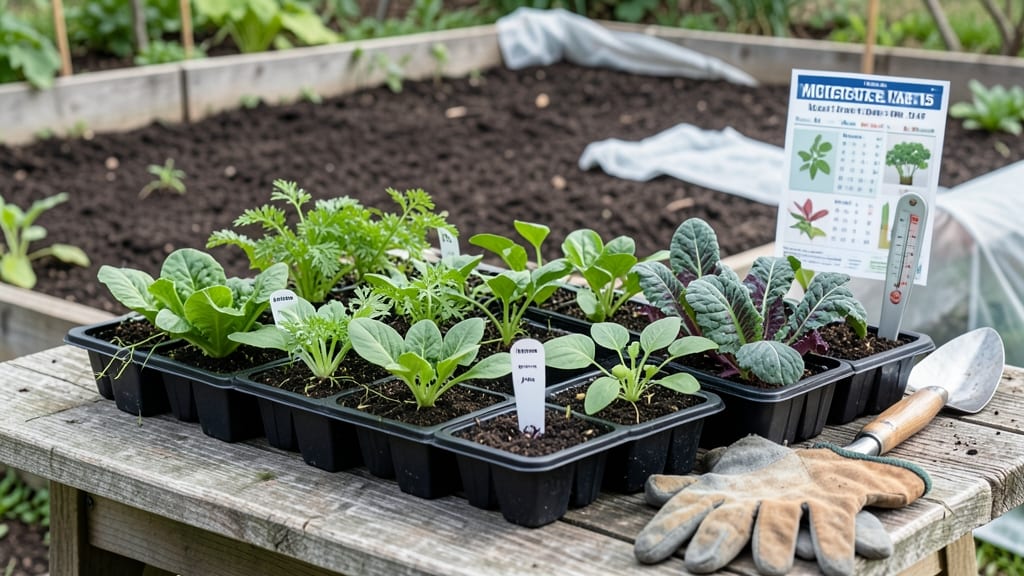
Planting your garden in Michigan at the right time is the difference between a bumper crop and a sad, frost-bitten disappointment.
Michigan’s short growing season demands precision—plant too early and risk frost, too late and miss peak harvests. Get your timing right with this zone-specific guide to maximize your garden’s potential.
Whether you’re in Zone 4 or 5, knowing when to start seeds indoors, when to transplant tender seedlings, and which crops thrive in Michigan’s unpredictable weather is the key to a thriving garden.
Here’s your breakdown of frost dates, ideal planting windows, and actionable deadlines for everything from tomatoes to cool-season greens—so you can enjoy fresh harvests all summer long.
Michigan planting deadlines by Zone 4 & 5 crop categories
Michigan’s USDA Zones 4 and 5 create distinct planting windows—Zone 4 (northern Michigan) has a shorter growing season (120-150 frost-free days), while Zone 5 (southern Michigan) enjoys 150-180 days.
Timing is critical: plant cool-season crops early to avoid bolting, and warm-season crops after the last frost to ensure heat tolerance. Let’s break down your planting deadlines by crop category.
First, mark your average last frost date: May 1-15 in Zone 4 and April 20-May 1 in Zone 5.
For warm-season crops like tomatoes and peppers, wait until 2 weeks after this date to avoid frost damage. Cool-season crops, such as spinach and peas, can handle light frosts and should go in 4-6 weeks before your last frost date.
Use this summary-table as your quick-reference guide for Michigan planting deadlines, organized by crop type and zone-specific windows. Adjust for your exact location using local weather data.
| Crop Category | Zone 4 Deadline | Zone 5 Deadline | Notes |
|---|---|---|---|
| Cool-Season Vegetables | April 15-May 1 (spring) / Aug 15-Sept 1 (fall) | April 1-April 15 (spring) / Aug 1-Sept 15 (fall) | Spinach, kale, peas, lettuce; direct sow or transplant. |
| Warm-Season Vegetables | May 15-June 1 (after last frost) | April 20-May 10 (after last frost) | Tomatoes, peppers, cucumbers, basil; start indoors 6-8 weeks before. |
| Herbs | April 15-May 1 (cold-hardy) / May 15-June 1 (tender) | April 1-April 15 (cold-hardy) / May 1-May 15 (tender) | Parsley, cilantro (cold-hardy); basil, oregano (tender). |
| Annual Flowers | May 1-June 1 (after frost) | April 15-May 1 (after frost) | Marigolds, zinnias, petunias; direct sow or transplant. |
| Perennial Flowers | April 15-May 1 (bare root) / May 15-June 1 (potted) | April 1-April 15 (bare root) / May 1-May 15 (potted) | Coneflowers, black-eyed Susans, daylilies; plant in early spring. |
For cool-season crops, prioritize early spring planting (as soon as soil is workable) to avoid bolting from
How to adjust planting times for Michigan’s unpredictable weather
Michigan’s variable frost dates and sudden heatwaves can turn a perfect planting schedule into a gamble. Even experienced gardeners in USDA Zones 4-6 need strategies to protect their crops. The key lies in flexibility—adjusting your timeline based on microclimates, seasonal extensions, and smart planting techniques.
Instead of rigid deadlines, think of your garden as a living calendar that shifts with the weather. Whether you’re dealing with a late April frost or an early June heatwave, these adjustments will help you maximize your harvest without losing your entire season to Mother Nature’s whims.
- 1
- 2
- 3
- 4
- 5
One of my favorite tricks is staggered planting for heat-sensitive crops like cucumbers. Start a batch in early June, then plant another 2 weeks later. If the first batch bolts from heat, you’ll still have fresh vines producing while the second batch matures.
Don’t overlook fall planting, either. Many gardeners focus only on spring, but cool-season crops like kale and spinach thrive in Michigan’s crisp autumn air. In fact, some varieties taste sweeter after a light frost! Just be sure to cover seedlings if a surprise early frost hits.
For Zone 4 gardeners, consider a cold frame or low tunnel to extend your season by 4-6 weeks. These simple structures create a mini greenhouse effect, letting you plant hardy greens in early April or harvest carrots into November.
Even a $20 hoop house can make a dramatic difference.
Remember: Michigan’s weather is unpredictable but manageable. By combining seasonal extensions, succession planting, and microclimate awareness, you’ll turn those late frosts and early heatwaves into opportunities—not obstacles. Your garden’s success depends on your adaptability, not just your calendar. 🌱