
Watering
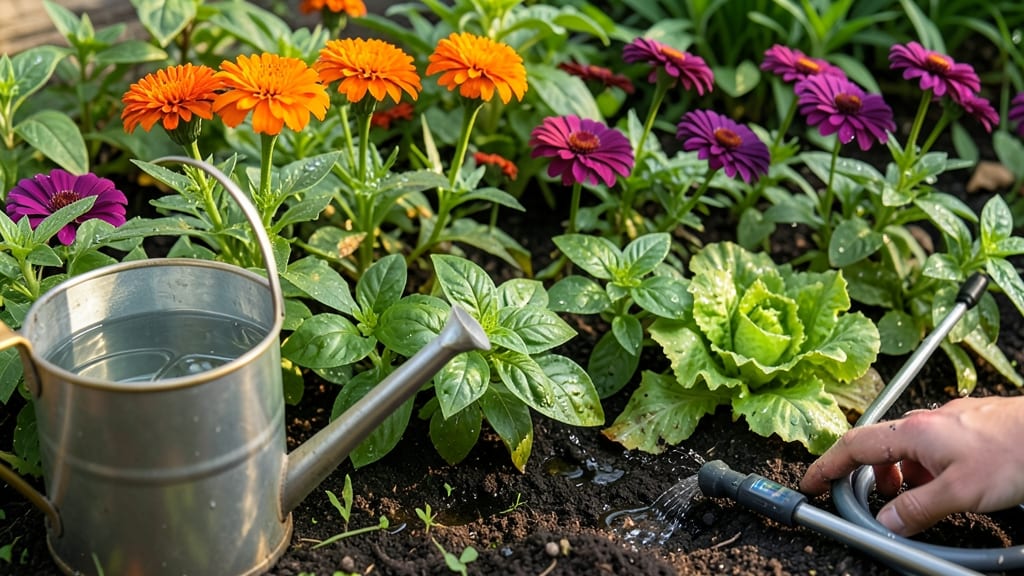
To water your garden the right way, you need a schedule that matches your plants, soil, and weather—not a one-size-fits-all rule.
Overwatering or underwatering your garden can kill your plants faster than pests or diseases—so why guess when you can follow a science-backed watering schedule?
Most gardeners don’t realize that soil type, plant variety, and seasonal shifts change how often you should water. A thirsty tomato plant in July needs far more than a drought-tolerant lavender in June, and clay soil holds moisture differently than sandy loam.
In this guide, I’ll break down the exact watering frequency for General Garden Plants 🌱 in USDA Zone 6a, plus how to adjust for rain, heatwaves, and container vs. in-ground gardens. No more dead zones—just lush, thriving plants that tell you when they’re happy.
Watering frequency by plant type: a gardener’s essential guide
Mastering your garden's watering schedule is like learning a plant's language—each type communicates its needs differently. Vegetables like tomatoes and peppers demand consistent moisture, while herbs such as rosemary thrive with less.
Flowers like lavender prefer drought conditions once established, while succulents practically scream at you if you overwater. Understanding these differences saves time, water, and keeps your garden thriving.
Your watering routine should revolve around two key factors: soil moisture levels and seasonal adjustments. Stick your finger 1-2 inches into the soil—if it feels dry, it's time to water.
In summer, you might water daily, while winter could stretch that to every two weeks. The key is adapting to both your plants and the weather, not following a rigid calendar.
Here’s a quick reference for common garden plants to help you dial in the perfect watering schedule:
For vegetables, deep watering is critical—especially for root crops like carrots and potatoes.
Aim for 1-2 inches of water per week, delivered directly to the soil (not the leaves) to prevent fungal diseases. Leafy greens like lettuce and spinach need consistent moisture, but avoid soggy soil, which leads to rot.
Mulching helps retain moisture and reduces evaporation, cutting your watering needs by up to 30%.
Herbs are a mixed bag—basil and cilantro love frequent watering, while rosemary and thyme prefer dry conditions. Overwatering herbs is a common mistake; always check the soil before watering.
If the top inch feels damp, wait another day. For potted herbs, water when the soil feels dry to the touch, as containers dry out much faster than in-ground soil.
Flowers like lavender and roses often get a bad rap for being high-maintenance, but they’re surprisingly low-water once established. Lavender, for example, thrives on neglect—water deeply but infrequently. Petunias, on the other hand, need consistent moisture to keep blooming.
The trick is matching your watering to the plant’s natural habitat; Mediterranean plants (like lavender) hate soggy roots, while tropical flowers (like hibiscus) crave humidity.
Succulents and cacti are the ultimate low-maintenance plants, but even they need a little love. Water them only when the soil is bone-dry, and always use well-draining soil to prevent root rot.
In winter, cut back to monthly watering—these plants go dormant and store water in their leaves. Overwatering is the #1 killer of succulents, so when in doubt, wait another week before watering.
Shrubs and bushes vary widely, but newly planted ones need weekly watering to establish roots. Once established, most shrubs tolerate drought better than overwatering. Hydrangeas, for example, love moisture but can’t handle waterlogged soil.
Always water at the base of the plant and avoid wetting the foliage to prevent mildew. For drought-tolerant shrubs like boxwoods, reduce watering in summer unless the soil is completely dry.
Seasonal adjustments are non-negotiable. In summer, you might water daily during heatwaves, while winter could stretch that to every two weeks. Pay attention to rainfall—if you’ve had 1 inch of rain, skip watering for a few days.
Use a rain gauge or tuna can to measure rainfall accurately. In spring and fall, aim for 1-1.5 inches per week, adjusting based on soil moisture and plant type.
Pro tip: Water in the early morning (before 10 AM) to reduce evaporation and fungal risks. If you must water in the evening, do it at least 3 hours before sunset to let foliage dry.
Invest in a soil moisture meter—it’s a game-changer for dialing in the perfect watering schedule without guesswork. With these guidelines, your garden will stay hydrated, healthy, and happy all season long.
Climate-specific watering rules: heat, rain, and drought adaptations
Your garden’s watering schedule isn’t one-size-fits-all—it’s a climate puzzle. In desert regions, plants like succulents thrive on weekly deep waterings, while tropical zones may need daily misting for delicate orchids.
Even temperate climates shift from spring showers to summer droughts. Let’s decode how to adapt your watering routine to match Mother Nature’s mood swings.
First, check your local climate zone. The USDA Plant Hardiness Zone Map is a great start, but microclimates (like shady spots or south-facing beds) add layers.
For example, a Zone 9 garden in Arizona might bake under 110°F summers, while a Zone 5 garden in Maine faces freezing nights and flash floods. Your watering strategy must evolve with these extremes.
- Desert Climates (e.g., Phoenix, Las Vegas): Water deeply 1-2x/week at dawn to prevent evaporation. Drip irrigation saves 30% more water than sprinklers.
- Tropical Climates (e.g., Hawaii, Florida): Light, daily misting for foliage plants; avoid soggy soil—use raised beds with drainage.
- Temperate Climates (e.g., Pacific Northwest): 1-2 inches/week total (rain + water). Use a rain gauge to track natural input.
- Mediterranean Climates (e.g., California): Winter dormancy = minimal water; summer drought = deep soaks every 5-7 days.
- Humid Regions (e.g., Southeast U.S.): Water early morning to reduce fungal diseases like powdery mildew. Mulch heavily to retain moisture.
Humidity plays a sneaky role too. In humid climates, like the Southeastern U.S., air moisture tricks you into thinking plants are hydrated—until root rot sets in. Always check soil moisture 2 inches deep with your finger.
If it’s damp, hold off. In arid zones, like New Mexico, water penetrates soil fast, so slow-release drip systems keep roots happy without waste.
Rainfall is another wild card. After a 1-inch downpour, most gardens don’t need water for 5-7 days. But sandy soil drains like a sieve—those plants may need a top-up in 24 hours.
Keep a watering journal to track rainfall vs. your garden’s thirst. Pro tip: Group thirsty plants (like tomatoes) near your downspout to harness free H₂O.
Seasonal shifts demand flexibility. Spring brings variable rainfall—water when soil feels dry 1 inch down. Summer heatwaves? Increase frequency but reduce water volume to encourage deep roots. Fall slows growth, so taper off to every 10-14 days.
Winter? Most gardens need 50% less water—unless you’re growing winter greens like kale, which stay thirsty.
Don’t forget container gardens—they dry out 3x faster than in-ground beds. In hot climates, check pots daily; in cool climates, every 3-4 days suffices.
For drought-prone areas, swap annuals for native perennials like yarrow or black-eyed Susans, which need half the water of imported plants.
Your garden’s watering rhythm is a living document—adjust as you learn. Start with these climate rules, then tweak based on plant feedback (wilted leaves? Yellowing? That’s your cue!). With practice, you’ll water like a pro, saving time, money, and your poor overwatered petunias.