
Advice
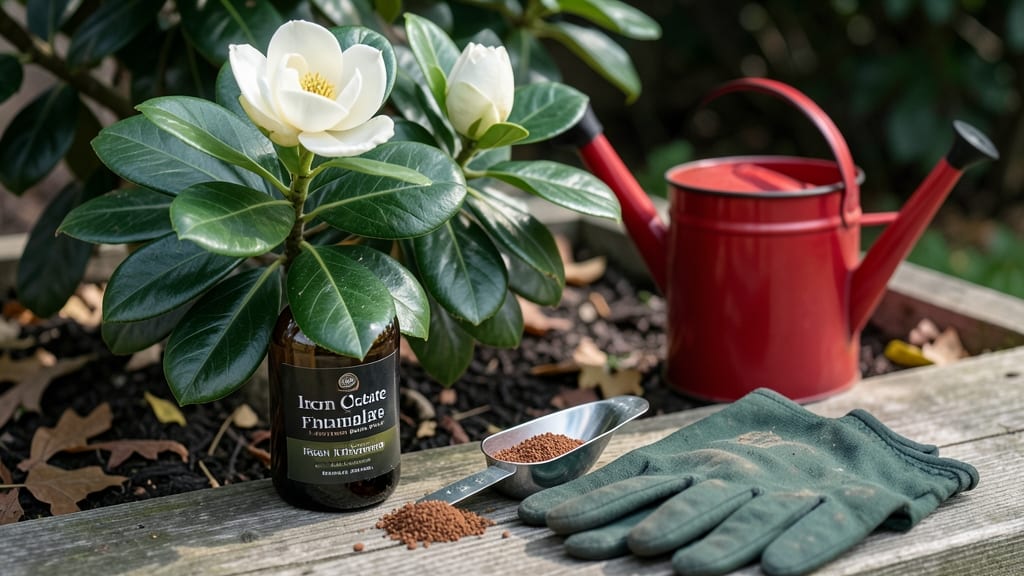
Giving your gardenias the iron they need can turn those sad yellow leaves into lush, fragrant 🌸 blooms in just 3 weeks—and the fix is easier than you’d think.
Struggling with yellowing gardenia leaves? Iron deficiency could be the silent killer of your prized plant—and the fix is simpler than you think. That creeping yellow between the veins isn’t just old age; it’s your gardenia screaming for help in soil that’s too alkaline or lacking the right nutrients.
Most gardeners in zones 9-11 overlook iron because they assume it’s a slow, complicated process. But with the right chelated iron supplement and a few tweaks to your soil, you can see dramatic improvements in weeks—not months.
Here’s exactly how to diagnose the problem, pick the best iron source for your gardenias, and revive them with a step-by-step plan that works even for beginners.
How to identify iron deficiency in gardenias and why it causes yellowing
If your gardenias are showing yellow leaves with green veins, you're likely dealing with iron chlorosis—a common but often misunderstood issue. This condition occurs when your plant can't absorb enough iron from the soil, despite iron being present.
Gardenias, being acid-loving plants, struggle in alkaline soils where iron becomes locked and unavailable. The result? Stunted growth, weak blooms, and those telltale yellow patches that start between the veins.
Iron deficiency isn't just about aesthetics—it directly impacts your gardenia's health. Without enough iron, the plant can't produce chlorophyll, the pigment responsible for photosynthesis. This leads to energy shortages, weakening the plant's immune system and making it more susceptible to pests and diseases.
The good news? Identifying the problem is the first step to a full recovery, and the fixes are often simpler than you'd expect.
Before diving into solutions, let's clarify what you're actually seeing. Iron deficiency often mimics other issues like nutrient deficiencies or even overwatering. That's why distinguishing between iron chlorosis and other problems is crucial.
For example, magnesium deficiency also causes yellowing, but it starts at the leaf edges and moves inward, while iron deficiency leaves the veins green. Paying attention to these details will help you target the right treatment.
Here's the key difference: iron deficiency yellows the leaf tissue between veins, leaving the veins themselves green. This pattern is called interveinal chlorosis and is a dead giveaway. Other symptoms include small, pale new leaves and a general lack of vigor.
If your gardenia's leaves are curling or dropping alongside the yellowing, it might also signal stress from improper watering or root damage. But if the veins stay green and the yellowing is widespread, iron deficiency is almost certainly the culprit.
🌱 Symptom Comparison: Iron Deficiency vs. Other Issues
| Symptom | Iron Deficiency | Magnesium Deficiency | Overwatering | Pests/Disease |
|---|---|---|---|---|
| Leaf Color | Yellow between veins, green veins | Yellow edges, progresses inward | Uniform yellowing, wilting | Spotted, discolored, or holes |
| New Growth | Pale, small leaves | Normal size, yellow edges | Stunted, drooping | Deformed or stunted |
| Root Health | Healthy but struggling to absorb iron | Healthy | Rotten, mushy | Damaged by pests or disease |
| Common Cause | Alkaline soil (pH >7) | Calcium/magnesium imbalance | Overwatered, poor drainage | Insects, fungi, or bacteria |
The root cause of iron deficiency in gardenias almost always boils down to one thing: alkaline soil. Gardenias thrive in acidic soil with a pH between 5.0 and 6.0.
When soil pH rises above 7.0, iron becomes insoluble and unavailable to plant roots, even if the soil contains plenty of it. This is why gardenias in calcareous or limestone-rich soils often develop chlorosis.
Other factors, like compacted soil or poor root aeration, can also hinder iron uptake, but pH is usually the primary culprit.
Iron uptake in gardenias is a fascinating process. Even when iron is present in the soil, roots can't absorb it directly unless it's in a soluble form. In acidic conditions, iron exists as Fe²⁺ (ferrous iron), which roots can easily take up.
But in alkaline soils, iron binds to other minerals and forms insoluble compounds, making it inaccessible. This is why simply adding iron fertilizer to alkaline soil won't solve the problem—you must first lower the pH to unlock the iron already present in the soil.
If you suspect iron deficiency, the first step is to test your soil's pH. You can use a simple home soil test kit (available at garden centers) or send a sample to a local extension service for a professional analysis.
Aim for a pH between 5.0 and 6.0 for optimal iron availability. If your soil tests above 7.0, you'll need to amend it with sulfur or peat moss to gradually lower the pH. This process takes time—
Best iron supplements for gardenias: chelated iron vs. Epsom salt vs. liquid fertilizers
If your gardenia leaves are turning yellow between the veins—classic iron deficiency—you need the right supplement to restore that lush green. The key lies in choosing between chelated iron, Epsom salt, or liquid fertilizers, each with unique benefits and drawbacks.
Let’s break down which works best for your acid-loving gardenia and how to apply them for fastest results.
Gardenias thrive in acidic soil (pH 5.0-6.0), where iron is readily available. But in alkaline soils, iron binds tightly and becomes unavailable—even if it’s present.
That’s why iron supplements must be water-soluble and pH-neutral to bypass soil chemistry barriers. The wrong choice can waste time and money, leaving your plant struggling.
Iron Supplement Comparison for Gardenias
- ✅ Fast absorption (organic bond)
- ✅ Works in alkaline soils
- ✅ Less risk of leaf burn
Best for: Severe deficiency, alkaline soils, or container plants.
- ✅ Cheap & accessible
- ✅ Boosts magnesium too
Best for: Mild deficiency or magnesium issues (not primary iron fix).
- ✅ Easy to apply (foliar or soil)
- ✅ Balanced nutrients
Best for: Preventative care or mild chlorosis.
- ❌ Expensive
- ❌ Overuse can cause toxicity
- ❌ Slow release (not for emergencies)
- ❌ Can raise soil pH over time
- ❌ Requires frequent reapplication
- ❌ Less concentrated than chelates
Chelated iron is my top recommendation for gardenias because it’s pre-bound to organic molecules, making it instantly available to roots—even in alkaline soils. Brands like Ironite or Sequestrene are formulated to bypass soil chemistry. For fastest results, mix 1 tsp per gallon of water and apply as a soil drench every 2 weeks until leaves regain color.
Epsom salt (magnesium sulfate) is a budget-friendly option, but it’s a secondary fix. While it provides magnesium (which aids iron uptake), it won’t replace iron directly. Use it as a supportive treatment: dissolve 1 tbsp in 1 gallon of water and water the soil monthly.
However, avoid overusing it—excess magnesium can raise soil pH, worsening iron deficiency long-term.
Liquid fertilizers with iron EDTA (like Miracle-Gro Iron Supplement) are great for preventative care or mild cases. They’re easy to apply—just follow the label for foliar sprays or soil drenches.
The advantage? They often include balanced nutrients, but the downside is they’re less concentrated than chelated iron, so you’ll need to reapply more often.
For foliar sprays, chelated iron or liquid fertilizers work best—just apply in the early morning to avoid leaf burn from sunlight. If using Epsom salt, stick to soil applications.
And remember: pH matters most. Test your soil—if it’s above 6.5, amend with sulfur or peat moss to lower pH before applying iron supplements.
Start with chelated iron for severe cases, then switch to liquid fertilizers for maintenance. Monitor your gardenia’s progress—healthy new growth should appear within 2-3 weeks. If yellowing persists, your soil pH may still be the culprit, and deeper amendments will be needed.