
Companion Plants
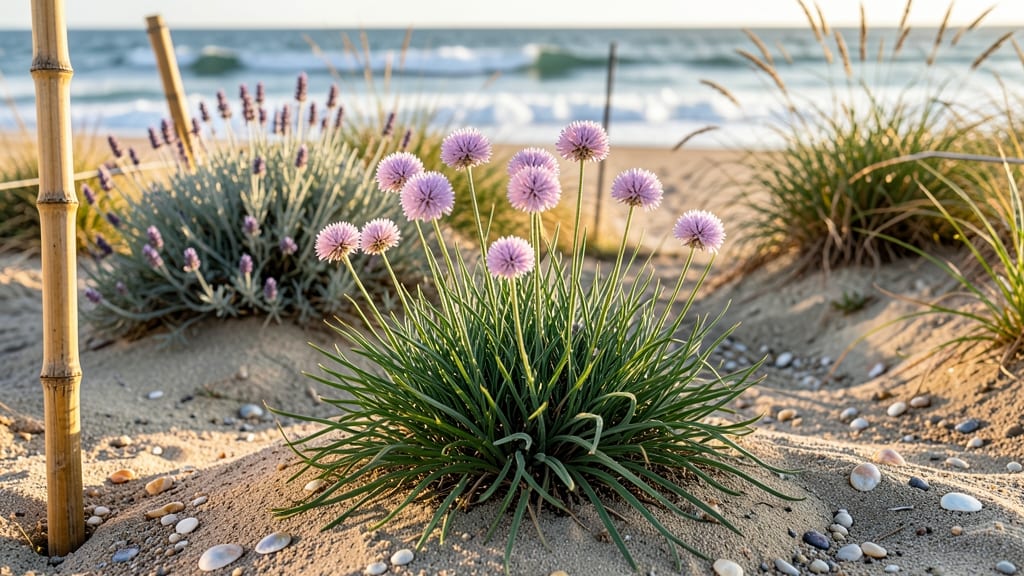
For seaside gardens, salt-tolerant plants like sea oats, beach grass, and saltmarsh cordgrass handle wind, salt spray, and sandy soil effortlessly. Add drought-resistant varieties such as yucca, rosemary, and lavender to boost both beauty and hardiness.
Creating a thriving seaside garden starts with selecting plants that naturally resist salt and sandy conditions. 🌊 The right species not only survive but often flourish in coastal environments, where most plants would struggle.
For instance, sea oats and beach grass stabilize dunes with their deep root systems, while yucca and rosemary thrive on minimal water, making them perfect for low-maintenance coastal landscaping. These plants have evolved unique adaptations like salt exclusion and thick, waxy leaves to protect against harsh elements.
Beyond their resilience, these coastal plants also offer aesthetic benefits. Lavender adds fragrant beauty, while saltmarsh cordgrass provides striking vertical interest. The key is matching plant types to specific zones—dunes need wind-resistant species, while borders can feature more ornamental varieties.
Many of these plants also attract pollinators, creating a vibrant ecosystem right by the shore.
💡 In This Article
- How Salt-Tolerant Plants Survive Coastal Challenges
- Best Salt-Resistant Plants by Garden Zone and Purpose
How salt-tolerant plants survive coastal challenges
Salt-tolerant plants have evolved sophisticated mechanisms to handle coastal conditions. One key adaptation is salt exclusion, where plants like sea oats filter out excess sodium chloride through specialized root cells called salt glands. These glands actively pump salt back into the soil, preventing buildup in plant tissues.
For example, saltmarsh cordgrass can maintain growth in soils with up to 30% salinity, while most garden plants wilt at just 5%. 🌊
Their deep root systems—often extending 3-5 feet—anchor plants in shifting sands while accessing moisture from deeper soil layers. This is why beach grass can thrive in dunes where surface soils dry out quickly.
Many also develop succulent leaves that store water, like yucca, which has thick, waxy foliage that reduces water loss by up to 70% compared to non-succulent plants.
Wind resistance is another critical adaptation. Plants like sea oats grow in dense clumps that reduce wind velocity near the ground, creating microclimates that protect roots.
Their flexible stems bend rather than break in storms, a trait shared by rosemary, whose woody stems can withstand 70 mph winds without damage. The waxy leaf coatings on many coastal species also repel salt spray, preventing leaf burn.
Soil drainage plays a surprising role too. Most coastal plants prefer sandy, well-draining soils that prevent salt accumulation around roots. For instance, lavender thrives in poor, rocky soils because its roots grow quickly to outpace salt buildup.
Meanwhile, plants like sea lavender (Armeria maritima) have developed osmotic adjustment, allowing them to maintain turgor pressure even when surrounded by high-salt conditions.
What's fascinating is how these adaptations work together. Take beach heather (Frankentia): its tiny leaves minimize surface area exposed to salt spray, while its shallow but widespread root system captures moisture from light rains.
This combination makes it ideal for rocky coastal borders where other plants would struggle. The result? A plant that not only survives but often becomes the dominant species in its harsh environment. 💫
Understanding these mechanisms helps gardeners replicate coastal conditions inland. For example, mixing sand and perlite into potting soil mimics natural drainage, while regular foliar rinses with fresh water can reduce salt buildup on ornamental plants.
The key is matching plant adaptations to your specific coastal challenges—whether it's wind, salt, or drought.