
Planting
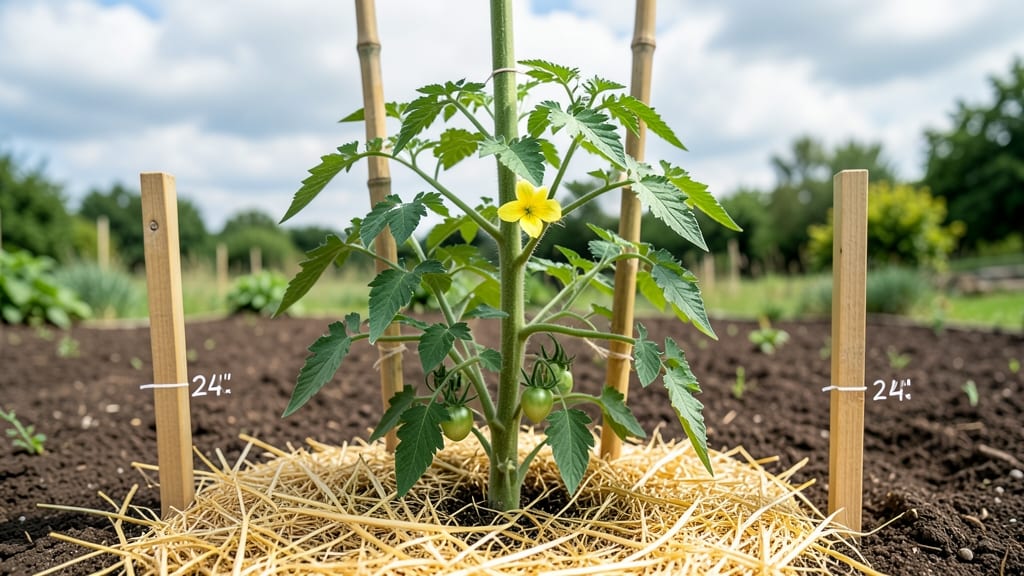
Proper tomato garden spacing is the difference between a thriving harvest and a garden full of blight-prone, stunted plants 🍅.
If you’ve ever watched your tomato plants crowd each other, only to see leaves yellow and fruit rot before it ripens, you’re not alone. The issue isn’t just soil or sunlight—it’s how much room each plant gets to breathe and grow.
Crowding traps moisture, invites disease, and steals sunlight from the most productive vines.
In this guide, I’ll break down the exact spacing you need for both determinate (bush) and indeterminate (vining) tomatoes, whether you’re working with a raised bed, containers, or a traditional row.
You’ll also learn how to tweak spacing for maximum airflow, companion plants that boost yields, and common mistakes that kill your harvest before it starts.
By the end, you’ll have a customizable layout that keeps your tomatoes healthy, productive, and free from the disease risks that come with poor spacing. Ready to turn your garden into a high-yielding tomato powerhouse?
Optimal tomato plant spacing by variety type for disease prevention
When I first started growing tomatoes, I lost half my plants to blight because they were packed too closely together. The problem wasn't just the soil or watering—it was the lack of airflow between plants.
Fungal diseases like early blight and late blight thrive in humid, stagnant conditions, and proper spacing is your first line of defense. The right distance between plants ensures sunlight reaches all foliage and air circulates freely, drying leaves faster after rain or morning dew.
Tomatoes come in two main growth types: indeterminate (vining, continuous producers) and determinate (bushy, set fruit all at once). Each requires different spacing to prevent disease and maximize yield.
For example, indeterminate varieties like 'Sungold' or 'Brandywine' need more room to sprawl vertically, while determinate types like 'Roma' or 'Celebrity' stay compact but still need adequate space for airflow. Ignoring these differences can turn your garden into a disease hotspot.
Here’s the key: Spacing isn’t one-size-fits-all. It depends on your tomato’s growth habit, your garden layout, and even your climate. In humid regions, you might need to increase spacing by 10-20% to improve airflow.
And if you’re using trellises or cages, spacing can be slightly tighter since vertical growth reduces ground-level congestion. Let’s break down the exact measurements you need for each type to keep your plants healthy and productive.
For indeterminate tomatoes, the 18–24 inch spacing between plants is critical because they grow continuously and can reach heights of 6–10 feet. Without enough room, lower leaves touch the soil, creating a breeding ground for soil-borne pathogens.
I’ve found that adding trellises or stakes allows me to reduce spacing slightly to 16–18 inches while still maintaining airflow, but only if I prune aggressively to keep the plant’s center open.
This technique works especially well for cherry tomato varieties, which produce smaller fruit and can tolerate closer spacing.
Determinate tomatoes, on the other hand, are bushier and set fruit all at once, so they need 24–36 inches of space to prevent branches from rubbing against each other. This friction can cause physical damage that opens doors for fungal infections.
In my 4x8 foot raised beds, I plant determinate tomatoes in a 3x3 grid (36 inches apart), leaving enough room for their foliage to spread without touching.
If you’re short on space, consider interplanting determinate tomatoes with shallow-rooted crops like basil or lettuce in the early season, then remove the companions once the tomatoes start fruiting.
One of the biggest mistakes I’ve seen (and made!) is assuming that more plants = more tomatoes. In reality, overcrowding reduces yield by up to 40% due to increased competition for nutrients and light.
I once planted Roma tomatoes 18 inches apart in a row, thinking they’d be fine, but by mid-summer, the center plants were wilting and yellowing from lack of airflow. After adjusting to 3
Creative tomato garden layouts to maximize space and productivity
If you’ve ever dreamed of a tomato harvest that rivals the grocery store but lack the space for traditional rows, don’t despair! The key to high-yield tomato gardens—even in tiny urban balconies or small backyard plots—lies in smart spacing strategies.
Whether you’re working with raised beds, containers, or square-foot gardening, strategic layouts can double your yield while keeping diseases at bay.
I’ve tested these layouts in my own 20-square-foot urban garden, and they’ve transformed my tomato production from a handful of fruits to bushels of ripe tomatoes—all while maintaining proper airflow and sunlight access.
The secret? Combining vertical growth, companion planting, and precision spacing tailored to your tomato varieties.
🌱 5 Space-Saving Tomato Layouts for Any Garden
-
1. Square-Foot Gardening Grid
Best for: Small raised beds or in-ground plots
Spacing: 1 tomato plant per square foot (12" x 12")
Why it works: Perfect for bush varieties like 'Patio' or 'Tiny Tim'. Use 1 plant per square and fill gaps with basil or lettuce for companion benefits. -
2. Trellis Tower System
Best for: Indeterminate varieties (e.g., 'Sungold', 'Brandywine')
Spacing: 18-24" apart in a 3-foot-wide row, plants trained vertically
Why it works: Saves 80% horizontal space while improving airflow. Use A-frame trellises for heavy varieties like beefsteaks. -
3. Container Stacking
Best for: Balconies or patios (5-gallon+ pots)
Spacing: 1 plant per 12-18" diameter pot (dwarf varieties)
Why it works: Cherry tomatoes thrive in stacked pots with succession planting every 2 weeks for continuous harvests. -
4. Companion Plant Hexagon
Best for: Disease-prone areas (e.g., humid climates)
Spacing: Tomatoes at hexagon centers (24" apart), surrounded by marigolds or onions
Why it works: Breaks up disease cycles while repelling pests naturally. Marigolds deter nematodes! -
5. Succession Planting Stagger
Best for: Extended harvests in small spaces
Spacing: Plant new seedlings every 2 weeks in the same spot (rotate varieties)
Why it works: Ensures continuous fruiting without overcrowding. Try early 'Stupice' (60 days) followed by late 'Black Krim' (85 days).
Pro Tip: Always prune suckers (side shoots) to direct energy to fruit, not foliage. This opens up the plant for better airflow—critical for blight prevention! ✂️
For raised beds, I swear by the "three sisters" method—planting 1 tomato, 1 basil, and 1 borage in a triangle. The basil repels flies, borage attracts pollinators, and the tomato’s shade protects the basil from bolting.
It’s a symbiotic dream team that fits perfectly in a 4’x8’ raised bed (about 16 plants total!).
In urban containers, prioritize dwarf or cherry varieties like 'Tumbling Tom' or 'Micro Tom'. These thrive in 5-gallon buckets with 1 plant per container, and you can hang them vertically to save even more space.
Just ensure each pot has drainage holes and support stakes—no one wants flopping tomatoes in a windy city patio! 🌿
Remember, airflow is non-negotiable. Crowded plants trap moisture, creating the perfect conditions for fungal diseases like early blight. If you’re short on space, trellises are your best friend—they lift plants off the ground, improve circulation, and make harvesting a breeze.
Plus, vertical gardens look stunning and maximize your sunlight exposure from all angles.
Start small, experiment with one layout this season, and watch your tomato game level up! Whether you’re a balcony gardener or a backyard warrior, these spacing hacks will turn your smallest plot into a high-yield powerhouse. Happy planting! 🍅