
Companion Plants
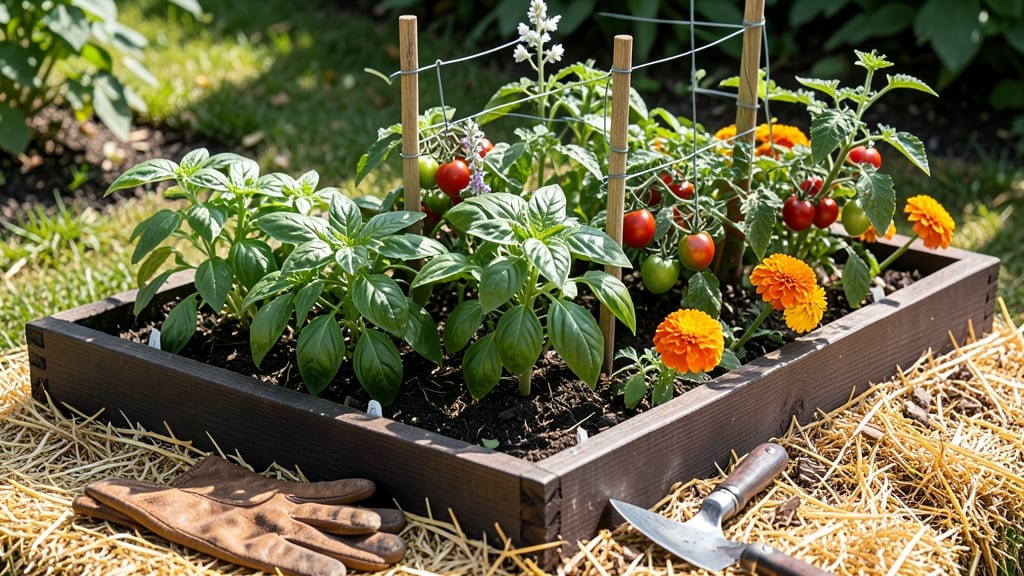
When planning what to plant together in garden beds, pair basil with tomatoes to enhance flavor and repel pests, while marigolds near vegetables deter aphids and nematodes. This strategic grouping creates healthier plants and reduces weeds organically through natural plant interactions.
Companion planting isn't just about aesthetics—it's a science-backed strategy that works by masking plant scents, confusing pests, and even attracting beneficial insects. 🌱 For example, the strong aroma of basil confuses tomato hornworms, while marigolds release compounds that repel nematodes.
I've seen gardens thrive with these pairings because they create a balanced ecosystem where plants support each other's growth.
Beyond pest control, some combinations improve soil quality by preventing nutrient competition. Carrots paired with onions, for instance, grow better because the onions deter carrot flies while the carrots break up compacted soil.
The key is understanding each plant's needs—sunlight, spacing, and water requirements all play critical roles in making these pairings successful.
💡 In This Article
- How Companion Planting Works: Science of Pest Deterrence and Growth Synergy
- Best Companion Plant Pairings for Vegetables, Herbs, and Flowers
How companion planting works: science of pest deterrence and growth synergy
The magic of companion planting begins with chemical communication between plants. Many species release volatile organic compounds (VOCs) through their leaves that mask the scents plants use to attract pests. For example, basil emits eugenol, a compound that confuses tomato hornworms by disrupting their ability to locate host plants.
This chemical camouflage works best when basil is planted within 1-2 feet of tomatoes, creating an invisible protective barrier 🌿.
Root exudates—natural secretions from plant roots—play another critical role. Marigolds, for instance, release α-terthienyl, a compound toxic to nematodes, while their bright flowers attract predatory wasps that hunt garden pests. Studies show marigolds can reduce nematode populations by up to 90% when planted near susceptible crops like cucumbers.
The key is timing: sow marigold seeds 4-6 weeks before transplanting vegetables to give their roots time to establish protective compounds.
Nutrient competition gets eliminated through strategic spacing. Carrots and onions grow better together because onions deter carrot flies while carrots' deep roots loosen soil, improving drainage for onions. This 3:1 ratio (3 carrots to 1 onion) prevents overcrowding while maximizing benefits.
The soil microbiome also thrives when diverse plants share space—legumes like peas fix nitrogen, benefiting heavy feeders like corn planted nearby.
Pollinator attraction is the final piece. Flowers like borage and alyssum planted near vegetables provide nectar for bees while repelling pests with their strong fragrances. The 30% increase in pollination rates observed in mixed gardens translates directly to higher yields for crops like squash and cucumbers.
Even herbs like dill act as pest traps, luring aphids away from more vulnerable plants.
Seasonal adjustments matter too. Cool-season crops like lettuce benefit from summer companions like radishes, which break up soil and deter pests. The 12-inch spacing between rows ensures both plants get adequate sunlight while maintaining the protective synergy. This layered approach mimics natural ecosystems where biodiversity creates resilience.
What most gardeners overlook is the soil temperature factor. Warm-season companions (like basil) planted too early may struggle in cold soils, while cool-season plants (like spinach) can bolt in hot conditions. Monitoring soil temps with a thermometer ensures optimal planting windows for each pairing.