
Planting
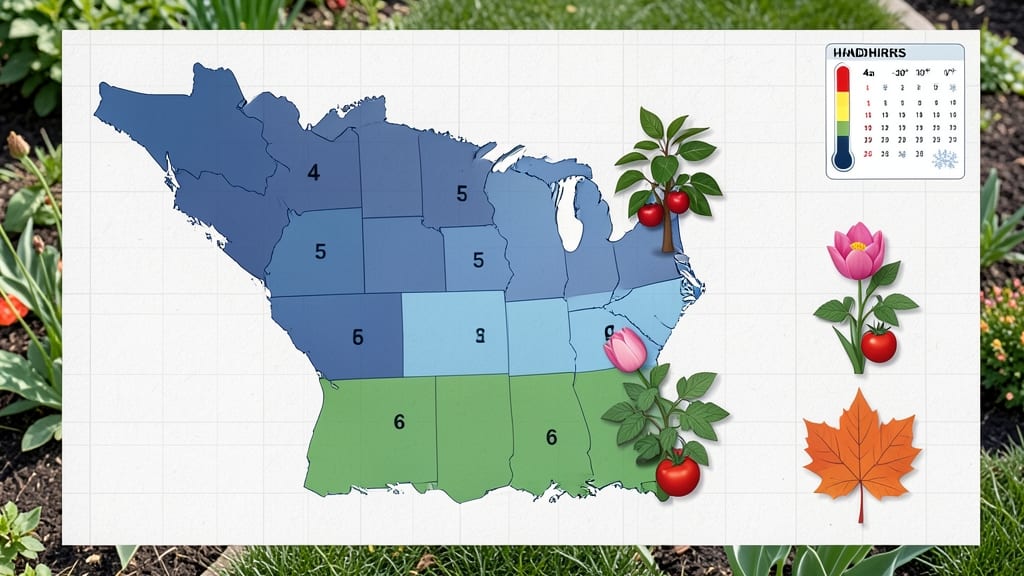
Michigan's gardening zones range from USDA Zone 4 in the Upper Peninsula to Zone 6 in southern regions, with most of the Lower Peninsula falling in Zones 5b–6a. These variations depend on local temperature patterns, elevation changes, and lake effects.
Understanding these zones helps gardeners choose plants that thrive in their specific area.
For example, Zone 4 in the Upper Peninsula (like Marquette) supports hearty perennials like coneflowers and black-eyed Susans, while Zone 6 areas (like Detroit) can handle tender varieties like roses and peonies. 🌿 The Great Lakes also create microclimates—coastal areas often experience milder winters due to lake-effect snow buffering temperatures.
Always check your county's specific zone for the most accurate planting advice, as even neighboring towns can differ by a full zone!
Pro tip: Use the USDA Interactive Plant Hardiness Map to pinpoint your exact zone. This tool accounts for historical temperature data and helps avoid costly mistakes when selecting cold-hardy plants or tender annuals. 💫
💡 In This Article
- Michigan’s Plant Hardiness Zones Explained
- Best Plants for Michigan’s Gardening Zones
Michigan’s plant hardiness zones explained
The USDA Plant Hardiness Zone Map divides Michigan into Zones 4 through 6 based on average annual minimum winter temperatures.
Zone 4, found in the Upper Peninsula, experiences the coldest winters with average lows of -30°F to -20°F, while Zone 6 in southern Michigan sees milder winters, averaging 0°F to 10°F. This 30°F difference dramatically impacts which plants can survive outdoors year-round. 🌡️
Lake effects create significant variations even within counties.
For example, Traverse City (Zone 5b) sits on Lake Michigan, where the water moderates temperatures, preventing extreme cold snaps that might otherwise push it into Zone 5a. Meanwhile, inland areas like Battle Creek (Zone 6a) experience slightly warmer winters due to less lake influence.
Elevation also plays a role—higher elevations in the northern Lower Peninsula (like Houghton) can drop into Zone 4a, while valleys in the southern Lower Peninsula stay in Zone 6.
What this means for gardeners is that a plant rated for Zone 5 might struggle in Zone 4 but thrive in Zone 6. For instance, Russian sage (perennial #1 for Zone 5-6) may not survive winters in Marquette (Zone 4a), while daylilies (Zone 3-9) would handle both areas.
The 10°F difference between zones translates to about 2-3 weeks of frost-free growing season per zone transition.
Microclimates add another layer—south-facing slopes in Zone 5 can be 5°F warmer than north-facing yards, while urban areas like Detroit (Zone 6a) often have 2-3°F warmer microclimates due to heat absorption from buildings and pavement.
This is why checking your exact ZIP code on the USDA map is critical before planting long-lived perennials or fruit trees.
Here’s how to interpret the zones practically:
- Zone 4 (Upper Peninsula): Focus on cold-hardy perennials like cranberries, wintergreen, and hardy shrubs such as potentilla
- Zone 5 (Northern Lower Peninsula): Ideal for apples, pears, and daylilies that need slightly milder winters
- Zone 6 (Southern Michigan): Supports roses, peonies, and tender perennials like lavender that struggle in colder zones
Pro tip: For accurate planting, use the USDA Interactive Map and cross-reference with your county extension office. They often provide localized zone adjustments based on recent weather data—critical for fruit trees or woody plants that take years to establish. 🌱