
Picking
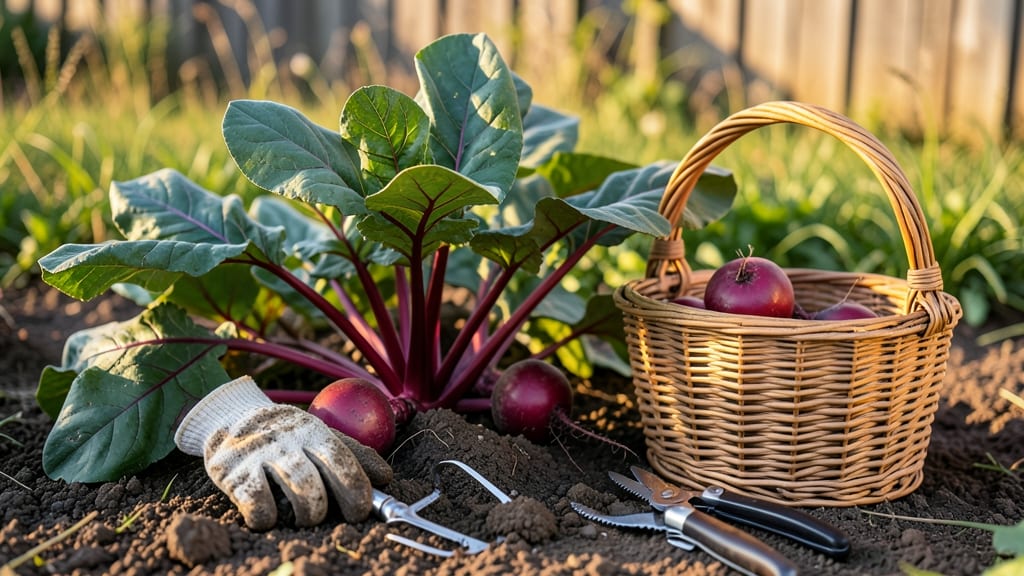
Picking beetroot from the garden at the right time turns earthy roots into sweet, tender treats—no guesswork needed.
Picture this: you’ve nurtured your 🍠 for weeks, watching them grow, only to pull one and find it still hard or bitter. That’s the moment you realize timing matters more than you thought.
Here’s the good news: with just three simple cues—root size, color depth, and leaf health—you’ll never second-guess harvest day again. I’ll walk you through each one, plus how to adjust for your local climate so your beets stay perfectly sweet from June through August.
Ready to go from "maybe next week?" to "perfectly ripe now"? Let’s dig in.


3 Visual and physical signs your beetroot is perfectly ripe
Harvesting beetroot too early means tough, underdeveloped roots, while waiting too long risks woody textures and less sweetness. The key is learning to read your plants' signals—leaf color, root size, and soil resistance—without digging up every root to check.
I’ve grown beets for years, and these three cues have saved me from countless bitter disappointments.
Start by examining the top foliage—healthy, vibrant leaves are a good sign, but watch for subtle changes that signal maturity. The roots themselves tell the most reliable story, though you don’t need to harvest them to know when they’re ready.
Even the soil can give you clues if you know what to look for. Let’s break down each visual and physical sign so you can confidently pick beets at their peak.
🌱 How to Tell When Beetroot Is Ready to Harvest
- 1 Leaf Color Changes: Look for outer leaves turning yellow while inner leaves stay green. This indicates the plant is redirecting energy to the root—your beet’s sweetness reservoir. Golden Detroit varieties often show this first, while Chioggia striped beets may retain more green but develop deeper color patterns.
- 2 Root Size Reaches 1–3 Inches: Gently brush away soil to check for roots between a golf ball and tennis ball size. Baby beets (like ‘Baby Keeper’) stay small—harvest when they’re 1 inch wide—while heirlooms can grow up to 3 inches before they toughen. Use your thumb as a guide: if the root fits snugly in your palm, it’s likely ready.
- 3 Soil Resistance Test: Gently grasp the beet through the soil and wiggle it. If it resists slightly (like pulling a carrot), it’s ready. If it slides out easily, it’s underripe. Overripe beets will feel hard and woody—a sign you’ve waited too long. Pro tip: Test a few in a patch to avoid disturbing the whole bed.
- 4 Sweetness Test (No Cutting Needed): Press your fingernail into the shoulder of the root (where the leaf meets the bulb). If it squeezes back slightly and feels firm, it’s sweet. A soft spot means it’s underripe; a hollow sound means it’s past its prime. This trick works best in warm soil (60–75°F), when sugars peak.
Don’t overlook the variety-specific clues—some beets, like the deep red ‘Boltardy’, develop a glossy sheen when ripe, while others, such as the golden ‘Albina Vereduna’, turn a rich amber hue.
Pay attention to your plant’s natural color progression, as this can vary even within the same family. For example, striped beets like ‘Chioggia’ may show darker rings as they mature.
Timing also depends on your climate zone. In cooler regions (like USDA Zone 5), beets may take 10–14 extra days to mature compared to warmer zones (Zone 8+). If your summer is short, opt for fast-maturing varieties like ‘Detroit Dark Red’ (50 days) or ‘Touchstone Gold’ (55 days).
In longer growing seasons, you can afford to wait for heirlooms like ‘Lutz Winter Keeper’ (80+ days), which sweeten more with time.
One common mistake is assuming all beets are ready at the same time. Baby beets (harvested at 1 inch) can be pulled as early as 30–40 days, while standard varieties need 50–70 days.
To avoid confusion, I plant a mix of varieties with staggered sowing dates—this ensures a continuous harvest and lets me enjoy beets at their sweetest throughout the season. For example, I’ll sow ‘Baby Keeper’ in early spring and ‘Boltardy’ in late spring to extend my harvest window.
If you’re unsure whether your beets are ready, err on the side of harvesting sooner. Beets continue to develop flavor after picking, especially if stored in a cool, dark place (like a root cellar). Underripe beets will sweeten slightly over time, while overripe ones will only become tougher.
To test sweetness without committing to a full harvest, dig up one beet per variety and taste it raw—this gives you instant feedback to adjust your timing for the next batch.
Finally, avoid harvesting during extreme heat (above 85°F), as this can stress the plant and reduce sweetness. Early morning is the best time to pick, when the soil is cool and the beets are at their crispest.
After harvesting, trim the foliage to about 1 inch above the root to prevent moisture loss and store them in a perforated plastic bag in the fridge for up to 2 weeks.
With these signs in mind, you’ll never again guess whether your beets are ready—just watch, wait, and harvest with confidence!
How long does it take for beetroot to mature? (Timing by variety)
Knowing when beetroot is ready to harvest depends entirely on the variety you're growing. Baby beets mature in just 30-40 days, while heirloom types can take 80+ days to reach peak sweetness.
The key is understanding your specific variety's growth timeline to avoid bitter, woody roots or underripe, bland ones.
Climate plays a huge role too—cooler temperatures slow growth, while warm soil (60-70°F) speeds it up. In my Zone 6a garden, I've seen baby beets ready in 35 days during warm springs, but heirlooms need 90 days in cooler summers. Always check seed packets for variety-specific guidance.
🌱 Visual Cue: Baby beets (like 'Babybeat') should be 1-2 inches wide with vibrant color, while standard beets ('Detroit Dark Red') need 2.5-3 inches diameter. Heirlooms ('Chioggia') can grow larger but lose tenderness if left too long.
| Variety Type | Days to Harvest | Ideal Soil Temp | Peak Sweetness Window |
|---|---|---|---|
| Baby Beets | 30-40 days | 60-70°F | 1-2 inches diameter |
| Standard Beets | 50-70 days | 65-75°F | 2.5-3 inches diameter |
| Heirloom Beets | 80-90+ days | 60-70°F | 3-4 inches diameter |
For baby beets, I harvest when the roots are golf-ball sized—this ensures maximum tenderness. With standard varieties, I wait until the roots feel firm when gently squeezed (like a soft baseball). Heirlooms need patience; their intricate patterns develop fully only after 80 days.
Watch for leaf color changes too—healthy green leaves mean the beet is still growing. If outer leaves start yellowing, it's often a sign the root has reached maturity. In my experience, mornings after rain are the best time to harvest because the soil is moist but not waterlogged.
Pro tip: If you're unsure, dig up one beet from the outer row. Cut it open—if the center is deeply colored with no hollow core, it's ready. If it's pale or woody, wait a few more days. Timing is everything for that perfect earthy-sweet flavor! 🌿