
Planting
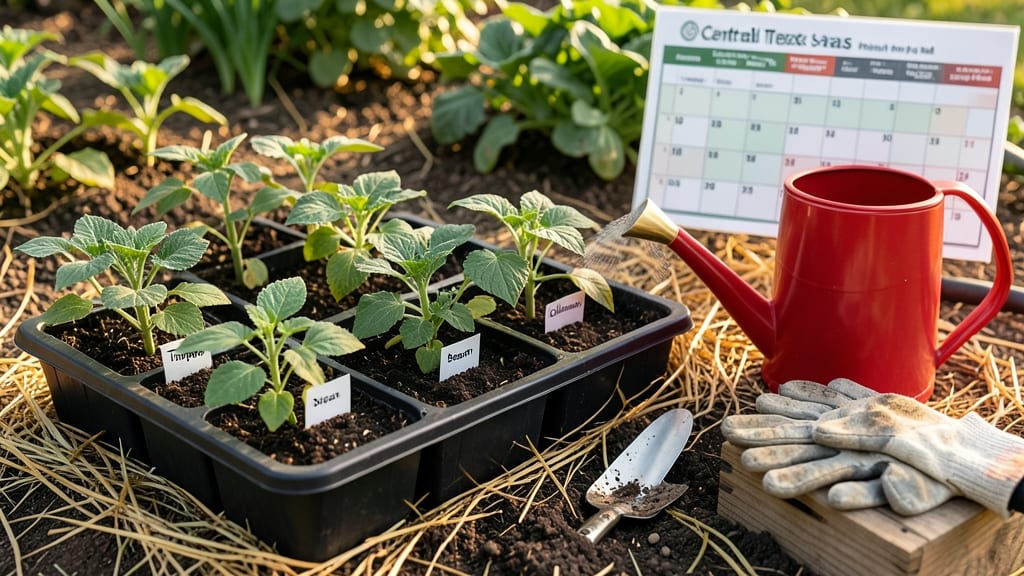
Planting a garden in Central Texas means timing it right to avoid frost and scorching heat—spring and fall are your best windows, with exact dates that vary by crop.
Central Texas gardeners know timing is everything—plant too early and risk frost, too late and miss peak harvests. But with the right schedule, you can grow a thriving garden year-round while avoiding the infamous Texas freezes.
The key is knowing when to start seeds indoors, when to transplant seedlings, and which crops thrive in the cooler months of March–April or September–November.
This guide breaks down the perfect planting calendar for Central Texas, tailored to your hardiness zone (8a-9a) and the unique microclimates of Austin, Waco, and San Antonio. Whether you're sowing heat-loving tomatoes or frost-tolerant kale, you’ll learn how to align your garden with nature’s rhythm—no guesswork, just zero-frost-risk harvests.
From adjusting for late frosts to maximizing fall harvests, you’ll discover the exact dates for every crop, plus pro tips for container gardening, row covers, and succession planting to stretch your growing season. Let’s get started!
Central Texas planting calendar: exact dates by crop type for zero-frost risk
Central Texas gardeners face a unique challenge: avoiding frost while maximizing growth in USDA Zones 8a-9a. The average last frost date is March 15, and the first frost typically arrives November 15. With 215 frost-free days, we can grow year-round—but timing is critical.
Plant too early and risk late frosts; too late and face scorching summer heat. This calendar aligns with Austin, Waco, and San Antonio’s microclimates for zero-frost risk.
Spring planting (March–May) is ideal for cool-season crops like lettuce and peas, while summer heat-lovers (okra, sweet potatoes) thrive when planted in June–July. Fall (September–October) offers the longest harvest windows for winter greens and root vegetables.
Below, I’ve broken down exact planting windows by crop type, including heat-sensitive and drought-tolerant options tailored to Central Texas.
For vegetables like tomatoes and peppers, I recommend planting transplants after April 15 to avoid soil-borne diseases from winter. Start seeds indoors in February for a head start. Okra and sweet potatoes, however, can handle summer’s brutal heat—plant them in June for a fall harvest.
Always check soil temperature (use a soil thermometer) before planting; 60°F+ is ideal for most vegetables.
Herbs like basil and cilantro are finicky in Central Texas. Basil thrives in spring and fall but bolts in summer’s heat, while cilantro prefers cooler temps. Rosemary and thyme, however, are drought-resistant perennials that flourish year-round with minimal care.
For flowers, marigolds and zinnias are heat-tolerant and attract pollinators, making them perfect for summer gardens.
Native and adapted plants like blackfoot daisy and lantana require almost no water once established, making them ideal for water-wise gardens. These plants also support local wildlife, including butterflies and bees.
If you’re new to gardening in Central Texas, start with easy-to-grow crops like bush beans, zucchini, and sunflowers, which forgive minor timing mistakes.
Pro tip: Use mulch (straw or wood chips) to retain soil moisture and regulate temperature. In August and September, mulch helps protect roots from heat stress while preparing the soil for fall planting.
For container gardening, choose heat-tolerant varieties like peppers, eggplants, and herbs—they thrive in pots with consistent moisture.
Remember, Central Texas
How to adjust planting dates for Central Texas’ unpredictable weather patterns
Central Texas’ weather is famously unpredictable—one week can bring freezing temperatures, while the next delivers 100-degree heatwaves. These swings make planting dates tricky, especially for heat-sensitive crops like tomatoes and peppers.
The key is flexibility: using soil temperature as your guide instead of a rigid calendar. I’ve learned to adjust planting dates based on real-time conditions rather than relying solely on average frost dates.
Start by checking your local frost-free date, which typically falls between March 15 and April 15 in Central Texas. However, late frosts can still occur, so I always have row covers or cold frames ready for early plantings.
For example, in Austin’s Zone 8a, I delay planting tomatoes until mid-April to avoid damage from late cold snaps. This extra caution has saved my garden from multiple frost-related losses over the years.
Here’s my proven system for adjusting planting dates based on Central Texas’ quirks:
- 1. Check soil temperature—Use a soil thermometer to confirm 60°F+ for warm-season crops like peppers and 50°F+ for cool-season crops. My tomatoes thrive when soil hits 70°F, even if air temps are cooler.
- 2. Calculate frost-free dates—Add 2–3 weeks to the average last frost date (March 15) to account for late cold snaps. For high-risk crops, I plant transplants instead of seeds to speed up growth.
- 3. Use container gardening—For heat-sensitive plants, I move containers to shaded areas during afternoon heatwaves (common in June–August). This gives me a 2–3 week extension for harvests.
- 4. Implement succession planting—Sow fast-growing crops like radishes or lettuce every 2 weeks to stagger harvests. This ensures a continuous supply even if one batch fails due to unexpected heat or drought.
- 5. Protect with row covers—Lightweight frost blankets can raise soil temps by 5–8°F, letting me plant broccoli or cabbage as early as February in sheltered beds.
- 6. Monitor rainfall patterns—Central Texas’ erratic rainfall can dry out soil quickly. I use drip irrigation on a timer to maintain moisture, especially during April showers followed by May droughts.
- 7. Choose heat-tolerant varieties—Opt for Texas-specific heirlooms like ‘Arkansas Traveler’ tomatoes or ‘Jalapeño M’ peppers, which handle 90°F+ temps better than standard varieties.
For tomatoes and peppers, my go-to method is succession planting in containers. I start seeds indoors in late February, then transplant hardened-off seedlings into pots on April 1.
If a heatwave hits, I move the containers to a shaded patio until temps drop. This strategy has given me harvests from June through October, even in Waco’s Zone 8b.
Don’t forget to mulch heavily to retain moisture and regulate soil temperature. I use straw mulch around basils and okra to keep roots cool during summer’s peak. This simple step has reduced my watering needs by 30% while protecting plants from temperature swings.
Always keep an eye on weather forecasts—a 10-day outlook can help you decide whether to rush or delay planting.
With these adjustments, you can beat Central Texas’ weather and enjoy a longer growing season without the stress. Start small with one high-risk crop, like tomatoes, and refine your timing each year. Before you know it, you’ll be harvesting homegrown peppers in October instead of waiting for spring! 🌱🌿