
Fertilization
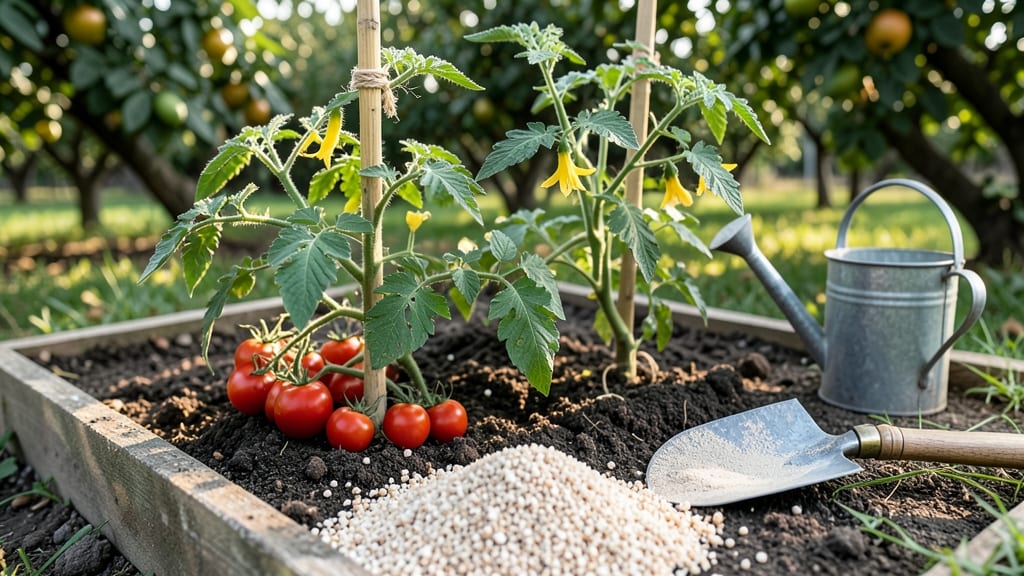
Garden tomatoes need calcium to prevent blossom-end rot, the unsightly brown scab that ruins fruit before it ripens.
If your 🍅 plants are developing those telltale sunken, rotten spots at the blossom end, calcium deficiency is likely the culprit—and the good news is, you can fix it fast with the right approach.
Calcium isn’t just about stopping rot—it strengthens cell walls, improves fruit firmness, and even boosts disease resistance. But most garden soils lack enough of it, especially after heavy rains or overwatering.
Below, I’ll show you how to diagnose the problem, the best organic and synthetic sources to use, and how to keep your tomatoes healthy all season long.
How to identify calcium deficiency in tomatoes and why it causes blossom end rot
When your tomato plants start showing dark, sunken spots at the blossom end, it’s a classic sign of calcium deficiency. This condition, known as blossom end rot, is one of the most common tomato diseases—but it’s not actually a disease.
It’s a nutritional disorder that happens when your plants can’t absorb enough calcium to support healthy fruit development.
Calcium is essential for cell wall structure in tomatoes. Without enough, the cells at the blossom end can’t form properly, leading to those rotten, leathery patches that ruin an otherwise perfect tomato.
The worst part? This issue often appears even when your plants look otherwise healthy, making it easy to overlook until it’s too late.
Here’s how to spot calcium deficiency symptoms early and understand why it happens so you can prevent it in future harvests.
| Symptom | Description | What It Looks Like |
|---|---|---|
| Blossom End Rot | Sunken, dark brown/black spots on the fruit’s blossom end | Leathery texture, may expand and turn mushy |
| New Growth Issues | Young leaves curl or develop brown edges | Crispy or brittle leaf margins |
| Stunted Fruit | Fruit fails to reach full size or develops cracked skin | Uneven ripening, blisters, or splits |
| Root Restriction | Plants struggle to absorb calcium due to compacted soil | Wilting despite adequate water |
The root causes of calcium deficiency in tomatoes are often environmental, not just a lack of calcium in the soil. One of the biggest triggers is inconsistent watering.
When your plants experience drought stress followed by sudden heavy watering, the roots can’t absorb calcium fast enough to keep up with the fruit’s demand. This is why blossom end rot is so common during hot, dry spells or when you’re new to gardening and watering irregularly.
Another major culprit is soil pH imbalance. Tomatoes thrive in slightly acidic to neutral soil (pH 6.0–6.8).
If your soil is too acidic (pH below 6.0) or too alkaline (pH above 7.0), your plants can’t access the calcium already present. Soil compaction or poor drainage also blocks root access to nutrients, even if calcium levels are adequate.
Temperature swings play a role too. Extreme heat or cold snaps can disrupt calcium uptake, especially during fruit set. If your tomatoes are flowering but the weather is unpredictable, calcium deficiency becomes more likely.
Even over-fertilizing with nitrogen can throw off the balance, making your plants prioritize leafy growth over fruit development.
To confirm calcium deficiency, check the soil pH and conduct a simple test. Dig a small hole near your tomato plants and mix a spoonful of soil with water. If the mixture smells sour or looks muddy, your soil may be too acidic.
You can also use a home soil test kit (available at garden centers) for a more accurate reading. If the pH is off, adjusting it with lime (to raise pH) or sulfur (to lower pH) can help your plants absorb calcium properly.
Once you’ve identified the issue, act fast. Remove any severely affected fruit to prevent the rot from spreading. Then, focus on improving calcium availability through soil amendments or foliar sprays.
The key is consistency—calcium moves slowly in plants, so you’ll need to address the root causes while giving your tomatoes time to recover. With the right approach, your next harvest can be blemish-free!
🌱
Best calcium sources for tomatoes: organic vs synthetic fixes compared
When your tomato plants show signs of blossom end rot, they're screaming for calcium. But not all calcium sources work the same—some act fast, others take time, and some are better for organic gardening.
Let me break down the best options, ranked by speed, cost, and compatibility with your garden goals.
First, the fastest fix is often calcium nitrate, a synthetic solution that dissolves quickly in water. It’s ideal when you spot rot developing and need immediate results. But if you prefer organic methods, crushed eggshells or gypsum are excellent long-term choices that won’t disrupt your garden’s natural balance.
| Source | Type | Speed of Action | Cost (Per Use) | Organic? | Application Method |
|---|---|---|---|---|---|
| Crushed Eggshells | Organic | Slow (3-4 weeks) | Free | Yes | Mix into soil or bake/grind for faster release |
| Gypsum (Calcium Sulfate) | Organic | Moderate (2-3 weeks) | $5-$10 per 50 lbs | Yes | Work into soil at planting or side-dress |
| Lime (Calcium Carbonate) | Organic (if OMRI-listed) | Slow (4-6 weeks) | $10-$20 per 50 lbs | Sometimes | Broadcast and till into soil |
| Calcium Nitrate | Synthetic | Fast (immediate) | $15-$25 per lb | No | Foliar spray or soil drench (1 tsp/gallon) |
For quick results, I recommend calcium nitrate as a foliar spray. Mix 1 teaspoon per gallon of water and apply directly to leaves when symptoms appear. It’s the only option that delivers calcium fast enough to stop rot from spreading overnight.
If you’re committed to organic gardening, gypsum is my top pick. It’s affordable, widely available, and improves soil structure while delivering calcium. Work 2-3 pounds per 100 square feet into the top 6 inches of soil at planting time for best results.
Don’t overlook crushed eggshells—they’re free and packed with calcium, but they take longer to break down. To speed things up, bake them at 200°F for 10 minutes to sterilize, then grind into a fine powder. Sprinkle around plants or mix into compost for gradual release.
For preventative care, combine methods: use gypsum at planting, side-dress with eggshells mid-season, and keep soil moisture consistent to avoid calcium uptake issues. A little planning now means fewer rotten tomatoes later!