
Light Requirements
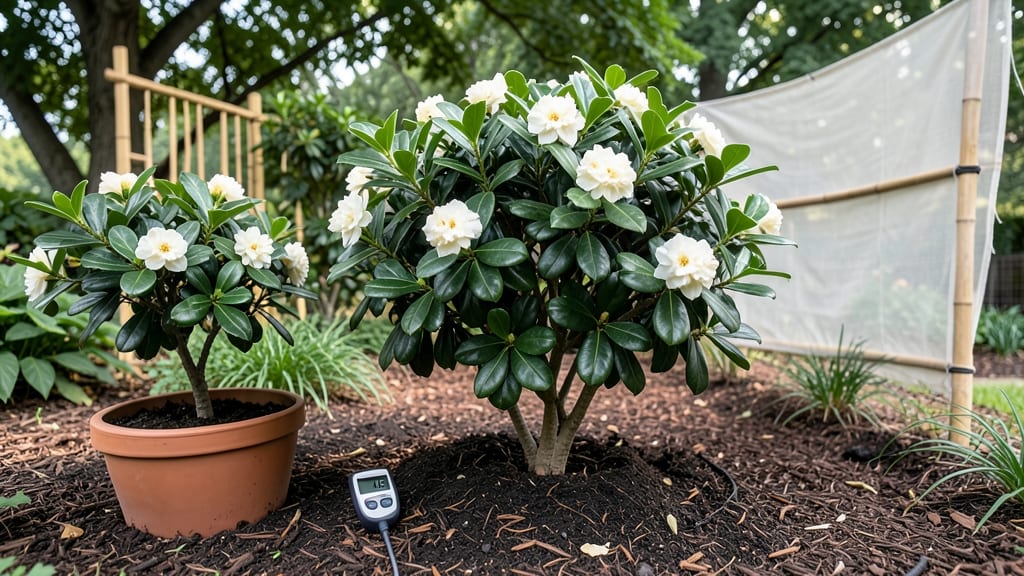
Gardenias can grow in shade, but they need the right balance of light and care to thrive and produce those signature fragrant blooms 🌸.
Struggling to grow gardenias in your shady yard? You’re not alone—many gardeners assume these fragrant favorites need full sun. But with the right approach, gardenias can thrive even in partial shade, producing lush foliage and intoxicating blooms.
The key is understanding how much shade your gardenia can actually handle. Too little light, and you’ll end up with sparse blooms and leggy growth. But too much direct sun can scorch the delicate leaves.
I’ll break down the ideal light conditions, how to spot signs of stress, and 5 proven strategies to keep your gardenia happy in shadier spots.
Whether you’re dealing with a north-facing yard or just a spot under tall trees, you’ll learn how to optimize soil, pruning, and even plant placement to turn your shade into a gardenia-friendly zone. Let’s get those blooms thriving!

How much shade can gardenias tolerate before struggling?
Gardenias are often labeled as sun-loving plants, but the truth is more nuanced. While they thrive best with 4-6 hours of bright, indirect sunlight, they can tolerate partial shade conditions—especially in hot climates where afternoon sun might scorch their delicate leaves.
The key is understanding the shade thresholds that trigger stress before your gardenia starts to suffer.
Most gardeners assume any shade is acceptable, but that’s not the case. Gardenias have photosynthesis limitations in deep shade, leading to stunted growth and fewer blooms.
The difference between light shade (dappled sunlight) and deep shade (minimal light) can mean the difference between a healthy, flowering shrub and a struggling, leggy plant.
Here’s the breakdown: Gardenias can handle up to 60% shade (or 4 hours of filtered light daily) without major issues, but anything beyond that risks chlorosis (yellowing leaves) and reduced flowering.
The ideal light spectrum for gardenias falls between 30-60% shade, where they can still produce fragrant blooms while avoiding stress.
🌿
Notice how the growth patterns and leaf color change dramatically as shade increases? In light shade (30-40%), gardenias maintain their glossy, dark green leaves and produce abundant blooms.
But when pushed into moderate shade (40-60%), you’ll see leggy stems and smaller flowers, signaling the plant is stretching for light.
One of the first warning signs your gardenia is getting too little sun is chlorosis—when leaves turn yellow between the veins while the veins stay green. This happens because the plant can’t produce enough chlorophyll in low light, disrupting its photosynthesis process.
If you notice this, it’s time to relocate or supplement light.
Gardenias also exhibit growth patterns that reveal their light needs. In sufficient shade, new growth is compact and bushy. But in deep shade, stems become elongated and weak, a classic sign of etiolation—where the plant stretches toward any available light source.
This not only makes the shrub look unruly but also weakens its structural integrity.
Scientifically, gardenias rely on photosystem II in their leaves to convert light into energy. In deep shade, this process slows down, leading to nutrient deficiencies because the plant can’t absorb enough nitrogen and phosphorus from the soil.
This is why shade-grown gardenias often need extra fertilizer to compensate for their limited energy production.
If your gardenia is already in deep shade, don’t despair. With strategic pruning to open up the canopy and targeted light supplementation (like a nearby reflective surface), you can often restore its health.
The goal is to keep your gardenia in the 30-60% shade range, where it can bloom beautifully without stress.
🌸
5 Proven strategies to grow gardenias in partial shade
Gardenias can absolutely thrive in partial shade with the right adjustments—it’s all about optimizing their growing conditions. While they prefer morning sunlight, too much direct sun can stress them, especially in hot climates.
The key is creating an environment that mimics their natural understory habitat while ensuring they get enough light for blooming.
Many gardeners make the mistake of assuming gardenias need full sun, leading to yellowing leaves or sparse blooms. But with these 5 proven strategies, you can transform your shady spot into a fragrant gardenia paradise.
Let’s dive into the actionable steps that make the difference between struggling plants and showstopping shrubs.
-
1. Amend soil with organic matter
Add 3-4 inches of compost or well-rotted manure to improve drainage and nutrient retention in shade.
-
2. Prune strategically for light exposure
Thin out dense inner branches to allow filtered light to reach lower growth.
-
3. Choose shade-tolerant varieties
Opt for 'Kleim’s Hardy' or 'Radicans'—both handle partial shade better than standard types.
-
4. Use companion plants to improve airflow
Plant ferns or hostas nearby to create a microclimate that retains moisture without suffocating.
-
5. Adjust seasonal care for shade conditions
Reduce winter watering but increase spring feeding to compensate for slower growth in shade.
Start with soil amendments—gardenias in shade need well-draining, acidic soil (pH 5.0-6.5). Mix in pine bark fines or peat moss to mimic their natural acidic environment. If your soil is heavy clay, consider planting in a raised bed to prevent root suffocation.
Organic matter like composted leaves or worm castings will also boost microbial activity, which helps nutrient uptake in low-light conditions.
Pruning is another game-changer for shade-grown gardenias. Focus on selective thinning rather than heavy pruning—remove crossing branches and overcrowded growth to improve airflow and light penetration. Aim to open up the center of the shrub by 20-30% during late winter or early spring.
This not only enhances blooming but also reduces the risk of fungal diseases that thrive in damp, shaded environments.
Companion planting can work wonders for gardenias in partial shade. Pair them with low-growing perennials like heucheras or ajugas to create a protective understory while keeping the soil cool and moist.
Avoid tall plants that could compete for light or cast additional shade. A well-planned companion setup can improve your gardenia’s overall resilience and even encourage more frequent blooming.
Seasonal adjustments are critical when growing gardenias in shade. In spring and summer, increase watering slightly to compensate for slower evaporation in shaded areas, but avoid waterlogging. Use mulch (like pine straw) to retain moisture and regulate soil temperature.
In fall and winter, reduce watering but keep the soil slightly moist—never let it dry out completely. A light application of compost in early spring will give your gardenia the nutrients it needs to bounce back from dormancy.
If you notice pale leaves or fewer blooms, your gardenia might need a nutrient boost. Organic options like fish emulsion or seaweed extract provide trace minerals without the risk of synthetic buildup.
For synthetic solutions, a slow-release fertilizer with micronutrients (like iron and magnesium) can help. Always follow package instructions—over-fertilizing in shade can lead to leaf burn or root damage.