
Fertilization
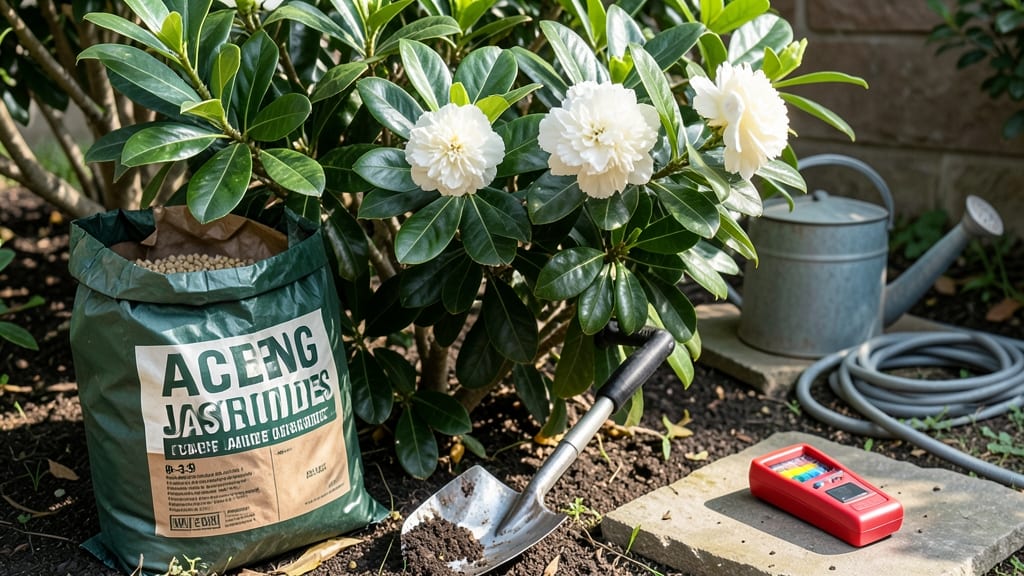
Fertilizing gardenias every 4–6 weeks during the growing season is the key to those fragrant blooms you’ve been dreaming of—but timing and type matter just as much as frequency.
Struggling to keep your gardenias blooming year after year? The secret isn’t just water or sunlight—it’s a precise fertilization schedule tailored to their seasonal needs.
Most gardeners overlook how much acidity and nutrient balance affect these acid-loving shrubs. Too little fertilizer means sparse blooms, while too much can burn roots and stunt growth—both mistakes I’ve made while perfecting my own gardenia care routine.
In this guide, I’ll break down the exact schedule for spring, summer, and fall feeding, plus how to spot over- or under-fertilization before it’s too late. Whether you prefer organic compost or synthetic blends, you’ll leave with a plan that keeps your 🌸 gardenias thriving.

Best fertilization frequency for gardenias by season (with key nutrient needs)
If you've ever watched your gardenia plants struggle with sparse blooms or yellowing leaves, chances are their nutrient needs aren't being met. Gardenias thrive on a seasonal fertilization schedule that matches their growth cycles.
Unlike many plants, they demand high acidity and a balanced NPK ratio—typically 10-10-10 or 12-4-8—to produce those fragrant, creamy-white flowers you love. Skipping this step often leads to underperforming shrubs that fail to reward you with their signature aroma.
Timing is everything with gardenias. Fertilizing at the wrong time can shock their roots or encourage weak, leggy growth instead of compact, blooming shrubs. For example, feeding in late summer can delay dormancy, leaving your plants vulnerable to early frost damage.
Meanwhile, holding off until mid-spring might mean missing the critical bloom-boosting window. The key is understanding how their nutrient uptake shifts with the seasons—and adjusting your approach accordingly.
Here’s a breakdown of the optimal fertilization schedule for gardenias, including nutrient ratios, fertilizer types, and seasonal adjustments to keep your plants thriving year-round.
🌱 Pro Tip: Always water your gardenias thoroughly before and after applying fertilizer to prevent root burn and ensure even nutrient distribution.
| Season | Fertilizer Frequency | Recommended NPK Ratio | Fertilizer Type | Key Nutrient Focus |
|---|---|---|---|---|
| Spring (March-May) | Every 4-6 weeks | 10-10-10 or 12-4-8 | Slow-release granules or liquid | Nitrogen for foliage + phosphorus for blooms |
| Summer (June-August) | Every 6-8 weeks (light feeding) | 8-4-12 or 6-10-10 | Liquid or organic (fish emulsion) | Potassium for heat tolerance + phosphorus |
| Fall (September-November) | None (stop 6-8 weeks before frost) | N/A | N/A | Focus on mulching and water reduction |
| Winter (December-February) | None (dormant period) | N/A | N/A | Prune lightly if needed; no fertilizer |
Spring is the most critical time to fertilize gardenias, as this is when they break dormancy and begin active growth. Start feeding in late April or early May, once you notice new leaves emerging.
A balanced fertilizer like 10-10-10 provides equal parts nitrogen (for leafy growth), phosphorus (for root development and blooms), and potassium (for overall plant health). For organic options, consider composted manure or fish emulsion, which also improve soil structure.
During summer, gardenias need less frequent feeding but still require nutrient support to handle heat stress and blooming demands. Switch to a lower-nitrogen fertilizer like 8-4-12 to encourage flowering over foliage. Apply it every 6-8 weeks and always water deeply afterward to prevent salt buildup in the soil.
If you notice leaf edges browning, this is a sign of over-fertilization—rinse the soil with water immediately.
Fall and winter are dormant periods for gardenias, meaning they don’t need fertilizer during these months. In fact, feeding in late summer or fall can stimulate weak growth that won’t harden off before cold weather.
Instead, focus on mulching with pine bark or leaves to insulate roots and retain moisture. You can also prune lightly
Signs your gardenia needs fertilizer (and how to fix over/under-fertilizing)
Your gardenia might be silently screaming for help if its leaves are turning yellow between veins or if you notice fewer blooms than usual. These are classic signs your acid-loving shrub needs a nutrient boost—but timing and type matter just as much as applying fertilizer.
Overdoing it can cause leaf burn or stunted growth, while underfeeding leads to weak stems and pale foliage.
Gardenias thrive on a balanced fertilizer with equal parts nitrogen, phosphorus, and potassium (like a 10-10-10 formula), but they’re picky about pH. If your soil isn’t acidic (pH 5.0-6.0), even the best fertilizer won’t work.
Start by testing your soil—this simple step can save your plant from nutrient starvation or chemical damage.
⚠️ Fertilizing Too Often?
Gardenias only need fertilizer every 4-6 weeks during spring and summer. Over-fertilizing in fall or winter stresses roots and causes leaf burn. Always flush soil with water after applying to prevent salt buildup.
If your gardenia’s leaves are crispy at the edges or turning brown, you’ve likely over-fertilized. This is your plant’s way of saying, “Too much salt!” Trim the damaged leaves and water deeply to leach out excess nutrients.
For the next 2 months, reduce feeding to half-strength fertilizer and monitor closely.
On the flip side, yellowing leaves with green veins signal nitrogen deficiency. Boost growth by applying a balanced fertilizer (like 12-4-8) in early spring. Pair this with a 2-inch layer of mulch to retain moisture and slowly release nutrients.
Organic options like composted pine needles also lower soil pH naturally.
For sparse blooms, your gardenia might need more phosphorus. Switch to a high-phosphorus fertilizer (like 5-10-5) in late spring to encourage flowering. Pair this with morning sunlight and consistent watering—skipping either can stress the plant and reduce blooms.
Pro tip: Prune leggy growth in early spring to redirect energy toward blooms. Avoid heavy pruning after June 1st, as new growth won’t harden off before winter. Combine this with seasonal fertilizer adjustments, and your gardenia will reward you with fragrant blooms all summer.
Remember, gardenias are slow growers—don’t rush their care. A little patience, the right fertilizer, and proper timing will keep your shrub thriving for decades. Happy gardening! 🌸