
Watering
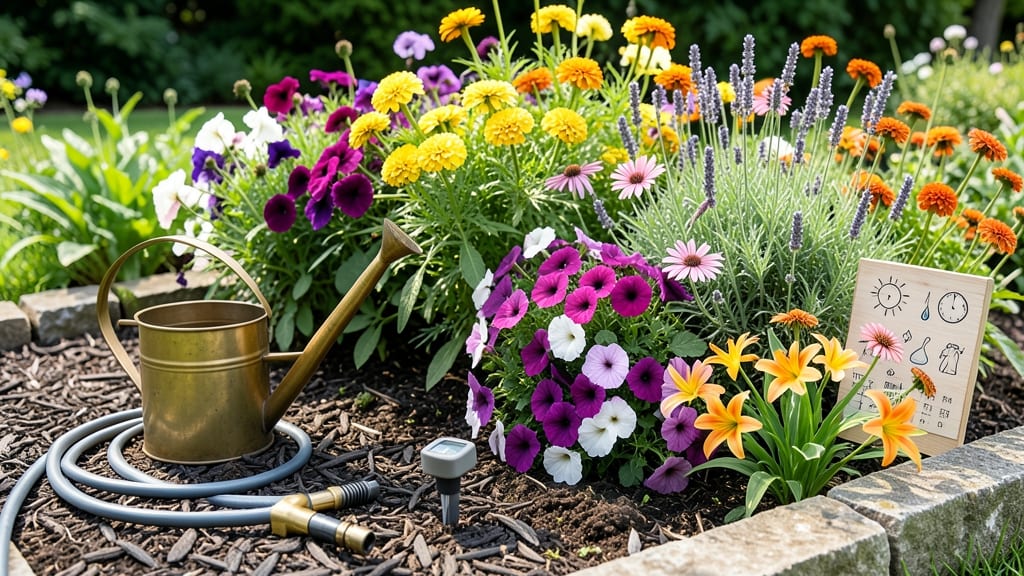
Watering your flower garden the right number of times keeps those 🌸 blooms vibrant and healthy—most varieties need 1-2 inches per week, but the timing and method make all the difference.
Overwatering or underwatering your flower garden can kill plants faster than pests or diseases—so knowing the exact watering schedule by plant type and season is your secret weapon for a thriving garden.
Think about it: too much water drowns roots, while too little stresses plants and invites wilting. The key is matching your watering routine to your garden’s needs—whether it’s drought-resistant succulents or thirsty dahlias.
Below, I’ll break down seasonal watering schedules, how to adjust for rain or heat, and the simple tricks to tell when your flowers are thirsty or waterlogged.
Watering frequency for flower gardens by plant type (indoor vs outdoor)
Guessing how often to water your flower garden is a fast track to wilting blooms or soggy roots. Annuals, perennials, and tropical flowers all have different thirst levels—some need daily drinks while others prefer a slow sip.
The key? Soil moisture tests and visual cues like leaf color and wilting. Let’s break down the exact watering schedule for your garden’s star players, whether they’re basking in the sun or thriving indoors.
Indoor flowers like orchids and hibiscus often dry out faster than outdoor plants because of lower humidity. Meanwhile, drought-tolerant perennials such as lavender and coneflowers can go weeks without water once established.
The trick is to match your watering routine to the plant’s natural habitat—tropical flowers mimic rainforests, while mediterranean perennials thrive on dry spells. Let’s dive into the specifics.
| Plant Type | Watering Frequency (Outdoor) | Watering Frequency (Indoor) | Soil Moisture Test | Visual Cues |
|---|---|---|---|---|
| Annuals (Petunias, Marigolds) | Every 1-2 days (deep watering) | Every 2-3 days (check soil daily) | 1-2 inches deep, dry topsoil | Wilting leaves, drooping stems |
| Perennials (Lavender, Coneflowers) | Every 5-7 days (drought-tolerant) | Every 7-10 days (humidity-dependent) | 3-4 inches deep, dry 2 inches down | Grayish leaves, crispy edges |
| Tropical Flowers (Hibiscus, Orchids) | Daily (morning watering) | Every 3-5 days (high humidity) | Top 1 inch dry, mist leaves | Yellowing leaves, drooping blooms |
💧 Pro Tip: Always water at the base to avoid fungal diseases on leaves.
For annual flowers like petunias and marigolds, the rule is simple: keep the soil consistently moist. These thirsty plants wilt fast when dry, but they also hate soggy roots. Stick your finger 1-2 inches deep—if it feels dry, it’s time to water.
In pots, annuals dry out even faster, so check daily during heatwaves. Morning watering is best to let foliage dry before evening humidity sets in.
Perennials like lavender and coneflowers are the low-maintenance stars of the garden. Once established, they can go 5-7 days without water, thanks to their deep root systems.
Test their moisture by digging down 3-4 inches—if it’s bone-dry, give them a deep drink. Overwatering perennials leads to root rot, so resist the urge to hydrate unless the soil is truly dry. Mulching around the base helps retain moisture and keeps roots cool.
Tropical flowers like hibiscus and orchids mimic their rainforest homes, craving frequent hydration. Outdoor hibiscus may need daily watering in summer, while indoor orchids thrive with 3-5 days between waterings if kept in humid conditions. The key is to never let the roots sit in water—use pots with drainage holes and water until it runs out the bottom. Yellowing leaves? That’s a cry for help—usually a sign of overwatering or poor drainage.
Indoor flowers face unique challenges like low humidity and artificial lighting, which dry out soil faster. Group potted plants together to create a microclimate and use a humidity tray with pebbles and water beneath pots.
For tropicals, mist leaves occasionally to replicate their natural environment. Terracotta pots dry out quicker than plastic, so adjust your watering schedule accordingly—terracotta may need water every 2 days, while plastic pots can stretch to 3-4 days.
Don’t rely on a rigid schedule—adjust based on weather. After a heavy rain, skip watering entirely. During heatwaves, increase frequency and water deeper to encourage root growth. Mulch is your best friend—it locks in moisture, regulates soil temperature, and reduces weeds.
Use organic mulch like straw or wood chips, keeping it 2-3 inches away from plant stems to prevent rot.
Watch for visual stress signals like wilting, yellowing, or crispy edges. Wilting in the morning means underwatering; wilting in the evening could signal overwatering or root issues. Dull, gray leaves often mean too much water, while drooping stems scream thirst.
When in doubt, dig a finger into the soil—it’s the most accurate moisture test. Trust your plants—they’ll tell you what they need if you pay attention.
Start with this plant-specific guide, but remember: every garden is unique. Observe your plants, tweak your routine, and soon you’ll have a watering rhythm that keeps your flowers blooming all season long. Happy gardening! 🌸
Seasonal watering schedule: adjusting for spring, summer, fall, and winter
Your flower garden’s watering needs change dramatically with the seasons—what works in sweltering summer can drown plants in cool spring or leave them parched in dry fall. The key is adjusting your schedule based on temperature, rainfall, and plant dormancy.
For example, spring-blooming tulips need less water once they’ve finished flowering, while summer dahlias may require daily deep soaks to survive heatwaves.
Before diving into seasonal adjustments, remember: morning watering is always best to prevent fungal diseases. Use a soil moisture meter or the finger test (stick your finger 1-2 inches deep—if dry, water).
Mulch with 2-3 inches of organic matter (straw or wood chips) to retain moisture and regulate soil temperature year-round.
🌱
In rainy seasons, skip watering entirely if you’ve had 1 inch of rain in the past week. Use a rain gauge to track accumulation—most flowers thrive on 1–1.5 inches of water weekly, including rainfall.
For container gardens, reduce watering in winter by half since pots drain faster and freeze more easily.
Pro tip: Group plants with similar water needs together in your garden layout. For example, place thirsty annuals (e.g., petunias) near your irrigation line and drought-tolerant perennials (e.g., sedum) in the driest spots. This hydrozoning saves time and ensures no plant gets neglected.
🌿