
How To
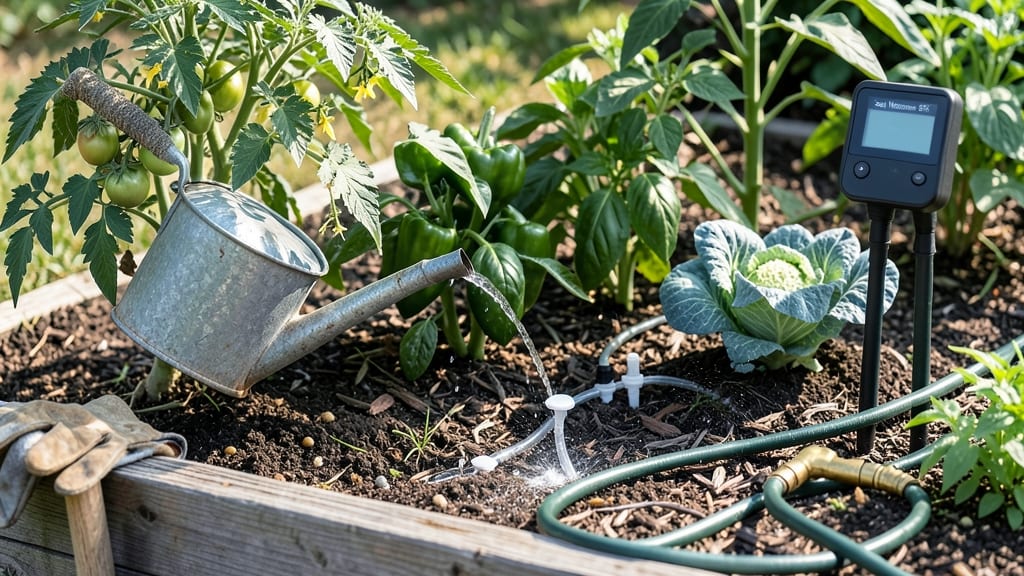
To water your vegetable garden correctly, aim for deep soaks every 2-7 days—depending on soil type and weather—because guessing leads to wasted water or stressed plants.
Overwatering wastes resources and drowns roots while underwatering stresses plants—yet most gardeners guess how often to water their 🥬 vegetable garden instead of using science-backed soil-type rules.
Clay holds moisture for days, sandy drains in hours, and loamy soils strike a balance. Without knowing your soil, you’re either drowning roots or watching plants wilt from thirst.
This guide breaks down exact schedules by soil type, plus three zero-waste moisture tests to stop the guessing game and keep your garden thriving.
Watering frequency by soil type: exact schedules for healthy vegetables
Your vegetable garden thrives on precision—not guesswork. Different soil types hold moisture differently, so a one-size-fits-all watering schedule leads to wasted water or stressed plants. Clay soil clings to moisture like a sponge, while sandy soil drains faster than a sieve.
Loamy soil strikes the perfect balance, and rocky soil? It’s the trickiest of all. Let’s break down exact watering schedules tailored to your soil, plus how to test moisture like a pro.
Understanding your soil type is the first step. Grab a handful—does it feel gritty (sandy), sticky (clay), or crumbly (loamy)? Rocky soil? That’s a whole other game. Each type demands a different watering frequency, depth, and seasonal adjustment.
For example, tomatoes in clay soil may need watering every 5 days, while the same plants in sandy soil could dry out in 2 days. The key is consistent moisture at the root zone (1–2 inches deep).
Seasonal shifts change everything. In summer, sandy soil may need daily watering, while clay soil can stretch to 7 days between sessions. Winter slows everything down—reduce frequency by 50% unless you’re growing winter greens like kale or spinach.
Always water early morning to prevent fungus and maximize absorption. Pro tip: Drip irrigation delivers water directly to roots, cutting waste and saving time.
New to gardening? Start with the finger test: Stick your index finger 1–2 inches into the soil. If it feels dry, water deeply. If it’s damp, wait. For container gardens, check daily—pots dry out 3x faster than in-ground soil.
And if your soil is compacted (common in clay), aerate it annually to improve water penetration. Think of your garden like a sponge
How to test soil moisture like a pro: 3 zero-waste methods
Testing soil moisture doesn’t require fancy tools—just your hands and a few simple techniques. I’ve used these zero-waste methods for years to keep my vegetable garden thriving without guesswork. The key is checking moisture at the root zone, where plants actually absorb water.
Overwatering wastes resources, while underwatering stresses plants, so mastering these tests ensures your tomatoes, peppers, and leafy greens get just the right amount.
Start with the finger test, the simplest way to gauge moisture. Stick your index finger 1-2 inches deep into the soil—this is where most vegetable roots thrive. If the soil feels dry, it’s time to water. If it’s damp, wait a day or two.
This method works for loamy soil and sandy soil, but you’ll need slight adjustments for clay soil or rocky soil, which hold or drain water differently. For container gardens, the finger test is even more critical since pots dry out faster.
For container gardens, the finger test becomes even more important because pots dry out faster than in-ground soil. Check the moisture every 2-3 days during hot weather, especially for herbs like basil or shallow-rooted lettuce.
If the soil feels dry at the surface but still damp below, your plants are likely thirsty. Containers also benefit from a DIY moisture meter—just insert a wooden stick and listen for the telltale sound of dryness.
Mulch changes the game by slowing evaporation, so your soil stays moist longer. If you’ve added mulch, reduce your watering by 20% to avoid overwatering. I’ve seen mulched beds stay hydrated for 3-5 days longer than unmulched ones, especially in sandy soil.
Always check the soil beneath the mulch layer to avoid misleading yourself—mulch can create a false sense of moisture retention if you only check the surface.
Pro tip: Combine these methods for the most accurate reading. Start with the finger test for a quick check, then use the trowel check or DIY meter if you’re unsure. Over time, you’ll develop a feel for your soil’s moisture patterns, making it easier to adjust your watering schedule.
Remember, consistency is key—vegetables like tomatoes and peppers prefer steady moisture over sporadic deep watering.
By mastering these zero-waste methods, you’ll water your vegetable garden like a pro—saving resources, preventing stress on your plants, and reaping a bountiful harvest. Happy gardening! 🌱