
Landscaping
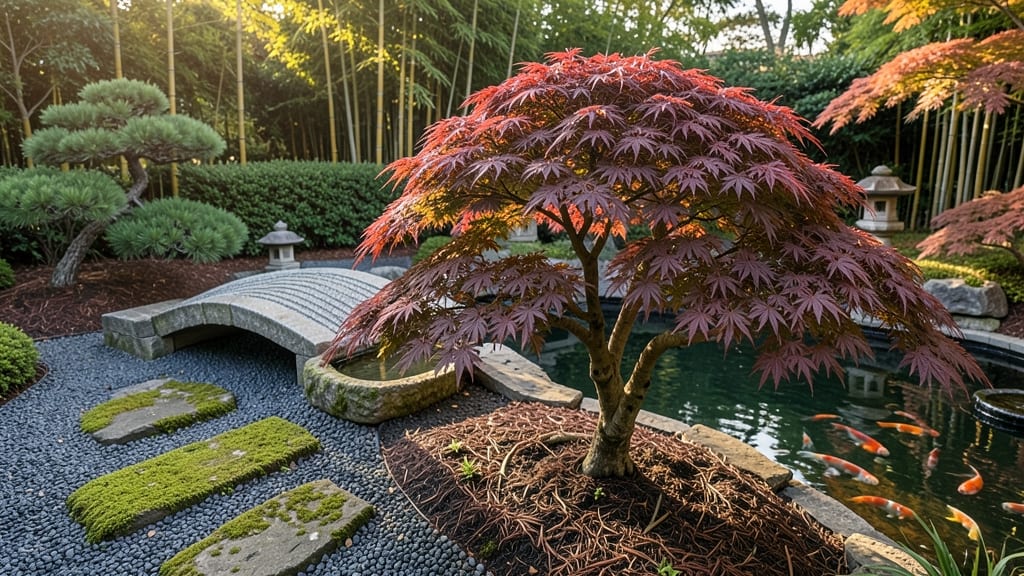
A Japanese garden in Los Angeles transforms city stress into tranquil retreats, with standout spots like the Huntington’s Japanese Garden, a sprawling 17-acre sanctuary complete with koi ponds, traditional tea houses, and meticulously crafted bonsai displays. Other must-visit gardens include the Getty Center’s Japanese Garden and Descanso’s Japanese Garden, where classic Zen design principles harmonize beautifully with Southern California’s unique climate for year-round visual appeal.
Los Angeles's Japanese gardens aren't just decorative—they're carefully designed to reflect nature's balance while adapting to the region's dry climate. 🌿 The Huntington’s garden, for example, uses water features like koi ponds to create auditory tranquility, while Descanso’s garden incorporates native plants that thrive with minimal irrigation.
What makes these gardens special is how they blend traditional Japanese elements with local landscapes, creating spaces that feel both timeless and distinctly Californian.
Each garden offers distinct seasonal experiences—spring brings vibrant cherry blossoms, while autumn transforms the landscapes into fiery displays of maple leaves. The Getty Center’s garden, nestled among modern art collections, provides a perfect contrast between contemporary culture and traditional Japanese aesthetics.
For visitors, this means you can enjoy the peace of a Japanese garden while also exploring nearby cultural attractions like tea ceremonies or art exhibitions.
💡 In This Article
- Design Principles Behind LA’s Most Stunning Japanese Gardens
- Best Times to Visit LA’s Japanese Gardens by Season
Design principles behind LA’s most stunning Japanese gardens
At the heart of every Japanese garden in LA lies the Zen philosophy, where every element—from carefully placed stones to flowing water—serves to create harmony with nature and encourage mindfulness.
The gardens follow strict principles like shakkei (borrowed scenery), where natural landscapes become part of the garden, and ma (negative space), which emphasizes emptiness as much as form.
For example, the Huntington’s garden uses its 17-acre layout to frame distant mountains through carefully positioned trees, creating a sense of vastness despite the urban setting.
The wabi-sabi aesthetic—finding beauty in imperfection—is visible in everything from the irregularly shaped stones to the weathered wood of tea houses. At Descanso’s garden, you’ll notice how moss-covered rocks and dry riverbeds (karesansui) reflect this philosophy, adapted for Southern California’s dry climate.
Unlike traditional Japanese gardens that rely on abundant water, LA’s versions use drought-tolerant plants like California buckwheat and toyons to maintain the garden’s natural feel while conserving water.
Water features play a crucial role in Japanese gardens, symbolizing both life and the passage of time.
The Huntington’s garden includes a 1.5-acre koi pond where the fish’s movements create dynamic patterns on the water’s surface, while the Getty Center’s garden uses a serpentine stream to guide visitors through the space.
These designs aren’t just decorative—they’re carefully engineered to produce soothing sounds that mask city noise, transforming the garden into a true sanctuary.
Stone placement is another key technique, where each rock represents mountains or islands and is positioned to create balance. At the Huntington, stones are arranged in odd-numbered groupings (like three or five) to avoid symmetry, reflecting natural formations.
The gardens also use borrowed views—like the Getty Center’s garden that frames the Pacific Ocean in the distance—to extend the garden’s boundaries beyond its physical limits.
Seasonal adaptation is critical in LA’s dry climate. While traditional Japanese gardens rely on lush greenery, LA’s versions incorporate deciduous trees like Japanese maples that change color in autumn, and evergreen conifers that provide structure year-round.
The Huntington’s garden, for instance, features over 300 bonsai trees, many of which are pruned to highlight seasonal changes, from delicate spring blooms to bold winter silhouettes.
What makes these gardens unique is how they blend tradition with modern sustainability. Techniques like xeriscaping (landscaping that reduces or eliminates irrigation) and native plant integration ensure the gardens thrive without excessive water use.
For visitors, this means you can enjoy the tranquility of a traditional Japanese garden while appreciating how it’s adapted to Southern California’s environment.