
Watering
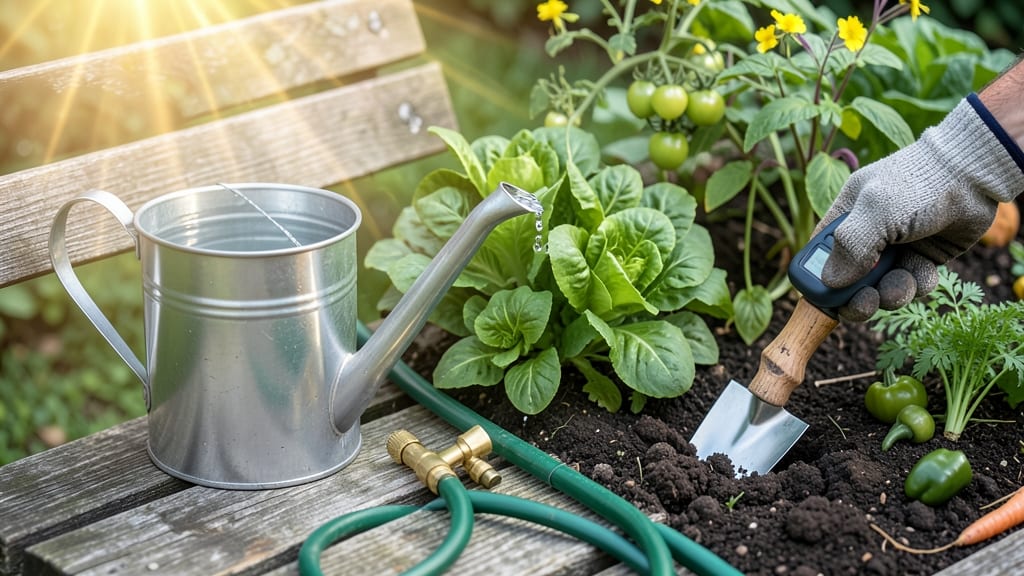
Watering your vegetable garden every day can actually harm your plants more than help them, especially in Zone 6a where soil stays moist longer.
Overwatering your 🥬 garden leads to root rot and fungal diseases, while underwatering stunts growth. The key is understanding when your plants truly need hydration—and when they don’t.
Most vegetables thrive with 1-2 inches of water per week, but the timing and method matter just as much. Deep watering in the morning preserves moisture and keeps roots healthy.
In this guide, you’ll learn how to check soil moisture, adjust your watering schedule by season, and spot the early signs of over- or under-watering before it’s too late.
How often should you water vegetable gardens (and why daily watering is risky)
Watering your vegetable garden daily might seem like a safe bet, but it can actually drown your plants and invite fungal diseases like root rot. Most vegetables thrive on consistent moisture, not constant soaking.
The key is understanding each plant's unique needs and adjusting your schedule based on soil type, climate, and growth stage. Overwatering washes away nutrients and suffocates roots, while underwatering stresses plants—both extremes hurt your harvest.
Instead of sticking to a rigid daily routine, focus on deep watering that encourages strong root systems. Sandy soils dry out faster than clay, while leafy greens need more frequent watering than root crops.
Let me break down the science and provide a plant-specific schedule to keep your garden thriving without the risk of overwatering.
| Plant Type | Water Frequency | Best Time to Water | Signs of Overwatering |
|---|---|---|---|
| Leafy Greens (Lettuce, Spinach, Kale) | Every 2-3 days (1 inch/week) | Morning (6-8 AM) | Yellowing leaves, moldy soil, wilting despite moisture |
| Root Crops (Carrots, Potatoes, Beets) | Every 4-5 days (1.5 inches/week) | Evening (4-6 PM) | Soft, mushy roots, foul odor, stunted growth |
| Fruiting Plants (Tomatoes, Peppers, Cucumbers) | Every 2-3 days (1.5-2 inches/week) | Morning (6-8 AM) | Blossom end rot, cracked fruit, leaf curl |
| Herbs (Basil, Parsley, Cilantro) | Every 3-4 days (0.5-1 inch/week) | Morning or evening | Drooping leaves, brown tips, mold on stems |
| Drought-Tolerant (Okra, Swiss Chard, Eggplant) | Every 5-7 days (1 inch/week) | Deep watering in morning | Wilting only in extreme heat, no mold |
Leafy greens like lettuce and spinach need frequent watering because their shallow roots dry out quickly. Aim for 1 inch of water per week, but check soil moisture—if the top inch feels dry, it's time to water.
These plants are especially sensitive to overwatering, which causes yellowing leaves and mold. I’ve found that morning watering reduces fungal risks by letting foliage dry before nightfall.
Root crops such as carrots and potatoes require deeper watering but less often. Their roots need consistent moisture to grow straight and avoid cracking. Watering every 4-5 days with 1.5 inches of water encourages strong development.
Overwatering here leads to soft, mushy roots and rot, so always let the top 2 inches of soil dry between waterings.
Fruiting plants like tomatoes and peppers demand the most attention during their flowering and fruiting stages. These plants need 1.5-2 inches of water weekly, but uneven moisture causes blossom end rot or cracked fruit.
I recommend using drip irrigation or soaker hoses to deliver water directly to the roots, keeping leaves dry to prevent disease.
Herbs like basil and parsley strike a balance—they don’t like soggy soil but also wilt quickly in dry conditions. Watering every 3-4 days with 0.5-1 inch of water keeps them thriving.
Overwatering herbs leads to brown tips and mold, while underwatering causes them to bolt or become bitter. Mulching helps retain moisture without overdoing it.
Drought-tolerant vegetables like okra and Swiss chard can handle longer dry spells, making them ideal for busy gardeners. Watering every 5-7 days with 1 inch of water is usually enough, but always monitor soil moisture.
These plants show wilting only in extreme heat, and their deep roots prevent overwatering issues common in other crops.
Climate plays a huge role in your watering schedule. In hot, dry summers, you may need to water daily, while cool, rainy springs might require watering every 5-7 days.
Always adjust based on weather forecasts and soil conditions. I’ve learned the hard way that sticking to a rigid schedule—even daily water
Smart watering schedules: when, how long, and how to check plant hydration
Determining the right watering schedule for your vegetable garden depends on more than just checking a calendar—it’s about understanding your plants' hydration needs. Most vegetables thrive with 1-2 inches of water per week, but daily watering can drown roots and invite fungal diseases.
Instead, focus on deep, infrequent watering that encourages strong root growth and conserves water.
Your watering routine should adapt to the season, soil type, and even your local climate. For example, sandy soil drains quickly and may need watering every 2-3 days, while clay soil holds moisture longer and might only require watering every 5-7 days.
Additionally, morning watering is ideal because it reduces evaporation and gives foliage time to dry, preventing mildew.
Investing in a moisture meter can simplify your watering decisions. These tools provide precise readings of soil moisture levels, eliminating guesswork. For example, a reading of 40-60% moisture is ideal for most vegetables, while anything above 70% signals overwatering.
Don’t rely solely on a fixed watering schedule. Instead, combine soil checks, leaf observations, and weather conditions to tailor your approach. For instance, after a heavy rain, your plants may not need water for several days, even if it’s been a week since your last watering session.
By mastering these smart watering techniques, you’ll ensure your vegetable garden stays hydrated without wasting water or risking plant stress. The key is consistency, observation, and adaptability—just like the plants you’re nurturing! 💧🌱