
Planting
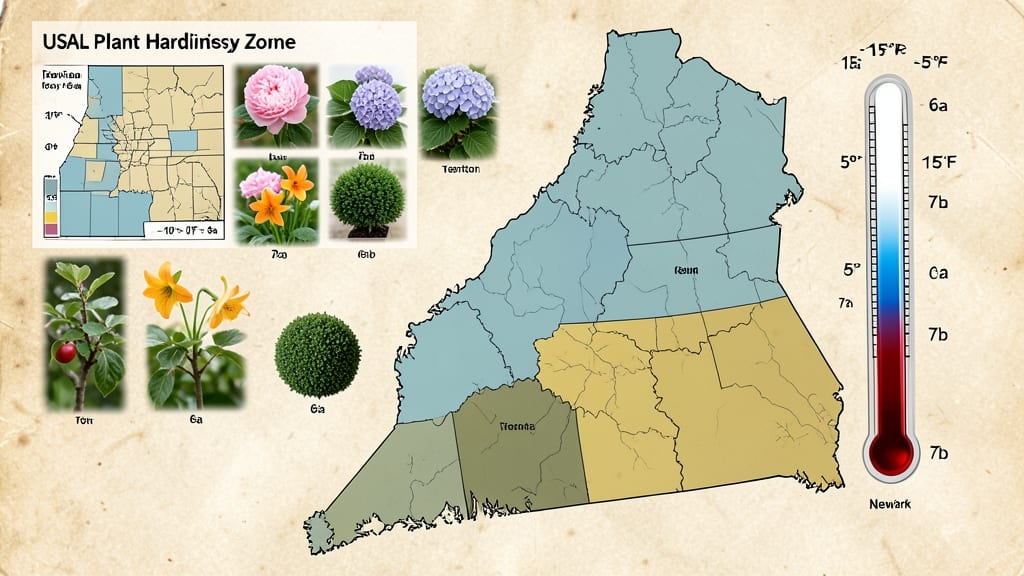
New Jersey's gardening zones range from 6a to 7b, with most areas falling between 6b and 7a. Coastal regions typically experience Zone 7a's milder winters, while northern inland areas lean toward Zone 6a's cooler temperatures.
New Jersey's diverse geography creates these distinct growing conditions.
Coastal areas like Cape May benefit from ocean breezes that moderate temperatures, pushing them into Zone 7a. Meanwhile, inland regions like Sussex County face colder winters, staying closer to Zone 6a. Even within cities, urban heat islands can shift microclimates by 2-5°F, affecting plant hardiness.
Understanding these variations helps gardeners select plants that thrive in their specific microclimate. 🌿
For example, hydrangeas and boxwoods flourish in Zone 7a's warmth, while Russian sage and coneflowers handle Zone 6a's chill better. The state's transition zones also allow creative gardening—planting heat-loving oleanders near the coast while keeping frost-sensitive bougainvillea in containers for summer display.
💡 In This Article
- How USDA Gardening Zones Break Down Across New Jersey
- Best Plants for New Jersey’s Mixed Gardening Zones
How USDA gardening zones break down across New Jersey
The USDA gardening zones in New Jersey reflect a complex interplay of geography and climate. The state's northern regions, like Sussex and Warren Counties, typically fall into Zone 6a, where average annual minimum temperatures dip to -10°F to -5°F.
This cooler climate supports hardier plants that can withstand prolonged winter chills. Meanwhile, the southern shore—including Atlantic City and Cape May—experiences milder winters, placing them firmly in Zone 7a with minimum temperatures ranging from 0°F to 10°F. 🌡️
Elevation plays a significant role in these variations. Higher areas in the northwest, such as the Kittatinny Mountains, can see temperatures drop 3-5°F colder than nearby valleys, creating microclimates even within the same county. Coastal regions benefit from the ocean's moderating influence, where saltwater breezes prevent extreme temperature swings.
Urban areas like Newark and Jersey City experience "heat islands," where pavement and buildings trap warmth, effectively raising local temperatures by 2-5°F compared to rural zones.
Understanding these shifts helps gardeners make precise plant selections. For instance, a gardener in Zone 6a Bergen County might struggle with tropical plants like elephant ears, which thrive in Zone 7a's warmth.
Conversely, coastal gardeners can grow bougainvillea year-round, while inland gardeners must treat it as an annual or container plant. The transition zones—like parts of Mercer or Monmouth Counties—offer opportunities for creative gardening by blending cold-hardy and heat-tolerant species.
Microclimates also emerge within urban spaces. A north-facing yard in Trenton might stay 5°F cooler than a south-facing one due to sunlight exposure, while a courtyard surrounded by tall buildings can become a heat trap.
These nuances explain why a single address might span two zones or why a plant thrives in one spot but fails just 50 feet away. 🌿
For practical application, gardeners should use the USDA zone map as a starting point but verify local conditions. Tools like weather stations or plant hardiness calculators (available from local Cooperative Extension offices) provide granular data.
For example, the Rutgers New Jersey Agricultural Experiment Station offers zone-specific planting guides that account for these microclimates, helping gardeners navigate New Jersey's diverse growing conditions with confidence.
What most people overlook is how wind patterns further refine these zones. Coastal areas experience prevailing westerlies that bring milder air from the ocean, while inland regions face colder northerly winds. This wind exposure can delay or accelerate frost formation, creating additional variability.
By accounting for these factors, gardeners can push zone boundaries—successfully growing Zone 7a plants in sheltered microclimates within Zone 6a areas.