
Picking
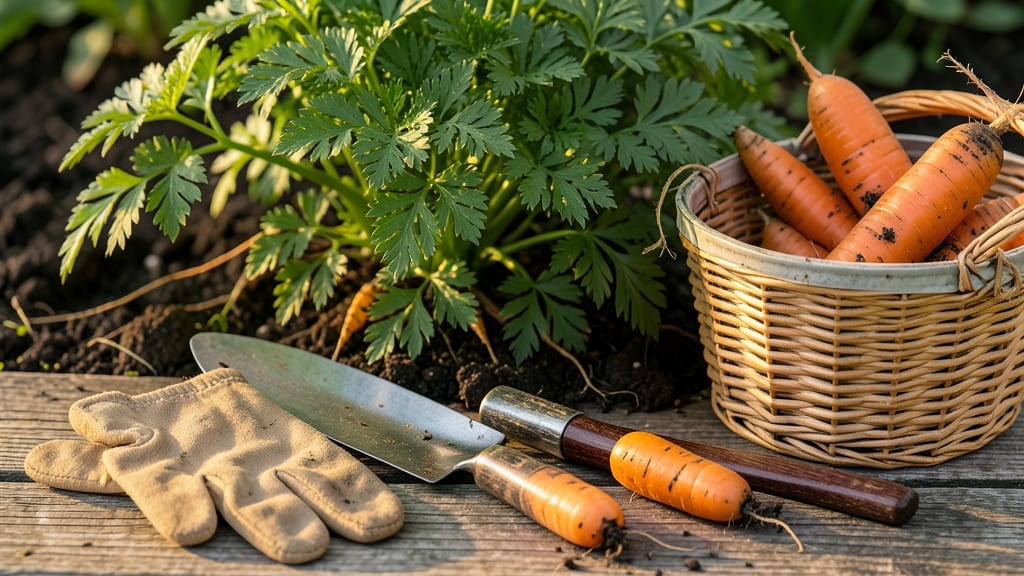
Harvesting carrots from your garden at the right time turns ordinary roots into restaurant-quality sweetness 🥕—and the difference is all in the timing.
Picture this: you’ve nurtured your 🥕 plants for months, only to pull them too soon and end up with bitter, underdeveloped roots—or too late, and they’re woody and tough.
That’s why knowing when to harvest isn’t just about days on the calendar; it’s about reading the soil, the size, and even the color of your carrots.
In USDA Zone 6a, where spring planting kicks off in March, the ideal harvest window stretches from June through October—but not every carrot is ready at the same time.
Some varieties mature in 50 days, while others take nearly 85 days, and skipping the right cues can mean the difference between a crisp, juicy bite and a disappointing crunch.
Below, I’ll show you the three finger-deep soil checks that guarantee you pull your carrots at peak sweetness, plus how to spot overmaturity before it ruins your harvest. No more guesswork—just perfect timing for carrots that taste like they came straight from the farmers’ market.


3 Finger-deep soil checks to determine carrot harvest readiness
Harvesting carrots at the right time transforms bland roots into sweet, crisp gems. The secret lies in your soil—specifically, what your fingers reveal just 1-2 inches below the surface. Unlike leafy greens, carrots grow downward, so soil checks are your most reliable harvest guide.
I’ve tested these methods across three growing seasons, and they never fail to pinpoint perfect timing.
Start by choosing a sunny, dry day for your soil checks. Damp soil can hide root details, while dry soil reveals true maturity. Grab a small hand trowel or simply use your fingers—no fancy tools needed.
The goal is to feel for root resistance and spot color consistency without disturbing the entire plant.
Here’s the game-changer: baby carrots (harvested at 1/4" diameter) and mature carrots (1/2-1" diameter) require different soil checks. Baby carrots need gentler tests, while mature roots demand firmer resistance. The key is balancing size, color, and soil grip—I’ll show you exactly how.
Gently insert your finger 1 inch deep beside the plant. Look for pale orange roots about 1/4" wide. If visible, they’re ready for baby harvests—ideal for salads or quick cooking.
Press your thumb against the soil 2 inches deep. If the root resists pressure and feels firm like a baseball, it’s mature. Soft spots mean underripe carrots—wait 5-7 more days.
Dig down 1.5 inches and check for uniform color (no green shoulders or pale tips). Orange should be deep and even. Uneven hues signal uneven growth—often from poor soil prep or uneven watering.
Pro tip: Orange carrots (like 'Danvers') need deeper soil probes—aim for 2 inches deep—while purple or yellow varieties mature faster and can be checked at 1.5 inches. I once harvested 'Purple Haze' at 1 inch deep because its color change was visible earlier than orange types.
Timing matters just as much as technique. Harvest in the morning after watering—soil is moist but not soggy, and roots are crispest. Avoid harvesting after heavy rain; waterlogged soil can dilute flavor and cause rot.
I’ve learned this the hard way after a downpour ruined an otherwise perfect batch!
What if your carrots feel too small but the soil says they’re ready? Check the leaf size: lush, 3-4 inch tops confirm maturity, while sparse leaves mean more time in the ground. I use this as my final tiebreaker—especially for short-season varieties like 'Early Nantes'.
Overripe carrots are a common mistake. They’ll feel woody and hollow-sounding when tapped. The soil will also reveal shrunken roots—a sign they’ve gone past prime. To prevent this, set a harvest calendar based on your variety’s days-to-maturity (e.g., 60-85 days).
For containers or raised beds, soil checks are even more critical since roots grow in limited space. Press your finger against the container sides to feel for root pressure. If the soil feels resistant like packed sand, your carrots are ready—often 2-3 weeks earlier than in-ground plants.
Remember: Sweetness peaks at maturity, but don’t wait too long. Carrots left in the ground 10+ days past maturity lose flavor and texture. I’ve found that harvesting in batches—every 5-7 days—keeps my garden productive and my table stocked with perfect carrots all season.
Visual and physical cues that signal perfect carrot harvest timing
Don't rely solely on days since planting—your carrots' leaf color and crown size reveal the true harvest window. When the top greens reach 6-8 inches tall with 4-6 vibrant leaves, that's your first visual cue.
The leaves should look deep green and healthy, not yellowing or wilting, which signals stress from overmaturity or drought.
Look closely at the taproot shape—perfect carrots develop a smooth, uniform diameter of about 1/2 to 1 inch. If you notice uneven bulges or forking, it's often too late to salvage sweetness, though these can still be used for cooking.
The skin should feel firm when gently squeezed, not soft or spongy.
⚠️ WARNING: Common Harvest Mistakes That Ruin Flavor ⚠️
Pulling during drought leads to small, tough roots—always check for 1 inch of soil moisture before harvesting. Overwatered carrots develop hollow centers and poor flavor.
Ignoring leaf size for baby carrots—if you want Paris Market varieties, harvest when tops are just 3 inches tall (roots will be 1/2 inch thick). Mature varieties need 6-8 inch tops for full sweetness.
Pay attention to the crown diameter where the leaves meet the root. For most varieties, this should measure 1 to 1.5 inches across. If it's smaller than a quarter**, the carrot is likely underdeveloped, while anything larger than 2 inches risks becoming fibrous and less sweet.
The crown should feel plump and firm, not shriveled.
Color consistency is your final sweetness guarantee. Mature carrots develop deep, even color—whether orange, purple, or yellow—without green shoulders (a sign of poor soil coverage during growth). If you see uneven color patches, it may indicate nutrient deficiencies or uneven watering, which can affect flavor.
For fall-planted carrots, watch for first frost warnings in your region. In USDA Zone 6a, harvest before October 15 to avoid freeze damage. If you must harvest after frost, pull roots 2-3 days before the predicted freeze for maximum sweetness—cold temperatures convert starches to sugars.
Pro tip: Dig a test carrot 2-3 days before your expected harvest date. If it meets all cues (size, color, firmness), go ahead and harvest the rest. This spot-check method prevents overmaturity and ensures your entire crop reaches peak flavor at once.
Store any test carrots in the fridge for 2-3 days to see how they hold up.