
Picking
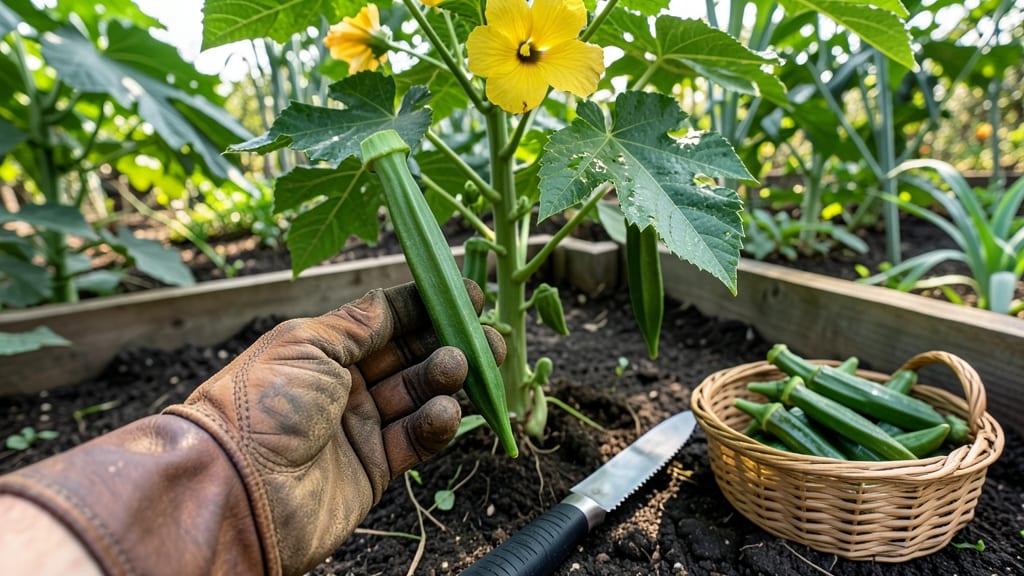
Picking okra from the garden at the right time means the difference between crisp, tender pods and tough, seedy ones.
Picture this: you’ve nurtured your 🌱 okra plants all season, and now the pods are growing fast. But wait too long, and those sweet, slim pods turn into woody sticks—no one wants that!
The secret? Harvesting when they’re just 2-3 inches long, firm to the touch, and still glossy green. That’s the window for peak flavor and texture.
Timing matters because okra grows quickly—sometimes too quickly. If you miss the sweet spot, the pods harden, and the seeds inside take over, leaving you with a less enjoyable bite.
But here’s the good news: with the right finger-length trick and a little know-how, you can keep your harvest at its best all season long.
In this guide, I’ll walk you through the exact finger-length tricks to spot the perfect okra, how often to pick for maximum yield, and what to watch for to avoid common mistakes. Ready to turn your garden into a crisp, delicious okra powerhouse?


How to determine okra's perfect harvest size using your fingers
Harvesting okra at the right size transforms your garden into a flavor factory. The key? Your fingers. Using them as a simple ruler ensures you pick pods when they're at their peak tenderness and sweetest flavor.
Overlooking this step often leads to woody, seedy pods that even the best recipes can't salvage. Let's unlock the secret finger-length measurements that guarantee homegrown okra success.
Okra pods grow rapidly, so checking them daily is essential. The ideal harvest window is when pods reach between 1 to 3 inches long. This range captures the sweet spot where texture and flavor shine.
Smaller than 1 inch means underdeveloped pods, while anything over 3 inches becomes fibrous and tough. Your fingers become the perfect tool for this precise measurement.
Here's how to use your fingers like a pro gardener to determine the perfect harvest size:
Beyond size, pay attention to the pod's texture. Ready-to-harvest okra should feel firm yet slightly crisp when gently squeezed. Think of it like testing a ripe avocado - it should yield slightly to pressure but not feel mushy.
If the pod feels woody or hard, it's past its prime. This texture check works hand-in-hand with your finger measurements for foolproof results.
Color also plays a crucial role in determining harvest readiness. The deepest green pods typically indicate peak ripeness. Look for a vibrant, glossy appearance rather than dull or yellowing pods.
Some heirloom varieties may develop subtle purple streaks at this stage, adding to their visual appeal while maintaining excellent eating quality. Always harvest pods with the most vibrant color for the best flavor profile.
For continuous harvests, establish a routine of checking your okra plants every 2-3 days during peak production. This frequent monitoring ensures you never miss the perfect harvest window. Use your fingers to quickly assess pod sizes while you're in the garden.
Over time, you'll develop an intuitive sense for when pods are ready based on their size, color, and texture alone, making the harvesting process even more efficient.
Pro tip: Harvest in the morning hours when pods are cool and crisp. This timing also allows you to enjoy your freshly picked okra in recipes throughout the day. The cooler temperatures help preserve the pod's texture until you're ready to use it.
Plus, morning harvesting gives your plants a full day to recover and produce more pods for your next harvest session.
Remember that different okra varieties may have slightly different ideal harvest sizes. Some dwarf varieties might reach peak flavor at the smaller end of the spectrum (around 1.5 inches), while larger varieties can tolerate up to 3.5 inches before becoming tough.
Always check the specific growing guidelines for your chosen okra variety to fine-tune your harvesting approach. This attention to detail will elevate your homegrown okra from good to exceptional.
With these finger-length tricks and visual cues, you'll transform your okra harvest from hit-or-miss to consistently delicious. The secret to perfect okra lies in your hands - quite literally! Your ability to quickly assess pod size and condition will become second nature after just a few harvests. Happy picking!
Common okra harvest mistakes that ruin flavor and texture
Okra is a fast-growing plant, but its flavor and texture plummet if you harvest at the wrong time. Many gardeners accidentally let pods grow too large, turning them woody and bitter.
The key is consistent harvesting—but even with that, mistakes like overcrowding or improper spacing can sabotage your crop before it even reaches the perfect size.
Waiting just a few extra days can transform tender okra into a tough, fibrous mess. Overripe pods develop thick skins and hard seeds, making them nearly inedible. Even if you love the taste of mature okra, most home gardeners prefer the sweet, crisp texture of smaller pods.
Let's fix these common mistakes so you get the best harvest possible.
⚠️ WARNING: The 3-Day Rule for Okra
Okra pods grow fast—up to 1 inch per day in ideal conditions. If you miss the 2-3 inch window, they can double in size overnight. Check plants every 2-3 days to avoid tough, overgrown pods that ruin flavor.
One of the biggest mistakes is overcrowding plants at planting. Okra needs 18-24 inches of space between plants to develop properly. When plants compete for nutrients and sunlight, they produce smaller, underdeveloped pods. Even if you harvest frequently, crowded okra will struggle to reach its full potential.
Another common error is harvesting at the wrong time of day. Okra is best picked in the morning when pods are cool and crisp. Harvesting in the afternoon heat can cause pods to wilt or develop a bitter taste.
Always check pods first thing in the morning for the freshest flavor.
Improper pruning techniques can also backfire. While deadheading spent blooms encourages more production, over-pruning can stress the plant. Focus on removing only yellowed or dead pods, not healthy ones. This keeps the plant's energy focused on growing new, tender okra.
Finally, neglecting soil health leads to poor pod development. Okra thrives in well-draining, nutrient-rich soil. If your soil is compacted or lacking organic matter, pods will grow unevenly or with poor texture. Amend soil with compost before planting to ensure strong, flavorful harvests.
By avoiding these mistakes, you'll enjoy crisp, sweet okra all season long. The secret is timing, spacing, and consistency—three simple rules that make a world of difference in your garden's harvest quality. Happy picking! 🌱