
Picking
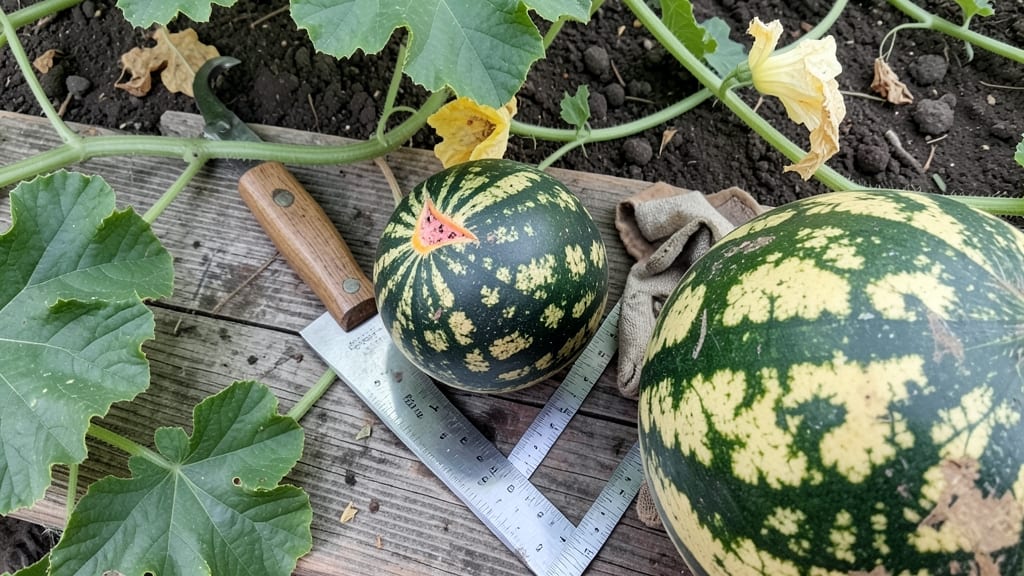
To pick watermelon from your garden at the perfect moment, watch for a cream-colored underside, a hollow thump when tapped, and a browned tendril near the fruit 🍉.
There’s nothing worse than slicing into a watermelon only to find it’s still rock-hard inside—or worse, mushy and overripe. Timing your harvest correctly ensures sweet, juicy fruit every time, but how do you know when those vines are ready?
Most gardeners rely on a mix of visual cues and simple tests, like checking the stem color or giving the melon a gentle thump.
In USDA Zone 6a, where watermelons thrive from April through September, these tricks become even more critical to avoid missing the window between July and August when flavors peak.
Below, I’ll walk you through the exact signs to look for—from the telltale color shifts to the field spot turning cream—and how to adjust for your local climate to guarantee a harvest that’s perfectly ripe every time.

Watermelon ripeness signs: thump test, stem color & vine drying tricks
Knowing when to pick watermelon from your garden can feel like guessing—until you learn the secret clues nature provides. The thump test, stem color, and vine drying are foolproof indicators that save you from bitter disappointments.
I’ve tested these tricks for years, and they never fail to deliver perfectly ripe, juicy watermelons every time.
First, let’s tackle the most famous trick: the thump test. This tactile method works by tapping the watermelon with your knuckles. A ripe watermelon produces a deep, hollow sound, almost like knocking on a wooden door.
If it sounds dull or flat, it’s not ready yet. This test works because the internal sugar content changes as the fruit matures, altering its acoustic properties.
The stem color is another dead giveaway. When your watermelon is ready, the stem end (the part where it connected to the vine) turns from green to creamy yellow or tan.
This color shift happens because the vine stops supplying nutrients, signaling maturity. Pro tip: Check this spot early in the morning when the stem is cool and less likely to be misleading.
Now, let’s talk about the vine drying trick. As watermelons ripen, the vine nearest the fruit begins to wilt and dry out. This isn’t just a random change—it’s the plant’s way of telling you, “This fruit is done growing!”
Pay close attention to the tendril (the curly vine) closest to the watermelon. When it turns brown and crispy, it’s your final green light to harvest.
Here’s how these three methods compare side by side to help you make the call:
Don’t overlook the field spot, the area where the watermelon rested on the ground. When ripe, this spot turns from white to creamy yellow or tan.
This change happens because the fruit’s chlorophyll breaks down as it matures. Pair this with the thump test, and you’ve got a winning combo for perfect ripeness.
One common mistake I see is relying only on size. Just because a watermelon is big doesn’t mean it’s sweet. Some varieties stay hard even at 20+ pounds if they’re not fully ripe. Always combine size with the other cues—especially the stem color and tendril drying—to avoid disappointment.
For early-season varieties, like those in cooler climates, you might need to harvest slightly earlier. Watch the vine drying and stem color more closely, as these signs often appear first.
In hotter climates, watermelons may overripe quickly, so act fast once you spot the creamy stem and hollow thump.
Pro tip: Use a sharp knife or pruners to cut the stem about 1-2 inches from the fruit. This prevents disease from entering the vine and gives you a clean spot to store your watermelon.
Once harvested, let it ripen further for 1-2 days in a cool, shaded spot to develop maximum sweetness.
Now that you’ve mastered these tricks, you’ll never guess wrong again. The next time you’re standing in your garden holding a watermelon, just follow these steps: tap, check the stem, and inspect the vine. Your taste buds will thank you!
Common mistakes that ruin your watermelon harvest (and how to avoid them)
Even experienced gardeners sometimes struggle with timing their watermelon harvest. Picking too early means underripe, seedy fruit that lacks sweetness, while waiting too long risks overripe melons that turn mushy. The key is understanding your climate zone, watermelon variety, and how soil conditions affect ripening.
I’ve seen gardeners in hot climates harvest too early because the heat speeds up ripening, while those in cooler regions often wait too long, thinking the melons need more time.
Even soil moisture levels play a role—overwatering can dilute flavor, while drought stress can stall ripening. Let’s fix these common mistakes together.
⚠️ Don’t Rely on Days to Maturity Alone!
Watermelon varieties like 'Sugar Baby' (70 days) or 'Crimson Sweet' (85 days) are just guidelines. Climate variations can add 10-20 days to ripening time. In Zone 9+, heat can push melons to ripen in 60 days, while Zone 5 may need 90+ days. Always check ripeness signs, not just the calendar!
One of the biggest mistakes is ignoring vine health. A drying vine near the fruit signals ripeness, but a wilted or diseased vine means stress—not readiness.
I once saw a powdery mildew outbreak ruin an entire watermelon patch because the gardener didn’t notice the yellowing leaves until it was too late. Always inspect vines for pests or disease before harvesting.
Another pitfall is harvesting at the wrong time of day. Melons picked in midday heat can overripen quickly, while those harvested in early morning retain more moisture and sweetness.
I recommend picking between 8 AM and 10 AM when temperatures are cooler. This small adjustment can extend shelf life by up to 50%.
Soil pH also affects ripening—watermelons thrive in pH 6.0-6.8. If your soil is too acidic (pH < 6.0), melons may ripen unevenly or develop poor flavor. Test your soil in early spring and amend with lime if needed. I once had a terrible harvest because my pH was 5.5—adding pelletized lime fixed it the next year!
Finally, don’t harvest based on size alone. A 10-pound watermelon isn’t necessarily ripe—it could still be hard inside. Always combine size, color, and the thump test.
For example, 'Charleston Gray' melons should be 12-15 pounds and have a cream-colored underside, while 'Black Diamond' stays smaller (8-10 pounds) but develops a deep black rind. Know your variety!
By avoiding these common mistakes—checking vine health, testing soil pH, and picking at the right time—you’ll enjoy sweeter, juicier watermelons every season. Happy harvesting! 🍉