
Picking
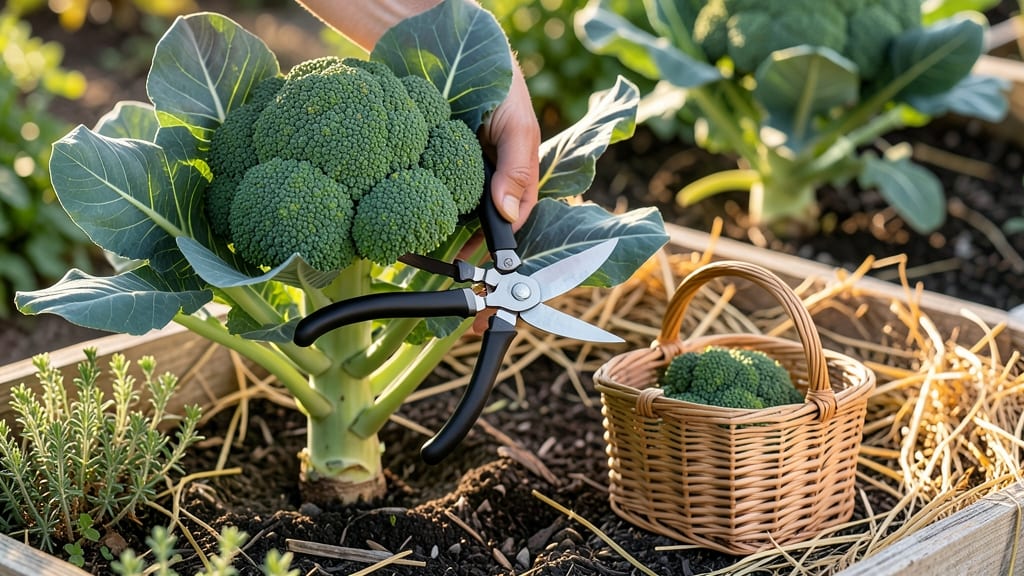
To pick broccoli from the garden at its peak, watch for a firm, dark green head that’s 3–5 inches wide—any later and you’ll lose that crisp, sweet flavor you’ve been waiting for.
Harvesting broccoli at the wrong time means sacrificing flavor, texture, and even future yields—so knowing exactly when to pick is the secret to garden success. One day too early, and you get bitter florets; one day too late, and those tight buds start spreading like a bad haircut.
Beyond the size, pay attention to the color and tightness of the head. A vibrant, deep green 🥦 with no yellowing and florets that don’t gap when you squeeze it? That’s your cue. Overlook these signs, and you’ll end up with woody stems and a head that’s past its prime.
Here’s what you’ll learn: the three foolproof clues to harvest broccoli at its sweetest, how to spot hidden readiness signals before they’re obvious, and what to do if you miss the window—plus, how to coax a second harvest from your plants.


3 Exact size & color clues to harvest broccoli at peak flavor
Nothing beats the satisfaction of harvesting broccoli at its sweetest, crunchiest point—when the flavor is intense and the texture is perfect. But timing is everything. Broccoli heads that are too small or too mature lose their sweetness and develop bitter, woody florets.
The key lies in three precise indicators: head diameter, floret tightness, and stem color. Master these clues, and you’ll never miss peak harvest again.
I’ve learned the hard way that even a single day’s delay can turn perfect broccoli into something tough and less flavorful. The science behind these cues is simple: broccoli’s nutrients and sugars peak when the head is fully developed but before it starts flowering.
Focus on these three visual and physical signals to guarantee your harvest is crisp, sweet, and packed with flavor.
📊 Comparison Table: Ideal vs. Overgrown Broccoli
| Harvest Stage | Head Diameter (Inches) | Floret Tightness | Stem Color | Flavor Profile | When to Cut |
|---|---|---|---|---|---|
| Perfect | 3–5 inches | Tightly packed florets | Deep green, vibrant | Sweet, crisp, mild | Cut immediately |
| Early (Underripe) | 1–2 inches | Loose, sparse florets | Pale green, dull | Bitter, fibrous | Wait 2–3 days |
| Overripe | 5+ inches | Florets spreading apart | Yellowing, dull | Bitter, woody | Harvest side shoots |
The head diameter is your first clue. Aim for a 3–5 inch head—this is the sweet spot for broccoli. Heads smaller than 3 inches are underdeveloped and often bitter, while anything larger than 5 inches starts to spread and lose its crispness.
I measure mine with a ruler for precision, especially when growing multiple plants.
Next, check the floret tightness. Perfect broccoli has florets so tightly packed they look almost fused together. If you can see gaps between florets or the head starts to open slightly, it’s past its prime.
A quick way to test? Gently press a floret—if it gives slightly, it’s ready; if it’s rock-hard, wait a few days.
Don’t overlook the stem color. A vibrant, deep green stem signals a healthy plant and peak flavor. If the stem turns yellow or starts to wilt, the broccoli is stressed or overripe.
I also look for a thick, sturdy stem—at least 1–1.5 inches in diameter—because thinner stems often mean the head isn’t fully developed.
Pro tip: Harvest in the morning after the dew has dried. This ensures the broccoli is crispest and most flavorful. Use a sharp knife or pruners to cut the stem about 5–7 inches below the head.
This leaves room for side shoots to grow, giving you a second harvest in 2–3 weeks.
Even with these clues, I’ve had seasons where broccoli bolts too quickly—especially in hot weather. If this happens, focus on harvesting the side shoots that form after the main head. These smaller florets are still delicious and less prone to bitterness.
Remember,
How to check for hidden signs your broccoli is ready (beyond size)
Even when your broccoli head looks close to perfect, subtle clues can reveal whether it's truly ready for harvest. These hidden signs often appear days before the head reaches its ideal size, giving you the edge for peak flavor and texture.
I've learned that ignoring these cues can mean sacrificing sweetness and crispness—so let's uncover what your plants are really telling you.
One of the first hidden indicators is the leaf color shift. When the lower leaves start turning yellow, your broccoli is redirecting nutrients to the head, signaling it's nearing maturity.
This isn't just about aesthetics—it's your plant's way of saying, "I'm almost ready!" I've seen this happen most noticeably in my spring crops when temperatures start to climb.
- 1. The Bud Test: Tiny yellow flowers forming at the center mean it's past prime—harvest immediately.
- 2. Leaf Color Shift: Lower leaves turning yellow signals nutrient redistribution to the head.
- 3. The Squeeze Test: Gently press florets—if they yield slightly, they're ready to pick.
- 4. Stem Thickness: Ideal stems are 1-1.5 inches thick at the base when harvested.
- 5. Morning Harvest: Pick in the morning after dew dries for crispest texture.
My favorite trick is the 'test squeeze' method. Gently press a floret—if it gives just slightly under your finger, it's ready. Rock-hard florets need 2-3 more days, while overly soft ones mean you've waited too long.
I've found this works especially well for heirloom varieties that mature unevenly. This simple touch test has saved me from harvesting broccoli that was either too tough or already starting to bolt.
Don't overlook the stem thickness either. The ideal stem should measure between 1-1.5 inches at the base when you harvest. Thinner stems often indicate the plant is still growing, while thicker stems can mean the head is overdeveloped.
I measure stems with my thumb—if it's about the width of my index finger, it's usually perfect. This simple measurement has helped me avoid harvesting heads that were either too small or already woody.
Timing your harvest is just as important as the visual cues. I've learned that morning harvests produce the crispest broccoli because the plants are fully hydrated after overnight watering. The cool morning temperatures also help preserve the vibrant green color.
If you must harvest later in the day, do it in the late afternoon to avoid the heat stress that can make florets wilt quickly.
For slow-growing plants or those under stress, watch for signs of nutrient deficiency like yellowing between leaf veins or purple stems. These plants may need extra nitrogen or consistent watering to reach maturity.
I've had success with a light application of fish emulsion when I see these early warning signs, which can help bring the plant back to optimal growing conditions.
Remember, these hidden signs work together to give you the most accurate picture of your broccoli's readiness. By paying attention to leaf color, stem thickness, and the squeeze test, you'll consistently harvest broccoli at its peak—just when it's sweetest, crispiest, and most nutritious.
These subtle cues have become my secret weapon for garden success, and they can work for you too! 🥦