
Planting
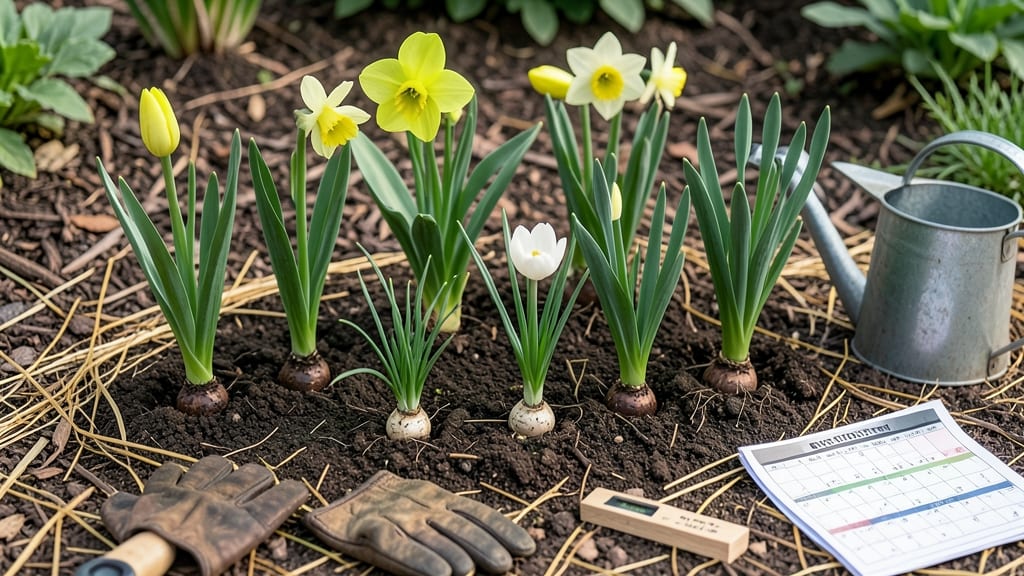
To plant bulbs in your garden at the perfect time means catching that narrow frost-free window—because a few weeks too early or late can mean no blooms at all.
Timing is everything when planting bulbs—get it wrong, and you’ll miss the blooms you’ve been dreaming of. But with the right frost-free window, you can transform your garden into a year-round floral masterpiece, from early spring daffodils to late-fall crocuses.
Most gardeners focus on fall planting for spring blooms, but some bulbs—like lilies—wait for spring. The key is knowing your USDA zone, soil temps, and when to tuck those 🌷 bulbs into the ground before the frost arrives.
Here’s how to pinpoint your exact planting window by zone, plus soil prep tips and care tricks to ensure vibrant blooms year after year.
Best planting times for garden bulbs by US hardiness zone
Planting bulbs at the right time ensures vibrant blooms and healthy growth. Most gardeners focus on fall planting for spring flowers, but timing varies drastically by USDA hardiness zone.
Whether you're in Zone 3 with harsh winters or Zone 10 with mild climates, knowing your frost-free window is key to success. Let's break down the ideal months for planting popular bulbs like tulips, daffodils, and hyacinths across all zones.
For spring-blooming bulbs like tulips and hyacinths, fall planting is critical—they need time to establish roots before winter. In colder zones (3-5), aim to plant 6-8 weeks before the first frost, while warmer zones (8-10) can plant until December or even January.
Meanwhile, daffodils and crocuses are more flexible, thriving when planted in fall or early spring.
Here’s how to determine your perfect planting window based on your zone:
| USDA Zone | Fall Planting Window (Spring Blooms) | Spring Planting Window (Summer/Fall Blooms) | Key Bulbs for Zone | Soil Prep Tip |
|---|---|---|---|---|
| Zones 3-4 | September 15 - October 15 | April 1 - May 15 | Tulips, Daffodils, Hyacinths, Alliums | Amend soil with compost and sand for drainage |
| Zones 5-6 | October 1 - November 1 | April 15 - May 30 | Crocuses, Snowdrops, Lilies, Fritillaries | Add bone meal for phosphorus |
| Zones 7-8 | November 1 - December 15 | May 1 - June 15 | Daffodils, Rain Lilies, Gladiolus, Begonias | Mulch after planting to retain moisture |
| Zones 9-10 | December 1 - January 31 | June 1 - July 15 | Tuberoses, Cannas, Dahlias, Caladiums | Plant in well-draining containers if soil is heavy |
*Adjust dates 1-2 weeks earlier for high-altitude areas or later for coastal regions.
In Zones 3-4, where winters are brutal, plant tulips and daffodils by mid-October to give roots time to establish before the ground freezes. Use mulch (like straw) to insulate bulbs during winter.
For Zone 5-6, extend your planting window slightly later—early November works well—since frosts arrive later. Add bone meal to boost root growth before the first freeze.
Warmer zones like 7-8 offer flexibility. You can plant daffodils in November or even December for spring blooms, but avoid planting too late—soil should still be workable and above 40°F.
In Zones 9-10, where frost is rare, focus on winter/spring planting for bulbs like tuberoses or caladiums, which thrive in mild climates.
Pro tip: Use a bulb planter or trowel to dig holes 3x deeper than the bulb’s height. Space bulbs 3-6 inches apart depending on variety—closer for small bulbs like crocuses, wider for tulips. Water thoroughly after planting to settle the soil and encourage root growth.
For spring-planted bulbs like gladiolus or dahlias, wait until the soil warms to 60°F+ in Zones 5-10. In colder zones, start these in containers indoors and transplant after the last frost. Always check the back of bulb packages for specific care instructions—some varieties have unique needs!
Remember: Soil temperature matters more than air temperature. Use a soil thermometer to confirm it’s below 60°F before planting fall bulbs. In Zone 10, where winters are mild, you can even plant some bulbs in late winter for summer blooms—just keep them moist until roots establish.
Layering bulbs is another trick for continuous color. Plant crocuses (early spring) under tulips (mid-spring) with alliums (late spring) in the same spot. This creates a staggered bloom sequence that keeps your garden lively from February to June.
Finally, mark your planting dates on a calendar and set reminders. Missed the fall window? Don’t worry—many bulbs, like daffodils, can be planted in early spring too. Just be prepared for slightly smaller blooms the first year. Happy planting! 🌷
How to calculate your local frost-free window for bulb planting
Planting bulbs at the wrong time can mean the difference between a vibrant spring garden and wasted effort. Your frost-free window determines the perfect moment to plant, ensuring bulbs establish roots before winter sets in.
This window varies by USDA zone and local microclimates, so let’s break it down step by step.
First, locate your USDA hardiness zone using the USDA Plant Hardiness Zone Map. This tells you your general climate range, but it’s just the starting point. Next, find your average first and last frost dates for your area—these are critical for timing bulb planting.
Tools like the National Oceanic and Atmospheric Administration (NOAA) or local gardening extensions can provide this data.
Use the USDA Plant Hardiness Zone Map to identify your zone (e.g., Zone 5, Zone 8). This sets your baseline for frost timing.
Visit NOAA’s Frost/Freeze Product or your state’s agricultural extension for your area’s average first frost date in fall and last frost date in spring.
Use a soil thermometer to confirm soil temps below 60°F for fall planting or above 50°F for spring planting. Most bulbs need 6-8 weeks to root before frost.
South-facing slopes warm faster; low-lying areas freeze earlier. Plant 2-3 weeks earlier in warm microclimates or delay 1-2 weeks in cold spots.
Tools like the Burpee Bulb Planting Guide or Park Seed Calculator plug in your zip code and suggest exact planting dates for your bulbs.
For example, if you’re in Zone 6a with an average first frost on October 15, aim to plant fall bulbs like daffodils or tulips between September 15 and October 1. This gives them 6-8 weeks to root before the ground freezes.
Spring-planted bulbs, like lilies or dahlias, should go in after your last frost date, usually in April or May.
Don’t forget to account for microclimates in your garden. A south-facing slope might stay frost-free longer, while a valley or shaded spot could freeze earlier. Adjust your planting window by 1-3 weeks based on these conditions.
For instance, if your yard has a sunny microclimate, plant bulbs 10-14 days earlier than the general guideline.
Once you’ve nailed down your frost-free window, mark your calendar and get those bulbs in the ground! Timing is everything, and with this method, you’ll be rewarded with stunning blooms year after year. 🌷