
Tools
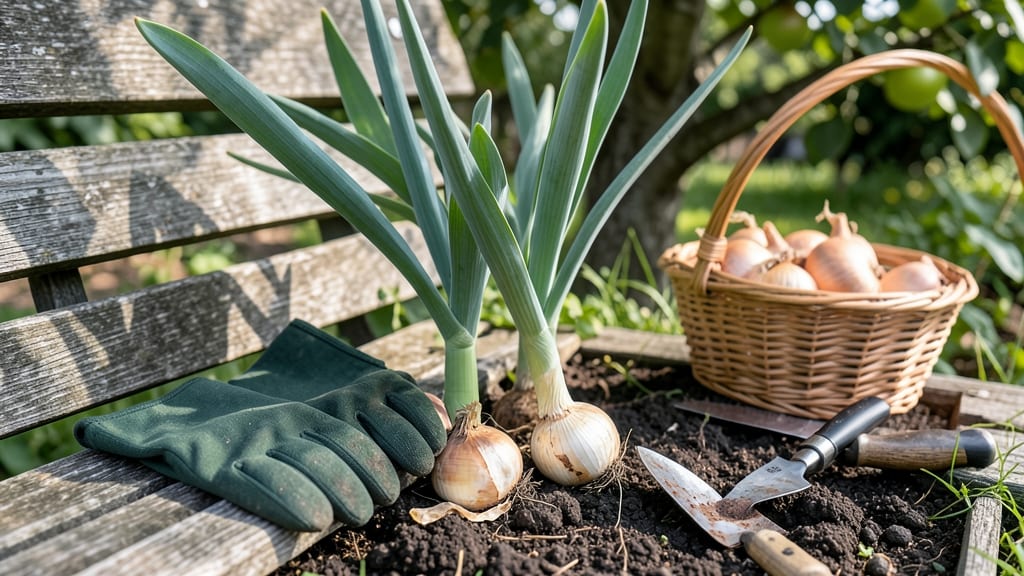
Pulling onions from your garden at the right time ensures sweet, flavorful bulbs instead of bitter, pungent ones—so timing is everything for home growers.
You’ve nurtured your 🧅 through spring rains and watched them grow, but one wrong move can ruin months of effort. The difference between a perfect harvest and a wasted one often comes down to knowing when those tops yellow and flop, or when the neck shrinks to half an inch.
Miss these cues, and you’ll either pull them too early (soft, pithy messes) or too late (bolting flowers that ruin storage).
Most gardeners in USDA Zone 6a (like me!) can expect harvest-ready onions between June and July, roughly 100–120 days after planting. But climate matters—cooler regions may need an extra week, while hotter areas could see them mature faster.
The key is balancing visual signals (like dry, papery skins) with your local growing season.
Below, I’ll walk you through the top 5 signs your onions are ready, how to test them without guessing, and what to do next—whether you’re curing for storage or prepping for fresh eating. No more second-guessing at harvest time!
5 Visual signs your onions are ready for harvest
Knowing when to pull onions from your garden is an art—one that separates flavorful, long-storing bulbs from bland, pungent disappointments. Many gardeners wait too long, risking bolting (flowering) or too short, leaving small, weak onions.
The key? Watching for these 5 clear visual cues that your onions have reached peak maturity.
I’ve harvested hundreds of onions over the years, and these signs never fail me. The moment your onion tops yellow and the neck shrinks dramatically, that’s your cue to grab your gardening gloves and get digging.
But let’s break it down step by step so you never miss the window again.
-
1. Tops Turn Yellow and Flop Over
When 70-80% of the foliage yellows and falls sideways, your onions are ready. This signals the plant is redirecting energy to the bulb. -
2. Neck Shrinks to ½-Inch Diameter
The stem connecting the bulb to the leaves should shrink dramatically. If it’s thicker than a pencil, wait a few days. -
3. Paper Skin Forms on Bulbs
Gently squeeze a bulb—if it feels dry and papery (not soft), it’s time. A tight, green skin means it’s underripe. -
4. Bulbs Feel Firm When Squeezed
Press a bulb gently—it should resist pressure. Soft bulbs are still growing; overly hard ones may be past their prime. -
5. Foliage Dries Down to 2-3 Inches
Leave 1-2 inches of green tops when harvesting. This helps the bulb cure properly and prevents neck rot.
One mistake I see often? Pulling onions too early because the tops are just starting to yellow. Patience is key—wait until at least 50% of the foliage has turned golden. Early harvests yield small bulbs with poor storage life.
Another common error is harvesting after the tops completely brown and die back. By then, the bulbs may have split or developed hollow centers. The sweet spot? When the tops are dry but still attached—not crispy and brittle.
Pro tip: If you’re unsure, dig up one test onion from the outer rows. Slice it open—if the layers are thick and dry, your whole batch is ready. If they’re thin and moist, wait another week.
Regional differences matter too. In hot climates (Zones 8-10), onions mature faster—sometimes in just 90 days. In cooler zones (like my Zone 5 garden), they take 120+ days. Always adjust your timeline based on your local growing season.
Once you’ve spotted these signs, act quickly! Onions left in the ground too long can bolt (send up a flower stalk), which ruins the bulb. Grab a fork, loosen the soil, and gently lift—never pull by the tops to avoid damaging the bulb.
After harvesting, let your onions cure in a dry, shaded spot for 2-3 weeks. This hardens the skin and improves storage life. Skip this step, and you’ll end up with soggy, rotting onions by winter.
How to test onion maturity before pulling (without guessing)
When your onion tops start yellowing, it’s tempting to dig up a few bulbs for a taste test—but that’s not the best way to judge maturity. Instead, I use a simple 3-step method to confirm when onions are truly ready.
This ensures you harvest at peak flavor and storage quality, avoiding the risk of overripe or underdeveloped bulbs. Let’s break it down so you can pull onions with confidence.
First, wait until the foliage yellows and dries down to about 2-3 inches above the soil. This is your first visual cue that the bulb is maturing. However, visuals alone aren’t enough—you’ll need to test the bulb itself.
The key is checking for firmness and paper skin, which indicate the onion is ready for harvest. Skipping these steps can lead to bulbs that split, rot, or lack flavor.
-
Step 1: Check the Top
✅Look for yellowing tops that have fallen over or dried to 2-3 inches tall. If tops are still green and upright, wait 1-2 weeks.
-
Step 2: Gently Dig and Inspect
🧅Use a fork to loosen soil around 1-2 onions. Gently pull them up and check for a firm bulb with paper skin. If the bulb feels soft or spongy, it’s not ready.
-
Step 3: Test the Neck
✂️Squeeze the neck (stem). If it’s ½-inch thick or thinner and shriveled, the onion is mature. A thick neck means it needs more time.
-
Step 4: Cure and Store
🌡️Lay harvested onions in a dry, shaded area for 1-2 weeks to cure. This hardens the skin and improves storage life. Avoid washing before curing!
If your onions pass these tests, it’s time to harvest the entire patch. But what if only some are ready? For partial harvests, gently dig around mature bulbs, leaving others to finish maturing.
This works best for green onions or smaller varieties. Remember, once you start harvesting, monitor the remaining onions closely—they’ll mature quickly after their neighbors are pulled.
For storage onions, timing is critical. Harvest them when the neck shrinks to ½-inch and the tops dry completely. If you wait too long, bulbs may split or sprout, ruining their storage potential.
Store cured onions in a cool, dry place with good airflow, like a mesh bag or ventilated box. This keeps them fresh for 6-8 months or longer.
Pro tip: If you’re unsure, harvest a few test onions and taste them. Overripe onions develop a bitter or harsh flavor, while perfectly mature ones are sweet and crisp. This quick check can save your entire crop from going to waste!
Now that you’ve mastered the art of testing onion maturity, you’ll never guess again. Happy harvesting—and enjoy those flavorful, homegrown bulbs all season long! 🌱