
Light Requirements
A garden needs between 6 and 8 hours of sunlight daily to thrive, though the exact amount depends on what you’re growing — and most gardeners either overestimate or underestimate their yard’s light exposure.
Picture this: your tomatoes are wilting by noon, your herbs are stretching toward the sky like they’re desperate for more, and your shade-loving hostas are crisping at the edges. These are classic signs your garden’s sunlight equation is off, and the fix isn’t just moving a pot or two.
Sunlight is the backbone of plant health, but not every garden gets the same amount. In Zone 6, morning sun might feel gentle, while afternoon rays can turn into a scorching challenge — and that’s before you account for trees, buildings, or even your neighbor’s fence.
The key isn’t guessing; it’s matching your plants to their ideal light ranges.
Below, I’ll break down the exact sunlight hours for vegetables, flowers, and herbs, show you how to measure your garden’s light like a pro, and reveal the three most common mistakes that sabotage growth before it even starts.


Sunlight requirements by plant type: full sun vs partial shade vs low light
Sunlight is the lifeblood of your garden, but not all plants thrive under the same conditions. Full sun lovers need 6+ hours of direct light, while partial shade plants prefer 3-6 hours, and low-light varieties survive with less than 3 hours.
Getting this right means the difference between lush harvests and struggling plants. Let’s break down exactly what each category needs to flourish.
First, understand that sunlight intensity varies by season and location. A south-facing garden in Zone 6 gets more hours than a north-facing bed, and summer sun lasts longer than winter’s. Even small adjustments—like moving pots or pruning nearby trees—can change a plant’s exposure by hours per day.
Start by observing your garden’s natural light patterns before planting.
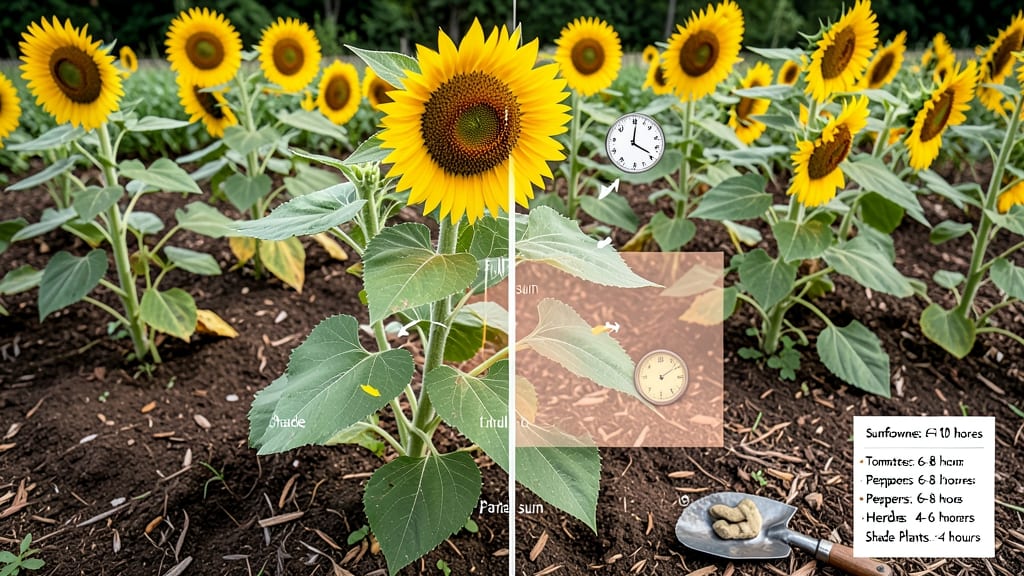
Here’s the visual breakdown of sunlight needs by plant type, including common examples and growth impacts:
Notice how vegetables like tomatoes and sunflowers dominate the full-sun category? That’s because they rely on intense light for photosynthesis and fruit production. Even a 1-hour shortfall can reduce tomato yields by 30%.
Meanwhile, hostas and ferns in partial shade stay vibrant but wilt under harsh afternoon sun. Low-light plants like pothos are your best bet for shady corners, but they’ll never thrive in full sun.
Pro tip: Group plants by sunlight needs to avoid competition. Place full-sun lovers together in the brightest spots, partial-shade plants in dappled areas, and low-light varieties under trees or near north-facing walls. This simple strategy maximizes space and minimizes stress on your plants.
Seasonal shifts matter too. A spring-planted basil might get 8 hours of sun in May but only 4 hours in September. Use reflective surfaces (like white mulch or mirrors) to bounce extra light onto shade-prone areas during shorter winter days.
Even a 10% increase in light can boost growth by 20%.
For container gardens, mobility is key. Move pots throughout the day to follow
How to measure sunlight in your garden and adjust plant placement
Measuring sunlight accurately is the first step to creating a thriving garden. Many gardeners assume they know how much sun their space gets, but seasonal shifts, nearby structures, and even tree growth can drastically alter light exposure.
Without precise measurements, you risk overcrowding sun-loving plants or leaving shade-tolerant varieties struggling. The key is using simple tools and observing patterns over time to match each plant's needs.
Start by observing your garden's sunlight patterns for at least two weeks in spring and summer—this accounts for seasonal variations. Use a sunlight calculator app (like Sun Surveyor or Plantix) or a DIY method: place a white stake in your garden and mark the shadow every hour.
This visual map reveals exactly how sunlight shifts throughout the day, helping you identify microclimates within your space. For example, a north-facing corner might get only 3 hours of morning sun, while a south-facing bed could receive 8+ hours.
- Full Sun (6+ hours): Ideal for tomatoes, peppers, and lavender. Place these in the sunniest spots with minimal obstructions.
- Partial Shade (3-6 hours): Perfect for herbs like basil and parsley. These thrive in morning sun + afternoon shade to avoid wilting.
- Low Light (<3 hours): Hostas and ferns flourish here. Group them together to maximize limited sunlight and reduce competition.
- Seasonal Adjustments: Summer sun peaks at 10-14 hours/day, but winter drops to 4-6 hours. Rotate plants accordingly.
- Reflective Surfaces: Use light-colored mulch or mirrors to redirect sunlight into shady corners for extra growth.
Once you've mapped your garden, group plants by their sunlight needs to optimize space. For instance, place tomatoes and marigolds together in full sun, while lettuce and pansies can share partial shade. Rotate plants every 2-3 years to prevent soil depletion and even out sunlight exposure.
Tall plants like sunflowers should face south to avoid casting shadows on shorter varieties, and consider vertical gardening for sun-loving climbers like cucumbers or beans.
Don’t forget to adjust for seasonal light changes. In summer, your garden might receive 12+ hours of daylight, but winter can drop that to 6 or fewer.
Use seasonal shade cloth (30-50% coverage) to protect delicate plants from intense midday sun, or move potted plants to sunnier spots during cooler months. For container gardens, rotate pots weekly to ensure even light exposure on all sides, preventing lopsided growth.
Even with perfect sunlight measurements, plant spacing matters. Overcrowding blocks sunlight for lower leaves, increasing disease risk and reducing yields. Follow spacing guidelines: 18-24 inches apart for tomatoes, 12 inches for herbs, and 6-12 inches for leafy greens.
If your garden has uneven sunlight, prioritize high-value crops (like peppers or berries) in the sunniest areas and fill gaps with shade-tolerant fillers like Swiss chard or nasturtiums.
With these adjustments, your garden will thrive year-round. Start small—measure one bed at a time—and watch as your plants respond with healthier foliage, bigger blooms, and higher yields.
The secret isn’t just knowing how many hours of sunlight your garden needs, but how to harness that light strategically for every plant’s unique requirements. 🌿☀️