
Fertilization
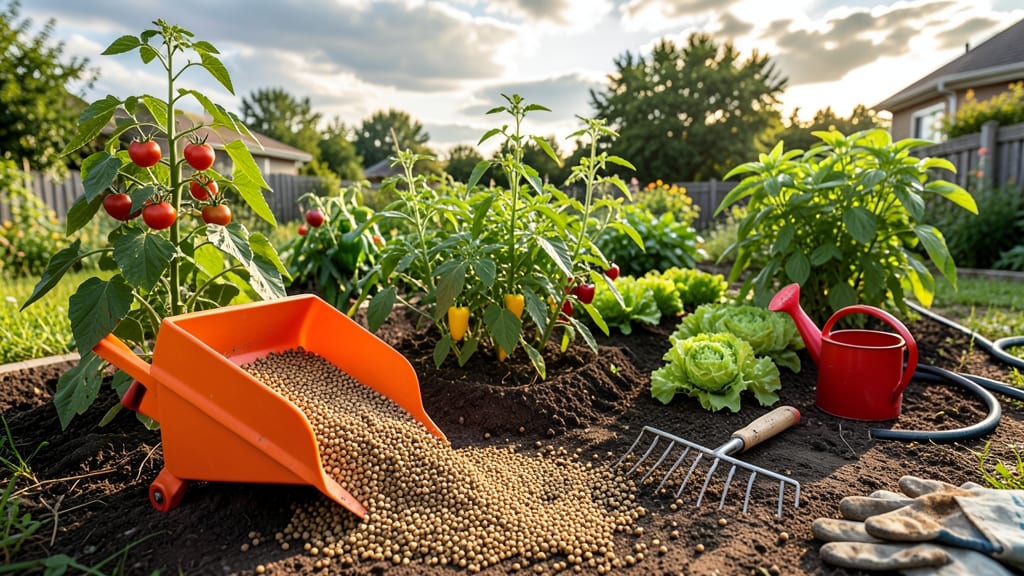
You should fertilize your garden every 4 to 6 weeks during the growing season — but timing and type matter just as much as frequency.
Over-fertilizing your garden can be just as harmful as under-fertilizing, leaving you with burnt leaves or stunted growth instead of the lush plants you envisioned. The key is understanding when to feed your 🌱 General Garden based on what you're growing, your soil health, and the season.
Vegetables like tomatoes and peppers crave consistent feeding, while flowers and lawns often do better with a lighter touch. Organic fertilizers release nutrients slowly, while synthetics work faster — and knowing the difference can save you time and money.
In this guide, I’ll break down the best schedule for your specific plants, how to spot when your garden is begging for (or begging off) fertilizer, and how to adjust for your unique soil and climate in USDA Zone 6a.

Seasonal fertilization schedule for different plant types
Fertilizing your garden isn't a one-size-fits-all task—it's a seasonal dance between feeding your plants just enough to thrive and avoiding the pitfalls of over-fertilization. Vegetables, flowers, lawns, and trees all have unique needs, and timing matters just as much as what you apply.
Think of spring as your plant's wake-up call, summer as their growth spurt, and fall as their wind-down. Let's break down the science-backed schedule to keep your garden lush without wasting resources.
One of the biggest mistakes gardeners make is fertilizing at the wrong time. For example, fall fertilizing can encourage tender new growth that won't survive winter frosts, while spring applications give plants the boost they need to establish strong roots.
The key is understanding your plant types and matching fertilization to their natural cycles. Organic fertilizers like compost or manure release nutrients slowly, while synthetic fertilizers provide an immediate but shorter-lived boost—both have their place when used correctly.
🌱 Plant Type | Seasonal Schedule | Fertilizer Type | Frequency --- | --- | --- | --- Vegetables (e.g., tomatoes, peppers) | Spring: At planting + 4-6 weeks later | Organic (compost) or Balanced (10-10-10) | Every 3-4 weeks during growing season Flowers (e.g., roses, petunias) | Spring: Early spring + mid-season | Slow-release organic or Low-nitrogen (5-10-10) | Every 6-8 weeks Lawns | Spring: Early spring + late spring | High-nitrogen (24-0-5) or Organic (alfalfa meal) | 4-6 times/year (spring & fall) Trees & Shrubs | Spring: Early spring (before buds swell) | Organic (compost) or Slow-release (14-14-14) | Once in spring, once in summer (if needed) Herbs (e.g., basil, cilantro) | Spring: At planting + light feed | Low-nitrogen (5-5-5) or Fish emulsion | Every 4-6 weeks (lightly)
🌿 Spring is the powerhouse season for fertilization. This is when you want to give your garden a strong foundation.
For vegetables, apply a balanced fertilizer like 10-10-10 at planting and again 4-6 weeks later to support rapid growth. Flowers benefit from a low-nitrogen fertilizer to encourage blooming, while lawns need high-nitrogen applications in early and late spring to green up quickly.
Trees and shrubs should get a slow-release organic fertilizer to avoid root burn during their active growth phase.
In summer, the focus shifts to maintenance.
Vegetables and flowers may need a light feeding every 4-6 weeks, but avoid high-nitrogen fertilizers that promote leafy growth at the expense of fruits or blooms. Lawns can handle a final summer feeding in late August to prepare for fall, while trees generally don't need summer fertilization unless they show signs of stress.
Organic options like compost tea or worm castings are excellent for summer top-ups—they feed the soil, not just the plant.
Fall fertilization is often misunderstood. Most plants enter dormancy by late summer, and feeding them can encourage weak, frost-sensitive growth. Lawns are the exception—apply a winterizer fertilizer (high in potassium) in early fall to strengthen roots for winter.
For vegetables like kale or carrots that mature in fall, a light feeding in early September can extend the harvest season. Trees and shrubs should not be fertilized in fall, as this disrupts their natural dormancy cycle.
Winter is the garden's resting period, so fertilization should be minimal to nonexistent. The exception is houseplants, which may need a light feeding in late winter to kickstart spring growth.
For outdoor gardens, focus on soil health by adding compost or mulch instead of fertilizers. This builds organic matter that will feed your plants naturally when spring arrives.
Choosing between organic and synthetic fertilizers depends on your garden's needs. Organic options like compost, manure, or bone meal release nutrients slowly, improving soil structure over time. They're ideal for long-term soil health but require more frequent applications.
Synthetic fertilizers provide immediate results and are great for quick fixes, but they can lead to nutrient imbalances if overused. My rule of thumb: Use organic for most plants, and synthetic only for specific needs like lawn greening or correcting deficiencies.
Watch for signs of over-fertilization, such as yellowing leaves, leaf burn, or stunted growth. These are your plant's way of saying, "I've had enough!" If you see these symptoms, flush the soil with water and hold off on fertilizing for a few weeks.
On the flip side, pale leaves, slow growth, or small fruits signal it's time to feed your garden. Adjust your schedule based on what your plants are telling you.
🌳 Pro tip: Always water your plants thoroughly after fertilizing to help nutrients penetrate the soil and prevent root burn. Early morning is the best time to fertilize—it gives plants time to absorb nutrients before the heat of the day.
And remember, a little prevention goes a long way. Regular soil testing can help you fine-tune your fertilization plan and avoid costly mistakes.
Signs your garden needs fertilizer (and when to stop)
Your plants are the best indicators of whether they need fertilizer. Look for yellowing leaves, especially on older foliage, which often signals a nitrogen deficiency. Stunted growth, weak stems, or smaller-than-expected flowers are also red flags that your garden could benefit from extra nutrients.
These signs suggest your soil may not be providing enough essential minerals for healthy development.
On the flip side, dark green leaves with purplish undersides or leaf tips that turn brown and crispy can mean you're over-fertilizing. This often happens when too much fertilizer—especially high in nitrogen—builds up in the soil.
Roots may also burn, leading to poor plant health despite the extra nutrients. It's a delicate balance to find the right amount.
When to Fertilize Your Garden
- Boosts growth for faster yields
- Enhances flower and fruit production
- Improves soil health over time
- Helps plants recover from stress
- Causes leaf burn and root damage
- Leads to water pollution if runoff occurs
- Encourages pests and diseases
- Wastes money and resources
For vegetable gardens, focus on nitrogen early in the season to promote leafy growth, then switch to a balanced fertilizer (like 10-10-10) as plants mature. Flowering plants often need phosphorus-heavy fertilizers to encourage blooms, while lawns benefit from slow-release nitrogen throughout the growing season.
Always match the fertilizer type to your plants' needs.
Another key sign is slow recovery after harvesting or pruning. If your plants take longer than usual to bounce back, they may need a nutrient boost. However, if you notice excessive leaf drop or mushy stems, it’s time to stop fertilizing immediately.
These are clear signs of over-fertilization, and your plants need time to recover from the stress.
Seasonal changes also play a role. In spring and summer, most plants are actively growing and will benefit from regular fertilization. But by late summer and fall, many plants begin preparing for dormancy, and fertilizing can actually delay this process, leaving them vulnerable to frost damage.
Adjust your routine based on the season and your plants' life cycles.
Pay attention to plant-specific signals, too. For example, tomatoes often show deficiency by developing yellow leaves between veins, while roses may produce fewer blooms if they lack phosphorus.
Keep a gardening journal to track which fertilizers work best for your specific plants and soil conditions. This will help you fine-tune your approach over time.