
Watering
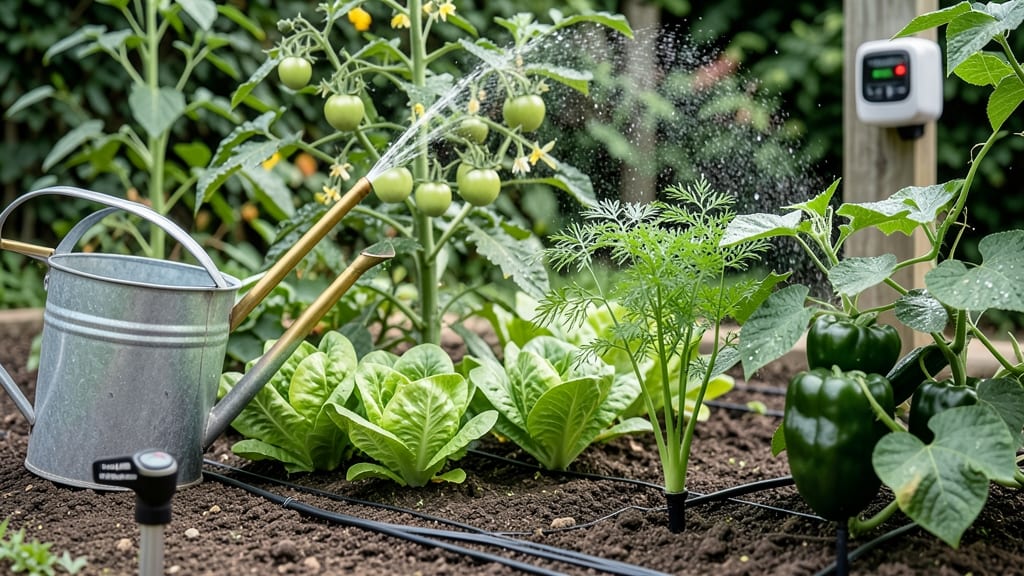
Watering your vegetable garden the right way means knowing how often to water it so that your 🥬 thrives—not just survives.
Too much or too little water can turn your hard work into a sad, wilted mess. But here’s the good news: with a few simple rules based on your soil type and the weather, you can keep your plants happy without guessing.
In this guide, I’ll break down the science behind watering schedules, from sandy soil that drains fast to clay that holds moisture like a sponge.
You’ll learn how often to water based on your zone, what signs to watch for, and even how to adjust for different crops like tomatoes, lettuce, and herbs.
By the end, you’ll have a foolproof system to keep your vegetable garden lush, productive, and free from the stress of over- or under-watering.
Soil-based watering frequency guide for vegetable gardens
Your vegetable garden's soil type dictates how often you should water—sandy soil drains quickly while clay holds moisture longer. Loamy soil strikes the perfect balance, but even it needs adjustments based on weather and plant types.
Understanding these differences ensures your tomatoes, lettuce, and herbs thrive without stress or waste. Let's break down the science so you can water with confidence, not guesswork.
Sandy soil's coarse particles create large air pockets, causing water to drain within 1-2 hours.
This means frequent but shallow watering can lead to shallow root systems. Clay soil, on the other hand, compacts tightly, trapping moisture but suffocating roots if overwatered. Loamy soil—the gardener's gold—retains moisture while allowing drainage, making it the easiest to manage.
Your watering schedule should adapt to these textures to prevent root rot or drought stress.
Here’s how soil texture affects your watering routine:
| Soil Type | Moisture Retention | Watering Frequency | Depth per Session | Best Time to Water |
|---|---|---|---|---|
| Sandy | Low (drains fast) | Every 1-2 days (summer) | 6-8 inches | Early morning |
| Loamy | Moderate (ideal balance) | Every 2-3 days (summer) | 4-6 inches | Morning or evening |
| Clay | High (retains moisture) | Every 3-5 days (summer) | 3-4 inches | Evening (to reduce evaporation) |
For sandy soil gardens, aim for daily watering in peak summer but adjust to every other day in spring/fall.
Use a soaker hose or drip irrigation to deliver water slowly, encouraging roots to grow deeper. Clay soil gardens benefit from mulching to prevent water loss—apply 2-3 inches of straw or wood chips around plants. This mimics natural rainfall patterns and reduces the need for frequent watering.
Seasonal shifts demand flexibility. In summer's heat, even loamy soil may need daily watering, while winter's chill can stretch intervals to once a week. Pay attention to weather forecasts: after heavy rain, skip watering entirely.
Use a moisture meter or the finger test (insert your finger 1-2 inches deep—if dry, water). This simple check prevents overwatering, which can drown roots just as effectively as underwatering.
Young seedlings are the most delicate. During their first 2-3 weeks, keep soil consistently moist by watering every morning, regardless of soil type. Once established, mature plants like zucchini or peppers can handle slightly drier conditions, but leafy greens like lettuce need consistent moisture to prevent bolting.
Tailor your approach: root crops (carrots, beets) prefer deeper, less frequent watering, while fruiting plants (tomatoes, cucumbers) thrive with steady hydration.
Mulch isn’t just for aesthetics—it’s a water-saving superstar. Organic mulches like grass clippings or shredded leaves break down over time, improving soil structure while locking in moisture.
In sandy soil, mulch reduces evaporation by up to 30%, while in clay soil, it prevents crusting that blocks water penetration. Apply a 2-4 inch layer around plants, keeping it 2 inches away from stems to avoid rot.
Overwatering is a silent killer. Signs include yellowing leaves, mushy stems, or fungal spots on foliage. If your soil feels soggy 2 inches down, hold off on watering. Underwatering shows as wilting, crispy leaf edges, or dropped flowers/fruit.
Adjust your schedule based on these cues—your plants will thank you with vibrant growth and bountiful harvests.
Pro tip: Group plants with similar water needs together. For example, pair basil and peppers (both love consistent moisture) in one bed, while potatoes and onions (drought-tolerant) get another.
This zone-based watering saves time and ensures no plant gets neglected. With this soil-smart approach, your vegetable garden will flourish—no more guesswork, just thriving crops and homegrown success.
Remember, the key to perfect watering lies in observation. Check your soil, watch your plants, and adjust as needed.
Soon, you’ll have a self-sustaining garden that rewards your efforts with juicy tomatoes, crisp lettuce, and fragrant herbs—all thanks to a watering schedule tailored to your soil’s unique personality. 🌱
Signs your vegetable garden needs water (and when to hold off)
Knowing when to water your vegetable garden isn't just about following a schedule—it's about reading your plants. Leafy greens like lettuce and spinach show stress quickly, while root vegetables such as carrots or potatoes tolerate dry spells better. The key is understanding plant-specific signals before wilting becomes irreversible.
Start by checking the soil moisture with your finger. Stick it 1-2 inches deep—if it feels dry, most vegetables need water.
For container-grown plants, the soil surface may dry faster, requiring more frequent checks. Morning watering is ideal to prevent fungal diseases, but timing matters just as much as frequency.
⚠️ callout-warning ⚠️
⚠️ How Often to Water Your Veg Garden
Sandy soil: Water daily (dries fast). Loamy soil: Every 2-3 days (ideal balance). Clay soil: Every 3-5 days (retains moisture).
Heatwave? Increase frequency by 50%. Mulch? Reduces evaporation—water 10% less.
✅ Do: Water deeply (1-2 inches per week). Don’t: Overwater—yellow leaves or mushy stems signal rot.
Watch for wilting leaves, especially in the afternoon when heat stress peaks. Tomatoes and peppers droop dramatically when thirsty, while herbs like basil may curl or develop crispy edges. Leafy greens often bolt (send up flowers) if they're underwatered or overwatered—both extremes trigger stress responses.
Overwatering is just as harmful as underwatering. Puddles or soggy soil for more than a day can suffocate roots, leading to fungal diseases like blight or root rot.
If your soil smells sour or plants develop yellow lower leaves, you're likely overdoing it. Let the top inch dry between waterings for most vegetables.
For shallow-rooted plants like lettuce or radishes, keep the soil consistently moist but not soggy. Deep-rooted crops such as carrots or potatoes can handle slightly drier conditions once established. Drip irrigation or soaker hoses deliver water directly to roots, reducing waste and fungal risks compared to overhead sprinklers.
Seasonal adjustments are critical. In summer heat, water in the early morning to minimize evaporation, and consider mulching to retain moisture. During cooler months, reduce frequency—most vegetables need water every 3-5 days when temperatures drop. Always adapt based on weather forecasts and your garden's unique conditions.