
Watering
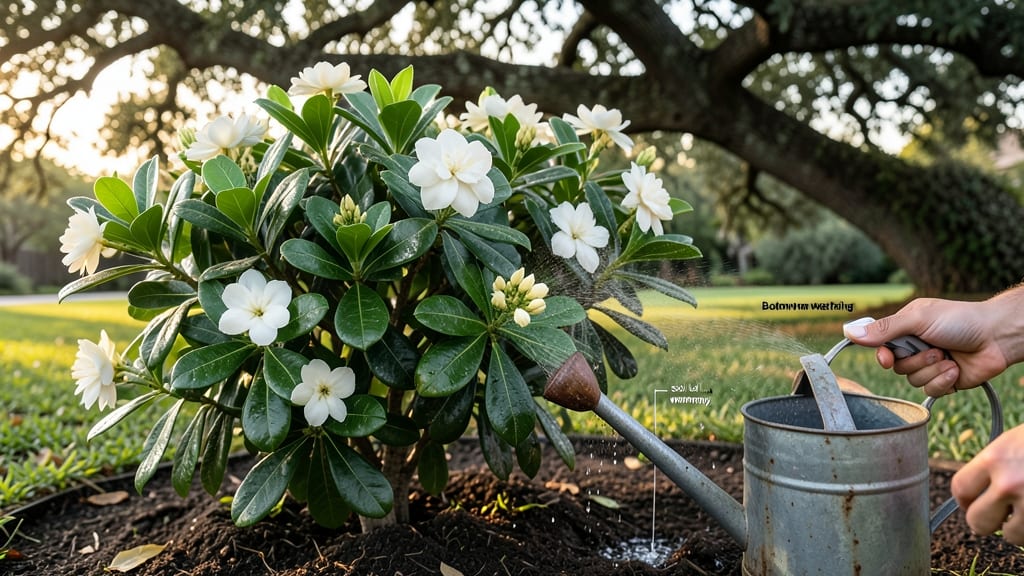
To water gardenia properly means giving it just enough moisture to thrive without drowning its roots — a trick that turns droopy leaves into fragrant blooms.
Struggling to keep your gardenia blooming beautifully without worrying about root rot? The secret lies in mastering the delicate balance of soil moisture—too much or too little can spell disaster for these fragrant favorites. One wrong move, and you’re either dealing with wilting stems or a sad, soggy mess.
Here’s the good news: with the right schedule and a few simple checks, you can keep your gardenia 🌸 happy year-round. We’ll cover when to water, how deep to go, and the best times of day to avoid wasting water or stressing the plant.
By the end, you’ll know exactly how to keep the soil moist but not soggy, spot trouble before it starts, and enjoy those iconic white blooms all summer long.
Optimal watering schedule for gardenias: when and how much
Gardenias thrive on consistent moisture, but their roots are famously sensitive to soggy soil. The key is mimicking their natural tropical habitat—deep, infrequent watering that keeps the soil evenly damp without waterlogging.
I’ve learned the hard way that gardenias hate wet feet, so let’s break down exactly how to strike that perfect balance.
Your gardenia’s watering needs shift dramatically with the seasons. During spring and summer, when growth is active, you’ll water more frequently. But in fall and winter, you’ll dial it back significantly.
The golden rule? Always water in the early morning—this gives foliage time to dry before evening, reducing fungal risks like powdery mildew.
| Season | Frequency | Time of Day | Soil Check | Water Amount |
|---|---|---|---|---|
| Spring (March-May) | Every 3-4 days | 6-8 AM | Top 1-2 inches dry | 1.5-2 gallons per plant |
| Summer (June-August) | Every 2-3 days | 5-7 AM | Top 1 inch dry | 2-3 gallons per plant |
| Fall (September-November) | Every 5-7 days | 7-9 AM | Top 2-3 inches dry | 1 gallon per plant |
| Winter (December-February) | Bi-weekly | 8-10 AM | Top 3-4 inches dry | 0.5-1 gallon per plant |
| Drought Conditions | Daily (short bursts) | Early morning | Surface dry | 1-1.5 gallons |
To check soil moisture like a pro, use the finger test—stick your index finger about 1-2 inches deep into the soil. If it feels dry, it’s time to water.
For container gardenias, the soil dries out faster, so you’ll need to water every 2-3 days in summer, even if planted in-ground varieties need less frequent watering.
For precise monitoring, invest in a moisture meter ($15 at garden centers). These gadgets take the guesswork out of watering by giving you an exact reading. I use mine to confirm when the top 1-2 inches of soil reach the ideal moisture level—neither bone-dry nor soggy.
Morning watering is non-negotiable for gardenias. Watering in the evening leaves foliage damp overnight, creating a fungal buffet for pathogens like botrytis blight. I set my timer for 6-8 AM during summer months to ensure the plant gets a full day to dry out before nightfall.
During drought conditions, increase frequency but reduce volume per watering. Instead of deep soaks, give your gardenia light, frequent waterings to prevent shock. If your area experiences prolonged dry spells, consider mulching with pine bark to retain moisture and cool roots.
Rainy seasons require extra caution. If you receive more than 1 inch of rain in a week, skip scheduled waterings entirely. Gardenias in containers need special attention—empty saucers after rain to prevent root suffocation from stagnant water.
Pro tip: Group your gardenias with other thirsty plants like hydrangeas or azaleas. This way, you can water the entire area uniformly without over- or under-watering individual plants. Consistency is what gardenias crave most—predictable moisture leads to vibrant blooms.
Remember, gardenias are sensitive to salt buildup from tap water. If your water is hard, collect rainwater or use distilled water for container plants. The extra effort pays off with healthier foliage and more abundant flowers.
Signs of overwatering vs. underwatering gardenias (and how to fix it)
Your gardenia leaves start telling a story when watering goes wrong—drooping, yellowing, or mushy stems scream for help. The key is learning these visual cues early to save your plant before root rot sets in or buds shrivel from thirst.
I’ve seen gardeners lose years of growth because they missed these subtle signals.
Overwatering is sneaky—it doesn’t always mean soggy soil. Sometimes, poor drainage or compacted soil traps moisture, suffocating roots even if you’re not drowning the plant. Underwatering, on the other hand, causes crispy edges and wilting that’s impossible to ignore. Let’s decode these symptoms so you can act fast.
🚨 Watering Gardenias Wrong Can Kill Them in 7 Days
Do this NOW: Stick your finger 2 inches into the soil—if it’s damp, wait. If dry, water until it drains from the bottom. Morning watering prevents fungal growth from evening moisture. Adjust frequency by season: every 2-3 days in summer, 5-7 in fall.
Pro Tip: Use a moisture meter for potted gardenias—they dry out faster than in-ground plants.
Yellow leaves are the first red flag, but don’t assume it’s always overwatering. Check the pattern: lower leaves yellowing often signals root stress from too much water, while upper leaves yellowing may mean nutrient deficiency (like iron chlorosis). Feel the leaves—if they’re soft and mushy, you’re overdoing it.
Wilting isn’t always a thirst signal. Overwatered gardenias wilt because roots can’t breathe, while underwatered plants wilt from dehydration. The fix? For wilting from excess water, let the soil dry slightly between waterings. For thirst, give a deep soak until water runs out the drainage holes.
Root rot is the silent killer. Look for black, mushy roots when you gently dig around the base. If the roots smell foul, you’ve got a fungal infection. Prune affected roots with sterilized shears, repot in fresh well-draining soil, and reduce watering to every 7-10 days while it recovers.
Here’s my quick-fix checklist for gardenia watering woes: ☑️ Test soil moisture before watering ☑️ Ensure pots have drainage holes ☑️ Water at soil level (not leaves) ☑️ Mulch to retain moisture without suffocating roots ☑️ Adjust for heat—water more in summer, less in winter. Blooms thrive when roots stay happy!