
Fertilization
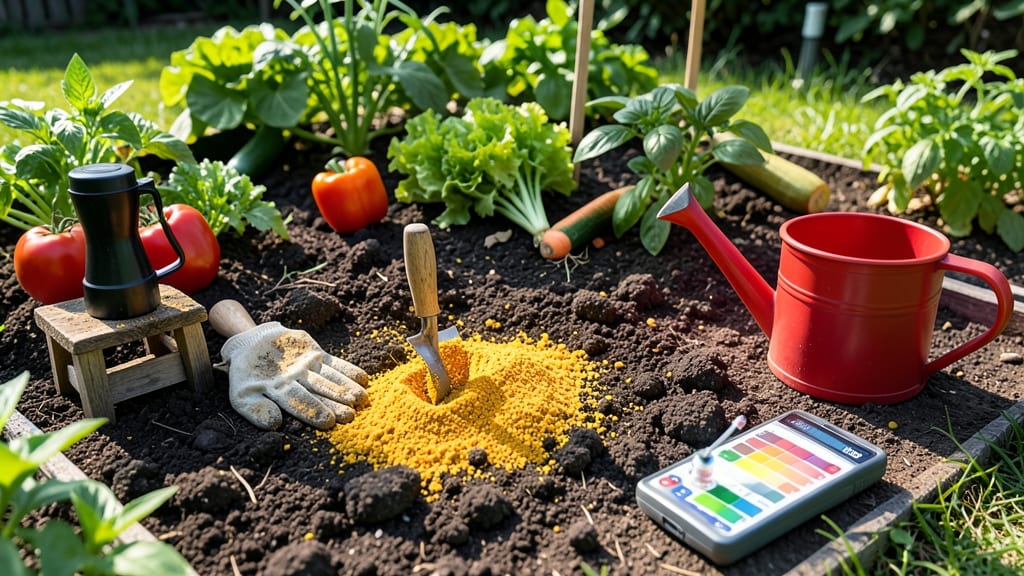
Fertilizing your veg garden at the right time—like right after planting and again during flowering—is the difference between a thriving harvest and a sad, stunted 🥕 patch.
Picture this: you’ve just sunk time and effort into your vegetable garden, only to watch it struggle because the nutrients hit at the wrong moment. Maybe you overdid it in spring, burning delicate roots, or skipped summer feedings when your tomatoes were begging for a boost.
Timing isn’t just about when—it’s about how your plants use nutrients at each growth stage.
In this guide, I’ll break down the exact seasonal schedule for fertilizing your vegetable garden, from cool-season crops like lettuce to warm-season powerhouses like peppers.
You’ll learn when to feed for leafy greens (hint: nitrogen matters most), when to switch to phosphorus for fruiting plants, and how to spot deficiency signs before they derail your harvest.
Whether you’re a first-time gardener or a seasoned pro, these actionable tips will help you fertilize smarter—not harder—so your veg garden delivers its best yield all season long.
Seasonal fertilization schedule for vegetables: when to feed by growth stage
Fertilizing your vegetable garden isn’t a one-size-fits-all task—it’s a timed strategy that shifts with plant growth stages and seasonal demands. Cool-season crops like broccoli and spinach need early feeding, while tomatoes and peppers thrive with mid-season boosts.
The key? Align your fertilizer with root development, flowering, and fruit production to avoid wasted nutrients or stunted growth.
I’ve grown vegetables for over a decade, and the biggest mistake I see is over-fertilizing early or skipping mid-season feeds. Both lead to poor yields. Instead, think of fertilization as a 4-phase process: pre-planting, early growth, flowering, and fruiting.
Each phase requires a different nutrient focus—whether you’re using organic compost or a synthetic blend.
Below is your seasonal fertilization timeline, tailored for USDA Zone 6a (adjust ±1 month for cooler/warmer zones). I’ve included organic vs. synthetic recommendations to help you choose what works best for your garden’s needs.
| Growth Stage | Cool-Season Crops (Mar-May, Sep-Nov) | Warm-Season Crops (Jun-Aug) | Fertilizer Type | When to Apply |
|---|---|---|---|---|
| Pre-Planting | Balanced 5-5-5 or compost (2-4 weeks before transplanting) | Balanced 10-10-10 or aged manure (1-2 weeks before planting) | Organic: Compost/manure Synthetic: Granular |
March-April (spring) / September (fall) |
| Early Growth | High-nitrogen (10-5-5) for leafy growth | Low-nitrogen (5-10-10) for root establishment | Organic: Fish emulsion Synthetic: Liquid |
April-May (spring) / June (fall) |
| Flowering | Phosphorus-rich (3-5-3) to support blooms | Balanced (10-10-10) for fruit set | Organic: Bone meal Synthetic: Slow-release |
May-June (spring) / July-Aug (fall) |
| Fruiting | Potassium-rich (2-5-10) for disease resistance | High-potassium (5-5-10) for fruit development | Organic: Wood ash Synthetic: Granular |
June-July (spring) / Aug-Sept (fall) |
For cool-season crops, focus on early nitrogen to build leafy growth, then shift to phosphorus as plants flower. In my garden, spinach and kale respond best to a light feeding every 3-4 weeks once established.
Meanwhile, warm-season crops like tomatoes and peppers need phosphorus upfront to encourage root systems, followed by potassium as fruits develop.
Organic fertilizers like compost or fish emulsion release nutrients slowly, making them ideal for pre-planting and early growth. I’ve found that synthetic granular fertilizers work better for targeted mid-season boosts, especially when plants show signs of yellowing leaves (nitrogen deficiency) or weak stems (phosphorus deficiency).
Always water deeply after applying to prevent nutrient burn.
One trick I swear by? Side-dressing with alfalfa meal or blood meal during the flowering stage. This adds a quick nitrogen boost without overloading the soil. For container gardens, use a water-soluble fertilizer every 2 weeks—just dilute it to half-strength to avoid shocking roots.
Watch for these red flags that signal it’s time to fertilize: pale leaves (nitrogen), purple stems (phosphorus), or yellow edges (potassium).
In my USDA Zone 6a garden, I’ve learned to fertilize cool-season crops in early spring and warm-season crops in late spring, adjusting for soil temperature (wait until soil hits 60°F for warm-season plants).
Pro tip: Test your soil every 2-3 years to avoid over-fertilizing. My last test showed high phosphorus, so I switched to a
Best fertilizer types for different vegetable families: N-P-K ratios explained
Not all vegetables need the same fertilizer. Leafy greens like spinach and kale thrive with high-nitrogen blends, while root crops such as carrots and potatoes benefit from phosphorus-rich fertilizers.
Matching your fertilizer to your plant’s family ensures stronger growth and better yields. Let’s break down the best N-P-K ratios for common vegetable families and when to apply them.
Understanding N-P-K ratios is key. The numbers represent nitrogen (N), phosphorus (P), and potassium (K). Nitrogen fuels leafy growth, phosphorus supports root and flower development, and potassium boosts disease resistance and fruit production. For example, a 10-10-10 fertilizer is balanced, while 5-10-10 is ideal for fruiting plants.
Here’s how to match fertilizers to your vegetable families for optimal results:
| Vegetable Family | Best N-P-K Ratio | When to Apply | Example Fertilizer |
|---|---|---|---|
| Leafy Greens (Spinach, Lettuce, Kale) | 30-10-10 (High Nitrogen) | At planting + every 3-4 weeks | Fish emulsion, blood meal |
| Fruiting Plants (Tomatoes, Peppers, Eggplant) | 5-10-10 (Balanced with Phosphorus) | At planting + when flowers appear | Bone meal, 5-10-10 granular |
| Root Crops (Carrots, Potatoes, Beets) | 10-20-10 (High Phosphorus) | At planting + side-dress mid-season | Rock phosphate, 10-20-10 fertilizer |
| Alliums (Onions, Garlic, Leeks) | 10-10-10 (Balanced) | At planting + early growth stage | Compost tea, worm castings |
| Legumes (Peas, Beans, Peanuts) | 5-10-10 (Low Nitrogen) | At planting (they fix nitrogen) | None needed (or light compost) |
For leafy greens, focus on nitrogen-heavy fertilizers early in the season to promote lush foliage.
Apply fish emulsion or blood meal every 3-4 weeks, but avoid overdoing it—too much nitrogen can lead to weak stems. Fruiting plants, like tomatoes and peppers, need phosphorus to develop strong roots and flowers, so use bone meal or a 5-10-10 blend when flowers appear.
If you’re growing root crops, prioritize phosphorus to encourage tuber development. Side-dress with rock phosphate or a 10-20-10 fertilizer mid-season. Legumes, like peas and beans, are unique—they fix nitrogen in the soil, so they rarely need extra fertilizer. A light application of compost at planting is usually enough.
Always apply fertilizers in the early morning to prevent leaf burn and ensure nutrients are absorbed efficiently. Water thoroughly after application to help nutrients penetrate the soil. For organic options, compost tea or worm castings are gentle yet effective for most vegetable families. 🌱