
Light Requirements
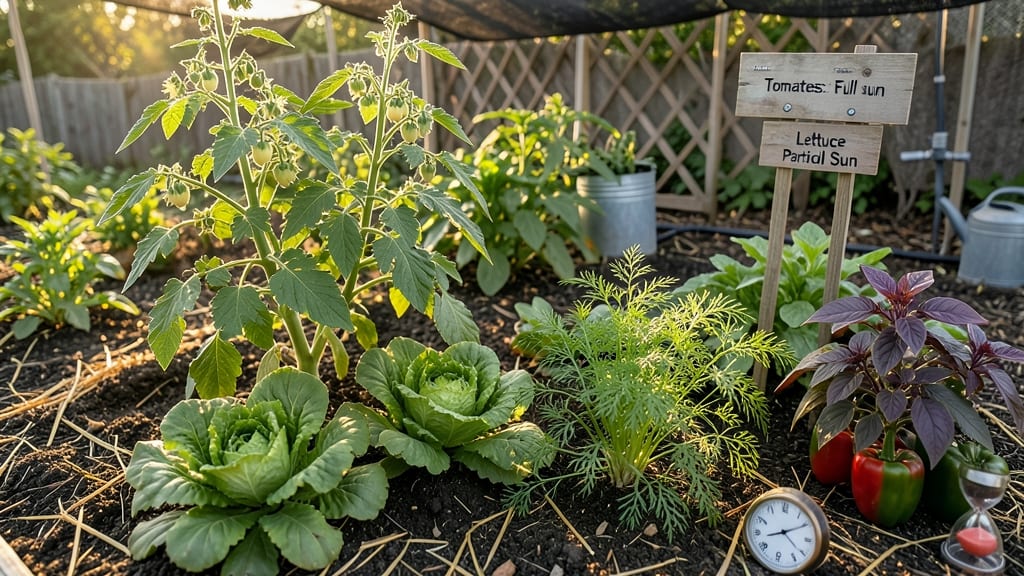
A vegetable garden needs 6 to 8 hours of sunlight daily 🌱 for most crops to thrive, but the exact amount depends on what you’re growing—and where you live.
Picture this: your tomato plants wilting by midday, your lettuce bolting before you can even pick it, or your zucchini vines stretching toward the sky like they’re reaching for a high-five.
Sunlight isn’t just a nice-to-have; it’s the difference between a bounty and a bust. Yet, many gardeners over- or underestimate their garden’s light exposure, leading to wasted space and missed harvests.
Not all vegetables are created equal when it comes to sunlight. Leafy greens like spinach and kale can handle 3 to 5 hours of partial shade, while sun-lovers like peppers and eggplants demand full sun to produce fruit.
Throw in seasonal shifts—longer days in summer, shorter ones in winter—and you’ve got a puzzle that’s easier to solve with the right guidance.
In this guide, I’ll break down the sunlight needs for your top crops, show you how to measure and adjust for your garden’s layout, and share game-changing tips to maximize every ray of light—whether you’re working with a sunny backyard, a shady balcony, or something in between.


Sunlight requirements by vegetable type: full sun vs. partial shade explained
Understanding how many hours of sunlight your vegetable garden needs is the first step to a bountiful harvest. Most vegetables thrive with 6 to 8 hours of direct sunlight daily, but some can tolerate 3 to 5 hours of partial shade.
The key is matching your plants to their ideal light conditions—especially in USDA Zone 6a where seasonal shifts affect sunlight exposure. Let’s break down the exact needs for your favorite crops.
Fast-growing vegetables like radishes or lettuce can mature in as little as 30 to 40 days, making them more flexible with sunlight. In contrast, slow-maturing crops like tomatoes or peppers require full sun (6+ hours) to develop properly.
Even a few hours less can delay harvests or reduce yields. For example, basil needs 6 hours of sun to produce flavorful leaves, while spinach can handle 3 to 4 hours in cooler climates.
Your climate zone plays a huge role in sunlight calculations. In Zone 6a, summer days are long (up to 15 hours of daylight in June), but winter sunlight drops to just 9 hours in December.
Adjust your garden layout by planting sun-loving crops in spring and fall and reserving partial shade spots for heat-sensitive greens during summer.
Here’s a quick reference for sunlight needs by vegetable type, including fast vs. slow growers:
For slow-maturing crops like tomatoes or peppers, prioritize the sunniest spots in your garden. These plants need consistent sunlight to set fruit and develop sweet flavors. If your garden lacks full sun, consider container gardening on a sunny patio or using reflective mulch to bounce extra light onto plants.
On the other hand, leafy greens and fast growers like radishes or arugula can thrive in partial shade, especially during hot summer afternoons when temperatures rise.
In Zone 6a, this means planting them on the north or east side of taller crops or under lightweight shade cloth (30–50% coverage) to protect them from scorching.
Pro tip: Use a sunlight meter or observe your garden throughout the day. Note which areas receive morning sun vs. afternoon sun—some plants (like carrots) prefer gentle morning light, while others (like zucchini) thrive in intense afternoon rays.
Adjust your layout by placing heat-sensitive crops in morning sun and heat-tolerant crops where the sun lingers longest.
If you’re new to gardening, start with a mix of full-sun and partial-shade crops to test your garden’s conditions. For example, plant tomatoes and peppers in the sunniest spot and lettuce or kale nearby to see how they perform.
Over time, you’ll learn how to optimize your space for maximum yield—no matter how much sunlight your yard actually gets.
Remember, even 6 hours of sun can vary by season. In
How to adjust sunlight exposure for different garden layouts and seasons
Adjusting sunlight exposure is one of the easiest ways to maximize your vegetable garden's productivity, especially when working with limited space or seasonal changes.
Whether you're using raised beds, containers, or an urban garden, understanding how to optimize sunlight can mean the difference between a thriving harvest and a struggling one.
The key is flexibility—what works in summer may fail in winter, and what thrives in a raised bed might struggle in a pot.
For most sun-loving vegetables like tomatoes, peppers, and cucumbers, 6-8 hours of direct sunlight is ideal, but partial shade options exist for leafy greens and herbs. The challenge is adapting these needs to your garden's layout and the shifting sun angles throughout the year.
Let's break down how to make it work for your space.
- 1 Raised Beds: Rotate crops every season to ensure all plants get optimal sunlight. Place taller plants like corn or sunflowers on the north side to avoid shading shorter crops.
- 2 Containers: Use reflective surfaces like white gravel or mirrors beneath pots to redirect 20-30% more sunlight to plants. Group containers together to create a microclimate with consistent light exposure.
- 3 Urban Gardens: Maximize vertical space with trellises or wall-mounted planters. South-facing walls receive the most sunlight, making them perfect for tomatoes or peppers that need 6+ hours of sun.
- 4 Winter Adjustments: Reduce watering and mulch heavily to protect roots from frost damage. Choose cold-hardy crops like kale or spinach that thrive in 3-4 hours of winter sun.
- 5 Summer Solutions: Provide afternoon shade for heat-sensitive crops like lettuce using shade cloth (30-50% coverage). This prevents bolting and extends the growing season by 2-3 weeks.
Seasonal changes require proactive planning. In summer, the sun is intense, and plants may need protection from midday heat. Use shade cloth or plant heat-tolerant varieties like okra or sweet potatoes.
In contrast, winter sunlight is weaker, so focus on cold-hardy crops that can handle partial shade and shorter days.
Another trick is to use reflective mulch like white plastic or gravel to bounce extra light onto plants. This is especially useful in containers or areas with limited sunlight. Pair this with seasonal crop rotation to ensure every spot gets the right amount of sun when it's needed most.
Don’t forget to monitor your garden’s sunlight throughout the day. Use a simple sunlight tracker (like a solar calculator app) to map how light shifts with the seasons.
This helps you adjust your planting plan before the growing season starts, ensuring your tomatoes get morning sun and your leafy greens avoid the hottest afternoon rays.
With these adjustments, you’ll create a dynamic garden that thrives year-round, no matter the layout or season. The key is observing, adapting, and making small changes to keep your plants happy and productive. Happy gardening! 🌱