
Light Requirements
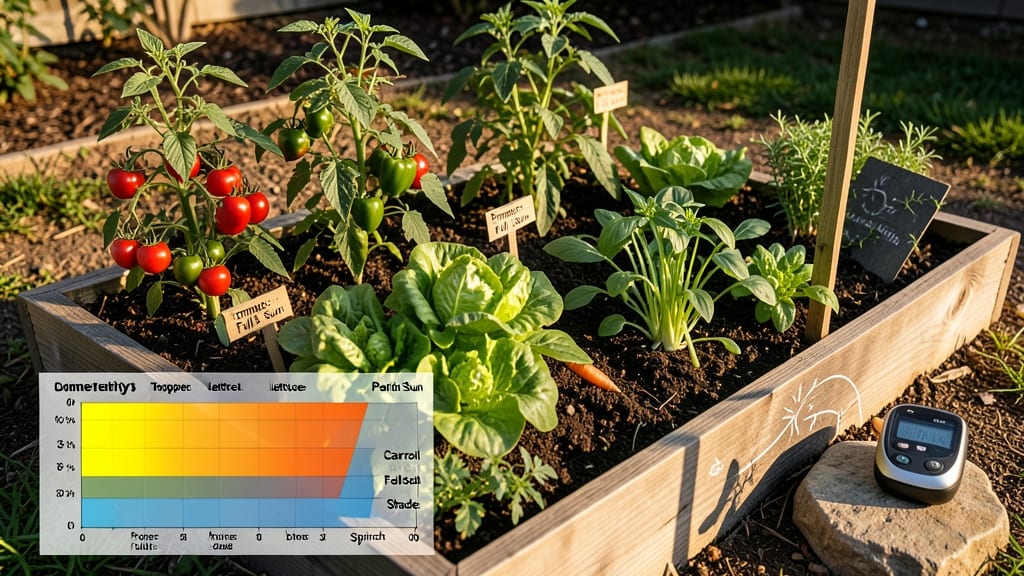
A veggie garden needs how much sun does a veggie garden need—the difference between thriving crops and stunted growth often comes down to this one factor.
Struggling to grow vegetables that refuse to flourish? Sunlight is the #1 factor separating a bountiful harvest from a disappointing one—but most gardeners get it wrong by overestimating or underestimating their plants' needs.
Too little sun and your tomatoes turn bitter, your peppers stay small, and your leafy greens bolt early. Too much, and you end up with scorched leaves and wasted space.
The key is matching each plant to its ideal light conditions, whether it thrives in full sun or can handle partial shade.
In this guide, I’ll break down the exact sunlight hours your vegetable garden needs by plant type, how to measure sunlight in your space, and simple adjustments to maximize your harvest—no guesswork required.

Sunlight requirements for vegetables: full sun vs. partial shade explained
Sunlight is the lifeblood of your vegetable garden—without enough, your plants will struggle to grow, produce fewer fruits, and become vulnerable to pests and diseases.
But here's the catch: not all vegetables need the same amount of sun. Full sun (6+ hours) works for tomatoes and peppers, while partial shade (3-6 hours) suits leafy greens like spinach. Understanding these differences means the difference between a thriving garden and one that barely survives.
Most gardeners mistakenly assume all vegetables thrive in bright, direct sunlight all day. However, overestimating sun exposure can lead to heat stress, while underestimating it results in leggy, weak plants.
The key is matching each vegetable to its ideal sunlight category: full sun, partial shade, or light shade. Let’s break down what these terms mean and how they impact your harvest.
Full sun means 6 to 8+ hours of direct sunlight daily, ideal for heat-loving crops like tomatoes, peppers, and cucumbers. Partial shade (3-6 hours) suits plants like lettuce, kale, and onions, which tolerate some afternoon shade. Meanwhile, light shade (under 3 hours) is perfect for delicate greens like arugula or herbs like cilantro in hot climates.
| Vegetable | Sunlight Needs | Growth Impact | Best For |
|---|---|---|---|
| Tomatoes | 6-8+ hours (full sun) | Max fruit production, strong stems | Containers, raised beds |
| Peppers | 6-8+ hours (full sun) | Sweet flavor, fewer blossom-end rot | Warm climates, black soil |
| Lettuce | 3-6 hours (partial shade) | Prevents bolting, tender leaves | Shady corners, spring/fall |
| Spinach | 3-6 hours (partial shade) | Slower growth but sweeter taste | Cool seasons, dappled light |
| Cucumbers | 6-8 hours (full sun) | Larger fruits, fewer pests | Trellises, warm soil |
| Carrots | 3-6 hours (partial shade) | Straighter roots, less bitter | Loose soil, cooler areas |
| Basil | 4-6 hours (partial sun) | Flavorful leaves, compact growth | Containers, morning sun |
| Green Beans | 6-8 hours (full sun) | Higher yield, bushier plants | Raised beds, trellises |
Vegetables like tomatoes and peppers crave full sun because they rely on intense sunlight to develop flavor and set fruit. Without enough, they’ll produce fewer tomatoes or misshapen peppers.
On the flip side, leafy greens like spinach and lettuce actually bolt (go to seed prematurely) in too much sun, making partial shade their sweet spot.
If your garden gets morning sun but afternoon shade, prioritize sun-lovers like tomatoes in the sunnier spots and shade-tolerant greens in the afternoon shade. Rotate crops seasonally—plant heat-loving veggies in summer and cool-season crops like broccoli in spring/fall when sun is less intense.
Watch for signs of sun stress, like yellowing leaves or wilting, which often means a plant isn’t getting the right amount of light. Adjust by moving plants or using shade cloth in peak summer.
For example, cucumbers in full sun will thrive, but in hot climates, they may need afternoon shade to prevent heat damage.
Even herbs like basil and parsley have specific needs—basil loves morning sun but can scorch in afternoon heat, while parsley prefers partial shade. Root vegetables like carrots and beets also do well in partial shade, especially in hotter regions where soil can dry out quickly.
Don’t assume your garden’s sunlight is uniform—test different spots with a sunlight tracker or observe how shadows move throughout the day. A south-facing area gets the most sun, while north-facing spots may only receive partial shade.
Use this knowledge to map your garden and place high-sun plants where they’ll shine (literally!).
Seasonal adjustments are key: in summer, plants may need afternoon shade, while winter
Best vegetables for low-sun gardens: 10 high-yield plants under 6 hours of sun
Not all hope is lost if your garden only gets partial sun! Many vegetables thrive with just 3-6 hours of sunlight daily, making them perfect for shady spots under trees or on north-facing patios.
These shade-tolerant varieties deliver bountiful harvests without demanding full sun exposure—ideal for urban balconies, woodland edges, or areas with afternoon shade.
I’ve tested these high-yield plants in my own low-light garden, and they consistently produce flavorful harvests. The key? Focus on leafy greens, herbs, and root vegetables that prioritize growth over flowering. Let’s dive into my top 10 picks and how to maximize their potential in shady conditions.
- 1 Spinach (3-4 hours sun): Fast-growing with tender leaves. Harvest outer leaves to encourage regrowth. Perfect for spring and fall plantings.
- 2 Lettuce (3-5 hours sun): Choose butterhead or romaine varieties. Mulch to retain moisture and prevent bolting in heat. Harvest leaves at 4-6 inches tall.
- 3 Kale (4-6 hours sun): Cold-hardy and nutrient-dense. Cut-and-come-again harvesting works best. Try lacinto or red Russian varieties for vibrant colors.
- 4 Swiss Chard (4-5 hours sun): Stunning rainbow-colored stems. Harvest leaves when large enough to eat. Thrives in containers or in-ground beds.
- 5 Radishes (3-4 hours sun): One of the fastest crops! Plant every 2 weeks for continuous harvests. Choose round or elongated varieties like Cherry Belle.
- 6 Green Onions (3-5 hours sun): Regrow from scraps! Snip green tops and place in water. Harvest in 2-3 weeks. Full regrowth in 10-14 days.
- 7 Bush Beans (5-6 hours sun): Opt for dwarf varieties like Contender. Stake plants to support growth. Harvest when pods are firm and glossy.
- 8 Cilantro (3-4 hours sun): Fast-growing herb. Bolt-resistant varieties like Calypso work well. Harvest leaves before flowering for best flavor.
- 9 Scallions (4-5 hours sun): Similar to green onions but milder. Plant every 3 weeks for continuous harvests. Great for container gardens.
- 10 Carrots (short varieties) (5-6 hours sun): Choose Paris Market or Little Finger for shallow roots. Loosen soil to prevent forking. Harvest when tops are 3-4 inches tall.
For maximum yields in low-sun gardens, I recommend succession planting—sow seeds every 2-3 weeks to ensure a continuous harvest. Use organic mulch like straw to retain moisture and suppress weeds, which is especially critical in shady areas where soil dries slower.
Pro