
Watering
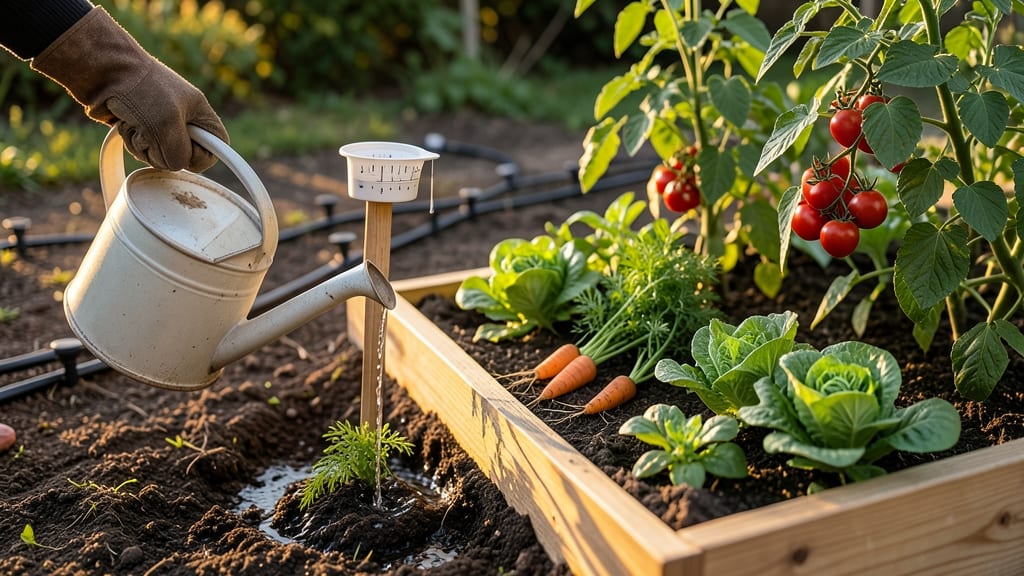
A garden needs watering that matches its type, soil, and season—too little or too much can ruin your harvest before it even starts.
Overwatering or underwatering your garden can kill your plants faster than pests or disease—yet most gardeners guess their watering needs instead of measuring them. Discover the science-backed watering rules that keep your garden thriving without waste.
From leafy greens that wilt in dry soil to thirsty tomatoes that crack in the heat, every plant has its own rhythm. Learn how to read your soil, adjust for clay or sandy ground, and water deeply just a few times a week instead of lightly every day.
Here’s how to calculate your garden’s exact needs, avoid common mistakes, and save water while keeping your 🌱 plants happy—no more wasted gallons or sad, drooping leaves.
Science-backed water requirements for common garden plants
Watering your garden isn't a one-size-fits-all task—it's a science that balances soil moisture, plant biology, and environmental conditions. Most plants need 1-2 inches of water per week, but this varies wildly between vegetables, flowers, herbs, and trees.
For example, leafy greens like lettuce need consistent moisture, while succulents like aloe vera thrive on neglect. The key? Understanding your root zone depth and how quickly water evaporates in your climate.
Humidity and temperature play huge roles too. In hot, dry climates, water evaporates 30-50% faster than in humid regions. That’s why your morning watering routine in Arizona might need double the volume of what works in Seattle.
Seasonal shifts matter too—spring and fall often require less water than peak summer months, when roots struggle to absorb moisture from baked soil.
Here’s the science-backed breakdown of water needs by plant type, including deep-watering techniques and how to adjust for your local conditions:
| Plant Category | Water Needs | Root Zone Depth | Frequency (Summer) | Deep-Watering Tip |
|---|---|---|---|---|
| Vegetables (Tomatoes, Peppers) | 1.5–2 inches/week | 12–18 inches | Every 2–3 days | Water at soil level, not leaves |
| Herbs (Basil, Cilantro) | 1–1.5 inches/week | 6–12 inches | Every 3–4 days | Mulch to retain moisture |
| Flowers (Roses, Petunias) | 1–1.5 inches/week | 8–12 inches | Every 4–5 days | Water early morning |
| Trees (Young Fruit Trees) | 2–3 inches/week | 18–24 inches | Every 5–7 days | Slow drip at base |
| Succulents (Aloe, Sedum) | 0.5–1 inch/month | 3–6 inches | Every 2–4 weeks | Soak and dry completely |
For vegetables like tomatoes and peppers, deep-watering 2–3 times per week encourages strong root systems. I always aim to moisten the soil down to 12–18 inches—that’s where most of their roots live. Shallow watering leads to weak stems and fruit that splits under the sun.
Use a soil moisture meter or your finger to check: if the top 2 inches are dry, it’s time to water.
Herbs like basil and cilantro need consistent moisture but hate soggy soil. I water them every 3–4 days in summer, focusing on the root zone (not the leaves) to prevent fungal diseases.
Mulching with straw or wood chips keeps moisture locked in and reduces evaporation by 30%. Pro tip: Water in the early morning to let foliage dry before evening humidity spikes.
Flowers like roses and petunias are thirsty but finicky. They need 1–1.5 inches of water weekly, but uneven watering causes buds to drop. I use drip irrigation for flower beds to deliver water slowly at the roots.
For container-grown flowers, I check soil moisture daily—potted plants dry out 2–3x faster than in-ground plants.
Trees are the heavy
How to calculate your garden’s exact water needs (step-by-step)
Figuring out how much water your garden truly needs can feel like guessing—until you learn the science behind it. Most plants thrive when their root zones receive 1-2 inches of water per week, but soil type, plant variety, and climate change everything.
Instead of relying on memory, use these three key methods to dial in your watering routine with precision.
Start by understanding your soil’s moisture-holding capacity. Sandy soil drains quickly and needs frequent, shallow watering, while clay soil stays soggy longer and requires deeper, less frequent watering. The good news? A simple finger test or soil moisture meter can reveal exactly when to water—no guesswork required.
Step-by-Step Watering Guide
- 1 Test soil moisture every 2–3 days by inserting your finger 1–2 inches deep into the soil. If it feels dry, it’s time to water.
- 2 Water deeply until moisture reaches 6–12 inches down (for most plants). Use a soil probe or trowel to check depth—this encourages deep root growth.
-
3
Adjust for soil type:
- Sandy soil: Water every 1–2 days (shallow roots).
- Clay soil: Water every 5–7 days (deep roots).
- 4 Monitor plant cues: Wilting leaves by noon mean it’s time to water, but yellowing leaves signal overwatering. Adjust based on weather patterns—hotter days mean more frequent watering.
- 5 Use mulch (2–3 inches) to retain moisture and reduce evaporation. Organic mulch, like straw or wood chips, also improves soil health over time.
For container gardens, check soil moisture daily—potted plants dry out 2–3x faster than in-ground plants. Place a moisture meter in your largest pot to track consistency. If the top inch feels dry, water thoroughly until it drains from the bottom.
Seasonal shifts demand flexibility. In summer, water early morning to prevent evaporation, while winter watering should be cut in half unless you’re growing cold-hardy crops like kale or carrots. Always water at the base of plants to avoid fungal diseases on leaves.
With these steps, you’ll eliminate the guesswork and give your garden the perfect balance of moisture—no more drowned roots or parched soil. Happy watering! 💧