
Planting
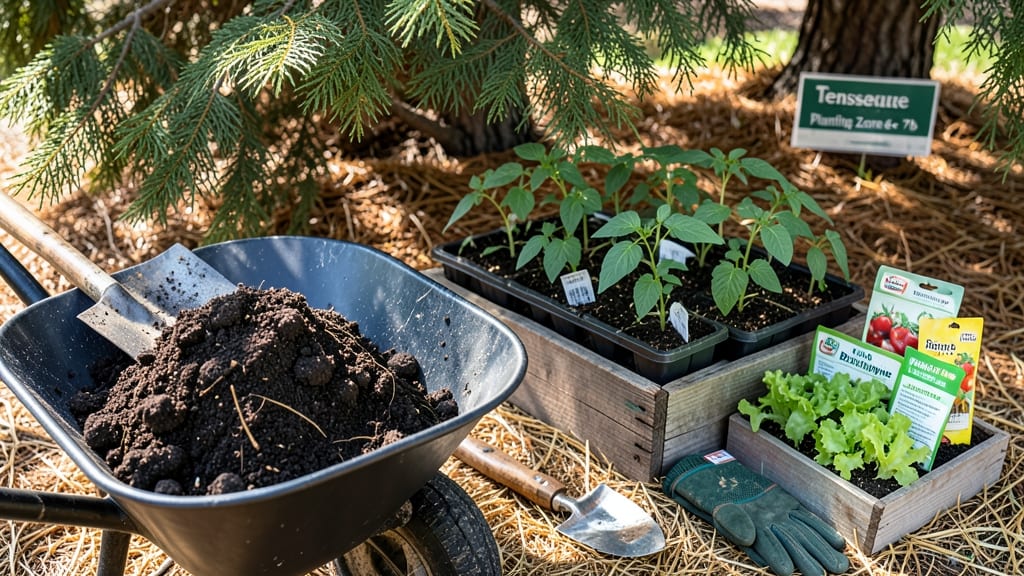
Planting your garden in Tennessee at the right time means the difference between a bountiful harvest and a season of disappointment.
Tennessee’s climate varies wildly—from the chilly highlands of the Smokies to the humid lowlands near Memphis—so a one-size-fits-all approach won’t work. Miss the window by even a week, and frost could turn your tender seedlings into sad, mushy puddles.
But get it right, and you’ll enjoy fresh tomatoes by July, crisp greens all summer, and fall crops that last well into October.
This guide cuts through the confusion with exact planting dates for Tennessee’s 7 USDA zones, broken down by crop type.
Whether you’re sowing cool-loving lettuce in early spring or heat-tolerant okra in late May, you’ll know when to start seeds indoors, transplant seedlings, and even stretch your season with simple tricks like row covers.
Skip the guesswork and learn how to time your planting for peak flavor, yield, and ease—so you can spend less time worrying and more time enjoying the fruits (and veggies) of your labor.
Tennessee last frost dates by Zone: your planting timeline
Tennessee spans USDA Hardiness Zones 6b through 8a, meaning frost dates vary dramatically from the cool mountain valleys to the warmer river bottoms. Knowing your last average frost date is the key to avoiding frost damage while maximizing your growing season.
For example, Zone 6b (East Tennessee) typically sees its last frost around April 15–May 1, while Zone 8a (West Tennessee) often warms up by March 1–March 15.
Your planting window depends on whether you’re growing cool-season crops (like lettuce or peas) or warm-season crops (like tomatoes or peppers). Cool-season crops can often handle light frosts, while warm-season crops need soil temperatures above 60°F to thrive.
The 14-day average after your last frost date is your best bet for planting warm-season crops outdoors.
Pro tip: Use a soil thermometer to confirm soil warmth before planting warm-season crops. In Zone 7a, for instance, soil may not reliably reach 60°F until mid-April, even if air temperatures feel warmer earlier.
For Zone 6b, early varieties of cool-season crops like spinach or kale can often be planted as early as late February under row covers or in a cold frame. However, most gardeners wait until March 1 for direct sowing to avoid frost damage.
In Zone 8a, you can start planting warm-season crops like okra or sweet potatoes as early as February 15, giving them a head start before the peak summer heat arrives.
Adjust your planting timeline based on microclimates. A south-facing slope warms up faster than a north-facing valley, so you might plant 1–2 weeks earlier in sunny spots.
Conversely, low-lying areas or near large bodies of water can hold frost longer, delaying your planting window by up to 10 days.
If you’re unsure about your exact frost date, check the Tennessee State University Extension’s frost date maps or use a local weather station’s 10-year averages.
For example, Nashville (Zone 7a) has seen late frosts as late as May 10 in some years, so it’s wise to have frost cloth on hand for early plantings.
For warm-season crops, wait until the soil temperature consistently stays above 60°F for 5+ days. In Zone 7b, this typically happens around mid-April, but in Zone 6b, you may need to wait until early May.
Use a soil thermometer to avoid guesswork—cool soil can stunt young seedlings.
Don’t forget about fall planting! Many cool-season crops thrive when planted in late summer for a fall harvest. In Zone 8a, you can plant
Best crops to plant in Tennessee by month (Zone-specific guide)
Tennessee’s 7 USDA zones (6b-8a) create microclimates where cool-season crops thrive in spring and fall, while warm-season plants need summer’s heat. My month-by-month guide aligns planting with Tennessee’s frost-free windows—from East Tennessee’s 6b zone (earlier springs) to West Tennessee’s 8a (longer summers).
For continuous harvests, I’ve included succession planting tips like sowing lettuce every 2 weeks or staggering tomato varieties in 2-week intervals. Even in Zone 6b, you can grow spinach and kale twice—once in early spring and again in fall—if you protect seedlings with frost cloth.
In Zone 6b (East Tennessee), prioritize early maturing varieties like ‘Early Girl’ tomatoes (55 days) or ‘Cherry Belle’ radishes (25 days). Meanwhile, West Tennessee’s Zone 8a gardeners can grow year-round greens like collards and turnips with minimal frost protection.
Pro tip: Use Tennessee State University Extension’s frost date maps to fine-tune your schedule. For example, Nashville (Zone 7a) averages April 15 for last frost, while Memphis (Zone 8a) sees March 1.
Adjust succession planting intervals based on your zone—2 weeks for fast growers like radishes, 3-4 weeks for lettuce.
Don’t forget herbs and flowers! Plant basil and cilantro in spring and fall, while marigolds and zinnias thrive in summer heat. My Zone 7 garden yields 3 harvests of cilantro by staggering plantings in March, June, and September.
🌱