
Picking
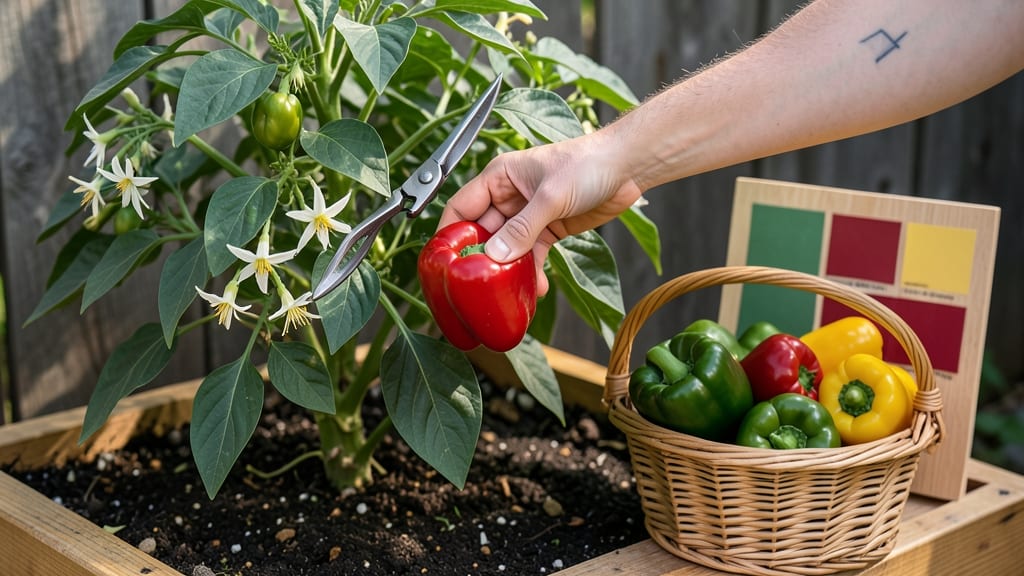
To pick bell peppers from your garden at their peak, watch for the color shift from green to vibrant hues like yellow or red 🌶️.
Bell peppers are a gardener’s pride—but timing their harvest wrong can mean bland flavors or lost crops. Master these 3 color-based clues to pick your peppers at their sweetest, crunchiest, and most nutritious moment.
Green peppers are fine to harvest early, but their flavor deepens as they ripen into red, orange, or yellow. A pepper ready for picking will feel firm, glossy, and fully colored—no streaks or soft spots.
Below, I’ll break down the exact color cues, size benchmarks, and environmental factors (like temperature) that tell you when to snip that stem for the best-tasting harvest.


3 Color stages of bell peppers and when to harvest each
Bell peppers transform through three stunning color stages—green, yellow/orange, and red—each signaling a different flavor and nutritional peak. Knowing when to harvest each stage ensures you enjoy the sweetest, most vibrant peppers from your garden.
The green stage is the earliest, but the real magic happens as they ripen into golden and fiery red hues.
Don’t assume all peppers ripen the same way! Some varieties stay green forever (like Banana Peppers), while others like California Wonder or Jupiter will turn yellow, orange, and finally red.
The color change isn’t just about aesthetics—it’s a flavor and nutrient upgrade you won’t want to miss. Let’s break down the exact timing and clues for each stage.
| Stage | Color | Days to Ripen | Flavor Profile | Nutritional Boost | Harvest Window |
|---|---|---|---|---|---|
| Green | Solid green | 60-75 days | Mild, slightly bitter | Lower vitamin C | July-August (earliest) |
| Yellow/Orange | Golden or orange | 75-85 days | Sweeter, fruity notes | Moderate vitamin C | Late August-September |
| Red | Deep red | 85-90+ days | Sweetest, richest | Highest vitamin C | September-October |
The green stage is where most peppers start, and it’s perfectly fine to harvest them here if you prefer a crisp, mild flavor. These peppers are firm and glossy, typically reaching 3-4 inches long before they’re ready.
However, if you’re growing a ripening variety, leaving them on the plant longer will unlock sweeter, more complex flavors as they transition through colors.
When peppers shift to yellow or orange, you’re in for a flavor explosion. These stages usually appear 10-15 days after green, depending on sunlight and warmth. The sugar content spikes, giving them a tropical, almost citrusy sweetness.
Nutritionally, they also pack more vitamin C and antioxidants than green peppers. Harvest them when the entire pepper is uniformly colored—no green patches!
Wait for the deep red stage for the ultimate payoff. Red bell peppers are the sweetest and most nutrient-dense, with up to 3x more vitamin C than their green counterparts. They take the longest to ripen, often 10-15 days beyond the yellow/orange phase.
Look for a vibrant, even red hue and a slightly thicker skin—this means peak ripeness. If left too long, they’ll become wrinkled or leathery, so time your harvest carefully.
Pro tip: Harvest in the morning when peppers are cool and crisp. Use a sharp pair of pruning shears or your fingers to twist gently at the stem—this avoids damaging the plant. The stem should snap cleanly if the pepper is ripe.
If it resists, it’s not ready yet. After harvesting, store peppers in the fridge for up to 2 weeks to preserve their freshness and flavor.
Not all bell peppers will ripen to red—some varieties are bred to stay green or yellow. Always check your seed packet for ripening expectations. For example, Poblano peppers often stay green, while Shishito peppers turn yellow.
If you’re unsure, harvest a few test peppers and taste them at each stage to train your palate for future harvests.
Remember, consistent harvesting encourages your plants to produce more peppers. The more you pick, the more your bell pepper plants will reward you with a bountiful, continuous harvest. So grab those shears, keep an eye on the colors, and enjoy the sweet journey from green to red!
How to test ripeness beyond color: touch, size, and stem checks
Color is just the first clue when deciding when to pick bell peppers from your garden. Even fully colored peppers can be underripe or overripe if you don't check other key indicators.
I've learned the hard way—harvesting too early means bland, tough peppers, while waiting too long leads to mealy, seedy disappointments. Let's explore the touch test, size benchmarks, and stem checks that reveal true ripeness.
Start with the firmness test—press your thumb gently against the pepper's skin. A ripe bell pepper should feel firm but slightly yielding, like a ripe avocado. If it feels rock-hard, it's underripe.
If it gives too easily, it's past its prime. This simple touch test works for green, yellow, and red varieties alike, helping you avoid the common mistake of harvesting based on color alone.
A yellow stem base doesn't always mean ripeness—it could signal overripeness! Check for these red flags: wrinkled skin, soft spots, or seeds turning dark. These peppers lose sweetness and develop bitter flavors. Harvest when stems brown easily but the skin stays glossy and firm.
Next, measure the size benchmark for your specific variety. Most standard bell peppers reach 3-4 inches long at maturity, but some heirlooms or specialty types grow larger. Compare your peppers to a ruler or your thumb measurement—if it's about the length of your forefinger, it's likely ready.
Smaller peppers may still ripen, but they'll be thinner-walled and less flavorful.
Don't overlook the stem check, my most reliable indicator. Gently twist the pepper near its stem—if it snaps cleanly with minimal effort, it's ready to harvest. A tough stem means it needs more time, while a stem that pulls away too easily signals overripeness.
This method works especially well for red and yellow varieties, where color changes can be subtle.
For green bell peppers, focus on the stem color change—it should turn from bright green to a dull brown or yellow at the base. Combine this with the firmness test: a green pepper with a brown stem but soft skin is overripe.
The key is consistency—all your ripeness tests should align before harvesting.
Pro tip: Harvest in the morning when peppers are cool and firm. Use clean, sharp pruning shears to avoid damaging the plant. Leave about 1/4 inch of stem attached—this helps peppers last longer in storage.
Now you're ready to pick peppers at their peak sweetness and texture, every single time!