
Picking
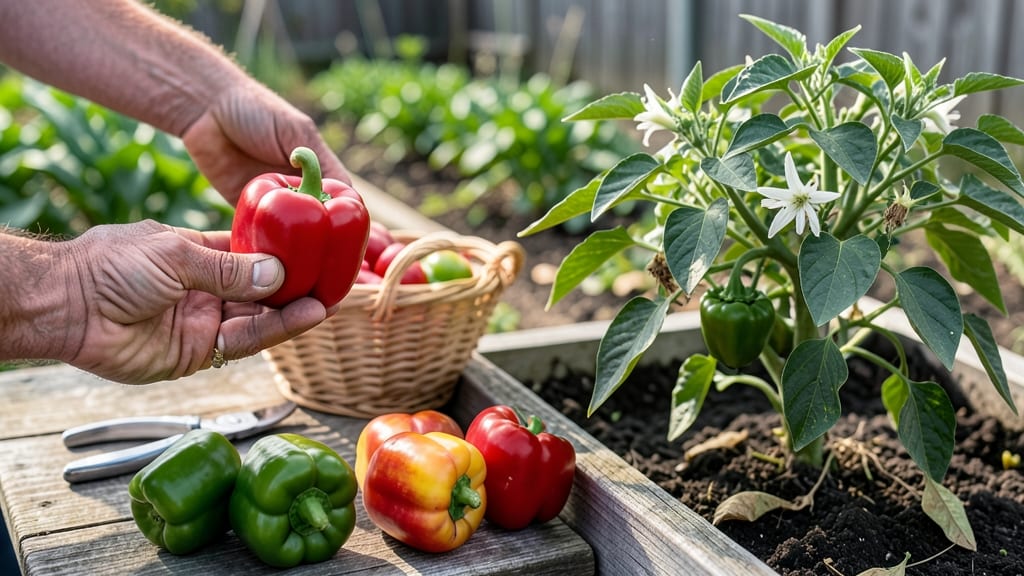
To pick peppers from your garden at the perfect moment means capturing their full flavor—whether you want sweet, tangy, or fiery heat.
Harvesting too early turns them bland and rubbery, while waiting too long can mean tough skins or lost crops to pests. The right timing depends on color, size, and even the variety—so let’s cut through the guesswork with a foolproof guide.
You’ll learn how to spot ripe peppers by their vibrant hues, firmness, and stem cues, plus how weather and variety affect the best harvest window. No more second-guessing when to snip that 🌶️—just perfect peppers every time.
From bell peppers to jalapeños, we’ll cover when to pick for peak sweetness, maximum heat, or storage potential, along with pro tips to keep your plants happy and productive all season.


Peppers by color: the exact ripening stages to harvest for best flavor
Peppers transform from green to vibrant reds, yellows, or oranges as they ripen, but each color stage offers a unique flavor profile and nutritional peak. Understanding these stages helps you decide whether to harvest early for storage or wait for peak sweetness.
The sugar content spikes dramatically as peppers mature, while capsaicin (the compound that makes them spicy) also evolves—sometimes intensifying, sometimes mellowing.
For example, bell peppers develop their sweetest flavor when fully ripe, while jalapeños can be harvested green for milder heat or left to turn red for a sweeter, fruitier taste.
Even the skin texture changes—thick and waxy when green, becoming softer and glossier as they ripen. Knowing these cues ensures you’re harvesting at the perfect moment for your culinary goals.
🌱
The green stage is where peppers start their journey, often harvested early for pickling or storage.
At this point, they’re firm with a grassy, slightly bitter taste—ideal for preserving but lacking the sweetness of ripened peppers. Bell peppers picked green will never reach their full sugar potential, but they’re still packed with vitamin C and crisp texture.
If you’re growing hot peppers like jalapeños, harvesting green gives you a milder heat, while waiting for red intensifies their fruitiness.
As peppers transition to yellow or orange, their sugar content begins to rise significantly—sometimes doubling from the green stage.
This is the perfect time for grilling or roasting, as the flavors become richer and more complex. Yellow peppers are often sweeter than green but not as intense as red. For orange peppers, the flavor takes on a caramel-like quality, making them fantastic for stuffing or sauces.
Scientifically, this shift happens because the plant redirects chlorophyll (green pigment) and replaces it with carotenoids (yellow/orange pigments), which are linked to increased sweetness.
🌿
When peppers reach their final color—typically red, purple, or black—they’ve hit their flavor peak. Red peppers are the sweetest, with up to 3x the sugar of their green counterparts, and their capsaicin levels drop, making them milder even in hot varieties.
This stage is ideal for raw eating, drying, or fermenting, as the flavors are most concentrated. Purple peppers, like the Shishito variety, develop an earthy, almost smoky note when fully ripe, perfect for unique dishes.
However, their skin is more delicate, so handle them gently to avoid bruising.
The storage life of peppers also varies by color. Green peppers last longest—up to 2 weeks refrigerated—while fully ripe peppers, especially red, should be used within 5-7 days for peak quality.
If you’re drying peppers for later use, red is the best stage, as their concentrated flavors hold up better during preservation. For freezing, green peppers are often preferred because they retain their crisp texture longer than ripe ones, which can turn mushy.
🌶️
One common mistake gardeners make is assuming all pe
5 Signs your peppers are ready to pick (beyond just color)
Color isn't the only indicator that your peppers are ready for harvest—though it's the most obvious. Many gardeners make the mistake of picking too early based solely on hue, missing out on peak flavor and texture.
To truly know when to pick peppers from your garden, you need to combine visual cues with physical tests and environmental factors. This ensures you're harvesting at the perfect moment for maximum sweetness or heat, depending on the variety.
I've learned that ignoring subtle signs like stem separation or skin firmness can lead to peppers that are either underripe and bland or overripe and mealy. For example, jalapeños picked too late can become bitter, while bell peppers left on the vine past their prime lose their crisp texture.
Let's explore the five key indicators that go beyond color to confirm your peppers are ready for harvest.
- 1 Full Size for the Variety: Measure against mature examples. Bell peppers should reach 3-6 inches, while jalapeños typically hit 2-3 inches. Under-sized peppers won't develop full flavor.
- 2 Firm Skin with Slight Give: Press gently—ripe peppers should resist your thumbnail but yield slightly. Overripe peppers feel mushy, while underripe ones are rock-hard.
- 3 Stem Separation Test: Gently twist the pepper at its stem. If it snaps cleanly at the base (not the fruit), it's ready. A green stem end means it's not fully mature.
- 4 Environmental Cues: Harvest when daytime temps are 70-85°F and nights stay above 55°F. Early morning picking preserves crispness and prevents sunscald on thin-skinned varieties.
- 5 Consistent Color: Look for deep, even color without patches. Uneven hues or pale spots indicate uneven ripening, often from inconsistent sunlight or watering.
One common mistake I see is harvesting peppers based on color alone, especially with hot peppers like habaneros or ghost peppers. These varieties develop their signature heat as they ripen, so picking them green means missing out on their signature fiery kick.
For example, a red jalapeño will be significantly hotter than its green counterpart, with a more complex flavor profile.
Environmental factors play a crucial role too. If your peppers are ripening during a hot summer stretch with temperatures exceeding 90°F, they may develop sunscald or lose flavor.
In these cases, it's better to harvest slightly earlier than later. Conversely, if nights drop below 50°F, ripening slows dramatically, and peppers may never reach their full potential.
Remember to use clean, sharp pruning shears or your hands to avoid damaging the plant. Always leave a small portion of the stem attached—this helps peppers last longer in storage and prevents the plant from rotting.
By combining these five signs, you'll consistently harvest peppers at their peak, whether you're growing them for fresh eating, cooking, or preserving. 🌶️